How to Turn Nonprofit Volunteers Into Donors (& Vice Versa!)
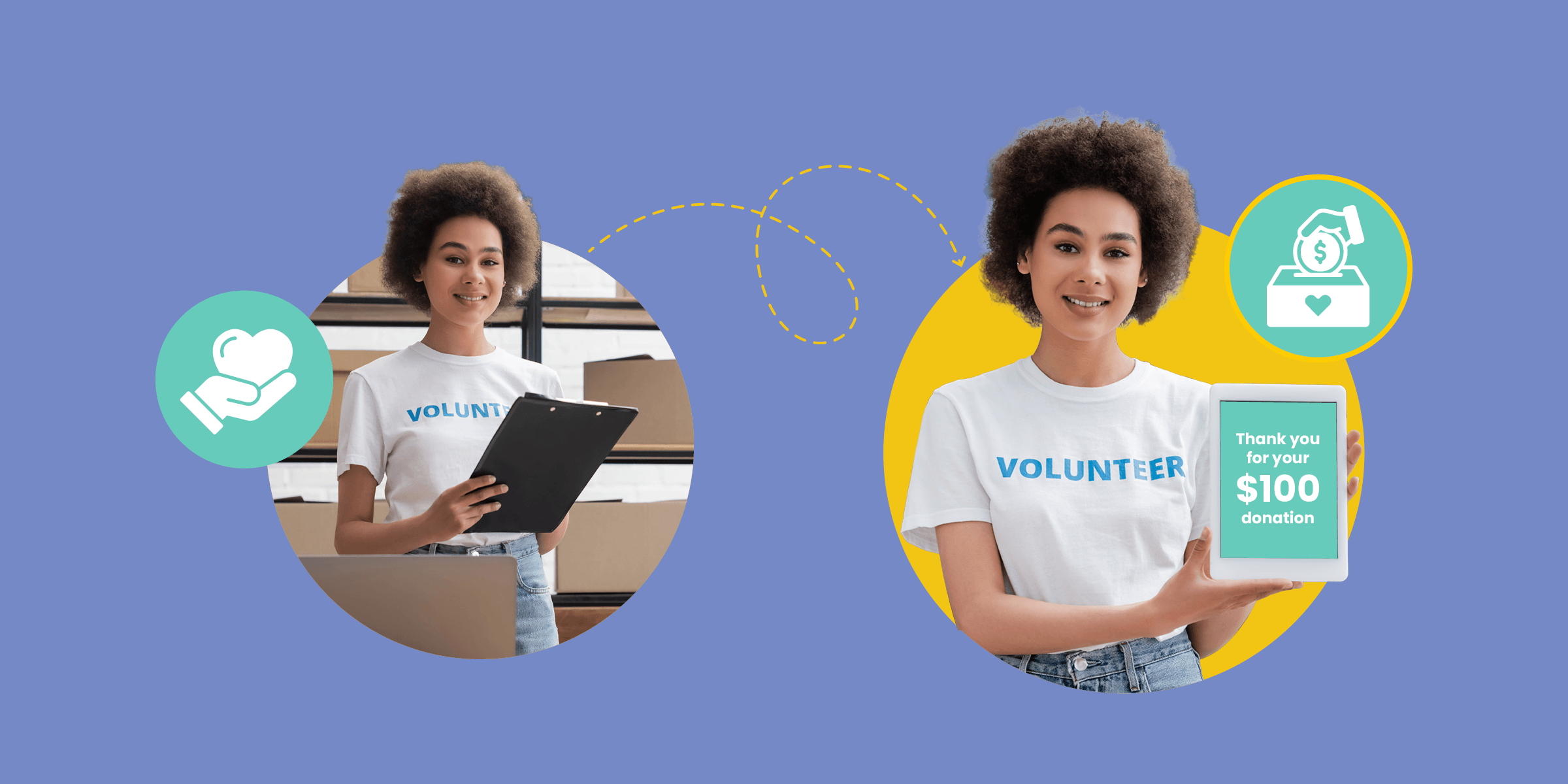
As a nonprofit leader, you know that it takes multiple types of support for your organization to truly thrive. Your donor community provides the material resources you need to fund your mission, and your volunteers expand your team’s capacity by giving their time and skills, which together lead to a greater overall impact than either type of support could have alone.
One of the best ways to fill gaps in your support needs and keep loyal supporters involved with your nonprofit is to present them with new potential methods of involvement. You may have consistent, high-impact donors hidden among your volunteer base—you just don’t know because you’ve never asked them for a monetary gift. Similarly, the last time you launched a volunteer recruitment campaign, did you think to reach out to your longtime donors first, or have you left that potential source of enthusiastic volunteer talent untapped?
In this guide, we’ll walk through four strategies for cultivating your nonprofit’s volunteers as donors and vice versa to help you boost engagement and contributions. Let’s get started!
Segment supporters for targeted outreach
The first step in getting supporters involved with your organization in new ways is to pinpoint the individuals who would be most interested in doing so. Use the information in your volunteer management platform and donor database to compile the following supporter data:
- Demographics. Information about age, location, education, marital and family status, and wealth lays the foundation for understanding who your donors and volunteers are. It can also help you start to narrow down the possibilities for cross-cultivation—for example, a donor who lives close to your nonprofit’s facility may be more interested in volunteering than one located far away.
- Psychographics. Understanding supporters’ hobbies, interests, lifestyles, and motivations for supporting your mission creates a more complete picture of who they are than demographics alone could. Even if a donor may seem like a good fit for your volunteer program in some ways, they might not be if they have a very busy lifestyle that doesn’t leave much room for a volunteer commitment.
- Giving and engagement history. Naturally, if a volunteer has already donated or a donor has volunteered, they should be at the top of your list for engaging through their previous secondary method of support. Frequency of giving or volunteering is also a strong indicator for potential further involvement (often even more so than total amount given or hours served), and supporters who have engaged in other ways like attending events or participating in advocacy activities are worth considering as well.
Once you’ve identified who to cross-cultivate, send them personalized messages on their preferred communication channels. Make the next step clear by linking to your donation page or volunteer signup form in each message, and time them strategically. For instance, a solicitation for a volunteer to donate would be much more appropriate on GivingTuesday (when they might expect donation requests from nonprofits they’ve engaged with) than in an appreciation message for their volunteer service (which could be perceived as undermining your gratitude).
Use new engagement methods to combat churn
In the process of finding loyal volunteers to ask for donations and repeat donors to volunteer, you may also come across supporters on both sides who are at risk of disengaging from your nonprofit. Depending on their reason for lapsing, you may be able to re-engage these supporters by offering them a different involvement method.
According to DonorSearch’s donor retention guide, two common reasons for donor attrition are uncertainty about the impact of monetary gifts and changes in financial circumstances. If donors at risk of lapsing for the first reason volunteer, the hands-on work may give them a deeper understanding of the difference they’re making with your organization. And in the second case, volunteering is a great way to stay involved in your work at no cost until donors’ personal situations or broader economic conditions change and they can afford to donate again.
On the volunteer side, Better Impact explains that uncertainty about impact and changes in circumstances are also common causes of churn, although these circumstances are usually related to time or proximity. Emphasizing to volunteers in the latter situation that donating to your organization takes very little time and can be done from anywhere may keep them involved while they’re too busy or far away to serve. In the former situation, let volunteers know what giving specific dollar amounts can do for your mission so they understand their impact up front.
Leverage peer-to-peer fundraising
Peer-to-peer fundraising may be considered a bridge between donating and volunteering. Donors who participate in a peer-to-peer campaign see what it’s like to contribute time and effort, and volunteers get to experience directly generating revenue for your nonprofit, which can encourage members of either group to cross over to the other side in the near future.
To run a successful peer-to-peer campaign, make sure to:
- Incorporate your organization’s branding so donors and volunteers represent your nonprofit consistently, professionally, and in a trustworthy manner.
- Let supporters customize their individual fundraising pages to tell their story of why they donate to or volunteer with your organization and inspire contributions.
- Provide clear instructions for fundraisers and peer donors to make it easy for everyone to participate.
- Gamify your campaign by creating leaderboards of the top peer fundraisers and awarding small prizes to the individuals whose pages bring in the most contributions.
Another benefit of peer-to-peer fundraising is that it introduces your nonprofit to a variety of new contacts who may be interested in donating again, volunteering, or doing both in the future. Their existing connections within your supporter community can be especially valuable for keeping them involved long-term.
Promote volunteer grants
Volunteer grants can also serve as a bridge between donating and volunteering if you position them strategically in your marketing. Donors will know they can still make a financial impact when they volunteer, and volunteers get to make that monetary impact for the first time, which can inspire them to give more.
Also known as Dollars for Doers, volunteer grants are a type of corporate giving program that essentially works like this:
- A volunteer serves with your nonprofit and tracks their hours.
- The volunteer submits their hours to their employer, usually either at the end of the year or once they’ve reached their company’s volunteer grant threshold.
- The employer reviews the submission and confirms with your volunteer program staff that the volunteer’s report is accurate.
- Your organization receives a monetary contribution from that company that corresponds in size to the number of hours their employee volunteered.
In addition to increasing supporters’ impact and providing additional revenue for your nonprofit, volunteer grants are advantageous for the businesses that offer them, boosting their reputation as socially responsible companies and helping them form mutually beneficial, long-term partnerships. However, this win-win-win situation will only happen if your nonprofit reminds supporters to check their volunteer grant eligibility and submit their hours!
Volunteers make great donors, and donors make great volunteers, probably more often than your nonprofit might think. Use the strategies above to launch your cross-cultivation efforts, and collect data on how many supporters convert from one group to the other to evaluate your success and adjust your approach as needed. Additionally, remember that the goal is to deepen supporters’ involvement, not completely change how they engage with your mission, and your requests should always reflect that reality.