Seminar on Fundraising Events

Toady, I conducted a seminar on Branding and Your Fundraising Event in conjunction with Peter Levinson, Owner of Levinson Block LLC. The session was part of the Connecticut Association of Nonprofits’ spring education series.

Held in New Haven, CT, the workshop helped nonprofits understand how to marry their mission with their fundraising event so that event attendees would leave the event as advocates for the organization. Using case studies for a house salon party, walk-a-thon, dinner gala, and conference-type events, we explained how an organization’s brand can inform the look of the marketing materials for the event, how to highlight the organization’s name so that donors know what event they are supporting, and ways to maximize your marketing budget,

A Few Takeaways:

  • Create a theme for your event that reinforces your mission.
  • Employ graphic techniques for establishing a consistent visual look for allmarketing materials for the event – from the invitation, to the journal, the emails, as well as the signs and presentation at the event.
  • Look for every opportunity to promote your mission and create a consistent brand.
  • Have your speakers reinforce your mission as part of the theme of their speech.
  • And don’t forget a podium sign with your logo!

The seminar can be adapted for different audiences and different lengths. To bring this session to your organization, contact Howard Levy at 212-673-9353 or howard@redroostergroup.com.

RRG Speaker Ad 3


Red Rooster Group IconRed Rooster Group is a New York based graphic design firm that creates effective brands, websites, and marketing campaigns to increase your visibility, fundraising, and communications effectiveness. Contact us at info@redroostergroup.com.


Fail Fast: How to Inspire Innovation

How do you foster innovation in your organization? Well, most organizations are more worried about making mistakes than the potential upside benefit. So the key in managing your mistakes.
Rita McGrath, Professor, Columbia Business School gives this advice: Recognize that you can’t measure the rate of failure, but you can manage the cost, so manage the cost. You can have a lot of failures if they are cheap. In short: fail cheaply.
And these days you can fail more cheaply than ever before, so it’s a good time to push the boundaries and explore new ground, whether it’s in developing new services, finding new funding methods, launching new fundraising events, exploring partnerships or collaborations or getting your feet wet in social media.
And if your effort doesn’t work out, learn from it and apply it to your next step.
But when you fail in your pursuit of progress, take note of the lessons. Think of it like tuition – You paid the tuition, so benefit from it. Recognize things you have learned that can make you more competitive in your core mission or can be by someone else.
WAKE UP CALL: Are you willing to create a new measurement of success for your organization? One that can take on new challenges, fail fast, cheap and move on, measuring your success by the amount of learning, willingness to grow, progress toward a goal and willingness to stop and move on to something else.
Resource: www.youtube.com/watch?v=M-91LvoyAZo&feature=channel

How do you foster innovation in your organization? Most organizations are more worried about making mistakes than the potential upside benefit. So the key is in taking the initiative, and managing your mistakes.

Rita McGrath, Professor, Columbia Business School gives this advice: Recognize that you can’t measure the rate of failure, but you can manage the cost, so manage the cost of your mistakes and benefit from them. You can have a lot of failures if they are cheap. In short: fail cheaply.Continue reading

White House Launches New Social-Innovation Office

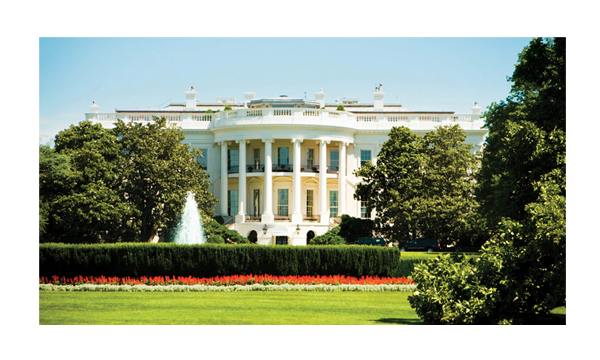
Picture of the White HouseThe new White House Office of Social Innovation and Civic Participation was created without much fanfare. In fact, even though it has been operating for several months, it has never been formally unveiled.
But the office, set up to promote creative and effective ways to tackle social problems, is slowly starting to emerge as a public entity. The White House briefly outlined its goals in a statement last month to announce that the president was proposing $50-million in his 2010 budget for a social-innovation fund. And after months of working behind the scenes, White House officials have started to speak publicly about the office’s plan

The Obama Administration is moving quickly to support the public sector and foster public-private partnerships that foster innovation.

The new White House Office of Social Innovation and Civic Participation,set up to promote creative and effective ways to tackle social problems, is slowly starting to emerge as a public entity. The White House briefly outlined its goals in a statement last month to announce that the president was proposing $50-million in his 2010 budget for a social-innovation fund. And after months of working behind the scenes, White House officials have started to speak publicly about the office’s plan. Read the full article at the Chronicle of Philanthropy.

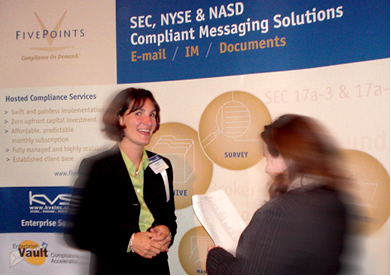
FivePoints Compliance Brochure

We developed the branding, brochure, folder and collateral to successfully launch this technology company which provides email compliance services for the financial sector. We also developed their trade show booth, advertising and other marketing materials.

FivePoints Display


Links


Understanding & Leveraging Your Nonprofit's Lifecycle Stage

I attended the Organizational Health and Nonprofit Lifecycle seminar, held by Don Crocker and John Brother at the Support Center for Nonprofit Management.
Understanding the life cycle is essential to any nonprofit’s continued success, no matter what stage it’s in (Idea/Startup, Growth/Maturity, Turnaround/Terminal Phases).
They first discussed criteria for board development and gave specific advice on steps that a nonprofit in the Idea/Startup phase could take to build a board, including forming a steering committee as a first step, producing an initial event to attract people, and leveraging members’ social networking.
One of the most compelling challenges for all nonprofits, is in marketing and branding. Here’s a short list of key challenges:
Differentiating your organization from others.
Investing in fundraising and marketing infrastructure.
Using the Internet to build your nonprofit’s brand, create visibility, attract a donor base, and develop a community.
They suggest that it is possible to work with other organizations as resources towards addressing these challenges.
Then the audience learned more details on the profile of each stage in a nonprofit’s life cycle, in the areas of Operations, Governance, Leadership, Obstacles, and Opportunities and my realization is that I tend to work with nonprofits in the Growth/Maturity phase.
Here are some specific characteristics of the Growth/Maturity phase:
Operations: 7- 20 years in operation
Governance: board turnover policy and strategy is in place, and power is shared between Executive Director and board
Leadership: since there are many managers on staff, Executive Director must possess good management and communication skills
Obstacles: remaining client-centered rather than policy-bound, keeping staff motivated around mission, building strong financial footing from endowment or reserve, maintaining a programmatic edge, based on a continued relevancy
Opportunity: new staff and board introduce new ideas, organization is known in community, adequate resources enable some risk-taking

Do you know what stage of growth your nonprofit is in? At the Non-For-Profit Leadership Summit VII, Don Crocker and John Brother of the Support Center for Nonprofit Management explained the stages:

Idea Phase: Imagine Inspire
Start Up Phase: The Labor of Love
Growth Phase: Ground & Grow
Maturity Phase: Produce & Sustain
Decline & Turnaround: Review & Renew
Terminal: Merge or Close Gracefully

Continue reading
Volunteering Gets a Boost on CNN

Nonprofits and volunteering are in the news again. CNN online featured a story about a man who was laid off from his Wall Street job and decided to volunteer to work with baboons in Africa. Volunteering was positioned as a good way to spend time between jobs: contributing to society, moving outside of your comfort zone, gaining new skills and perspectives, and potentially reducing your living expenses.

WAKE UP CALL: How is your nonprofit taking advantage of the recession to attract highly-qualified volunteers to help bring about needed change.

UJA-Federation MAP Program Celebrates 25 Years

Last night, the UJA-Federation held a reception celebrating 25 years of its Management Assistance Program, its internal volunteer matching service to provide help to its 150 funded agencies.

MAP consultants have worked on more than 1,100 projects for UJA-Federation beneficiary agencies. Services have included strategic planning, board development, marketing, branding and creative services.

Red Rooster Group has provided pro bono branding services through MAP. The branding we did for ENGAJE!, a joint educational venture to help foster awareness of Jewish values to early childhood teachers was featured in MAP’s 25th Anniversary program. In addition, I was featured in a video of MAP consultants discussing their experiences.

ENGAJE! Stationery

For the ENGAJE! initiative, we created a logo and stationery items, brand manual, as well as invitations and program guide for their successful launch event. We are pleased that these items were selected as showcase examples to be featured in MAP’s 25th Anniversary brochure (shown above).


Links


Quick Tips for Better Pics

As spring rolls around and you are planning your fundraising events, you will undoubtedly want to take photos for use on your website and in your fundraising materials. You’ll want to make sure that you have the best quality images you can t0 reflect positively on your organization. Naturally, it’s best to hire a professional photographer. But if you can’t do that, consider these tips.

Continue reading