3 Easy Steps to Simplify the Prospect Research Process

Simplify Prospect Research

3 Easy Steps to Simplify the Prospect Research Process

Simplify Prospect Research

Many nonprofit professionals view prospect research as overly complicated and time-consuming. That’s because, for a long time, it was! Using multiple research databases, combing through social media, and exploring philanthropic reports consumed time and energy. 

However, the days of complex, manual research processes are behind us. Nowadays, AI tools and nonprofit CRM platforms offer simple solutions to help organizations streamline donor prospecting and earn more through major gifts.

Let’s explore three simple steps you can take to reduce the complexity of your prospecting efforts and find more new donors for your nonprofit organization

Step 1: Clarify the shared traits of your nonprofit’s major donors 

The prospect research process becomes much simpler when you first identify common characteristics among your nonprofit’s major donors. Doing so allows you to guide the prospecting process using hard data by applying historical knowledge to current research. 

Bloomerang’s guide to major donors outlines the following common traits of major giving prospects: 

  • High giving capacity: The exact giving amount that qualifies a major donor varies from nonprofit to nonprofit, but many organizations consider those who can give $10,000 or more as major prospects. 
  • Recent donations: Recent involvement with your nonprofit effectively indicates which supporters are currently engaged in your mission and may respond well to larger giving requests. 
  • Support related causes: Donors contributing large sums to similar organizations may be more inclined to support your cause. For example, donors contributing to local schools may also be interested in supporting an educational-focused nonprofit. Or, major donors to an advocacy-minded nonprofit may have also made significant political donations to candidates with similar beliefs. 
  • Have a long-standing relationship with your nonprofit: Donors who have previously been involved with your mission as volunteers, peer-to-peer fundraisers, advocates, or beneficiaries demonstrate a higher level of commitment to your organization. 
  • Have relationships with current donors: The friends and family members of current major donors may have a favorable view of your organization and be more likely to start giving in significant amounts. 

Ultimately, major donor traits fall into two categories: wealth indicators demonstrating a high giving capacity and affinity or warmth indicators indicating a personal passion for your cause. Both types of indicators must be present to consider an individual as a major giving prospect. 

Step 2: Leverage AI-driven donor prospecting directly in your CRM

After clarifying what you’re looking for in major donor prospects, it’s time to put your technology to work for you. Invest in a donor management software system that offers wealth and warmth insights directly within your nonprofit CRM.

Today’s top CRMs incorporate AI tools to automatically conduct prospect research and help nonprofits quickly identify which individuals in their donor databases will most likely become major donors. Use your CRM solution to: 

  • Screen donors based on the criteria you identified in Step 1. AI prospecting tools can automatically screen your database to identify individuals who exhibit common major donor traits. 
  • Enrich donor profiles with generosity information. Add any missing information to your database with data appends. For example, you can incorporate details about which similar nonprofits donors have given to or reference a timeline of every event the donor has attended. 
  • Identify prospects you may not yet have a relationship with. Robust CRM platforms can even help your nonprofit identify potential donors who may not have connected with your organization yet. You can learn more about these individuals and access tailored insights into how to communicate with them. 

Your CRM should be able to automatically pull information from your other software solutions, such as your fundraising platform or marketing tools, to enrich your current data. Many CRMs offer multiple tools in one platform, or you can use integrations to manage this process. 

Step 3: Prioritize prospects with the help of predictive modeling

Once you’ve leveraged your CRM to identify possible major donors, use predictive AI solutions to organize and sort prospects based on their potential value. We recommend working with a consultant or AI tool specifically designed to help you manage every step of this process. Here’s what the predictive modeling process looks like: 

  • Set up a lead-scoring system. This numerical system will help you organize your prospect list based on which individuals will most likely give large gifts. Prioritize donors with a high giving capacity, strong affinity for your cause, and recent participation in your campaigns or programs. 
  • Focus on donors in the top 2-3% of prospects. Set your sights on prospects at the top of your donor pyramid. Doing so enables you to maximize your return on investment (ROI) by focusing most of your time and attention on your most likely prospects.

At this point, you’re ready to move on to the next step in the prospect research process: building relationships with top prospects!

Next Steps: Steward your prospects

From here, the prospect research process transitions into a donor stewardship campaign. Use these quick tips to kickstart prospect stewardship and engagement: 

  • Use donor data to improve outreach and storytelling. Incorporate the information you’ve learned through prospect research into your messages to potential donors. Identify programs they’ve engaged with, events they’ve attended, or campaigns they’ve supported. Then, send emails, letters, or texts that reference their interests. 
  • Invite donors to get involved with opportunities that match their interests. Encourage donors to register for volunteer opportunities, advocacy campaigns, peer-to-peer fundraising events, and other experiences that align with their passions and skills. 
  • Schedule in-person or virtual meetings. Invite prospective donors to one-on-one in-person or online meetings to cultivate personal connections. Get to know them by asking about their lives and exploring what draws them to your cause. 

Your prospect research and stewardship processes should run simultaneously. Continually update your donor management system with fresh, accurate data about current donors and prospects, including their interests, motivations, and giving patterns. Creating this recurring process allows you to maintain a strong major donor program with a healthy influx of new large gifts. 

6 Donation Page Design Tips to Maximize Online Giving

Tips to Maximize Online Giving

6 Donation Page Design Tips to Maximize Online Giving

Tips to Maximize Online Giving

Staying relevant as a modern, successful nonprofit hinges on your organization’s online presence. Your social media profiles, email newsletters, and website must convey the importance of your mission and lead users to the heart of your online giving strategy: your donation page.

But once they arrive on your donation page, how do you get them to stay? What convinces donors to follow through and click that all-important “Donate” button? What makes them decide to close the page?

While the motivations of individual users vary, there’s plenty your nonprofit can do to optimize your donation page and make it as compelling as possible for the general public. Explore these top tips and web design best practices to get started.

1. Integrate your donation page with your fundraising platform.

If you didn’t use donation form software to create your online giving page, take the time now to ensure that it integrates with your fundraising platform. This is crucial for recording donations, tracking important donor data, and accurately calculating fundraising metrics.

When integrated with your donation page, your software should automatically record details like:

  • Donors’ contact information
  • Donation amounts
  • Giving frequencies
  • Gift specifications (i.e., if it should go toward a specific program)
  • Matching gift eligibility

Then, your platform should create new donor profiles and populate existing ones with these details for future reference. The best platforms will also generate online fundraising reports and dashboards so you can quickly get a bird’s eye view of your progress.

2. Include suggested donation amounts.

While your donation page should always let supporters enter custom amounts, plenty of people may arrive on your page not knowing how much they want to give. They may have a general idea or range they’re considering, but the right nudge could persuade them to give more.

To give these donors structure and inspire larger gifts, add a few suggested amounts to your donation form. Base these numbers on your nonprofit’s average online gift sizes and pair each amount with a tangible impact. Seeing exactly what their donation can do for your cause will help supporters understand the power of their gifts and encourage them to follow through.

The impacts you include with your suggestions should be clear and realistic. For example, an animal shelter might ask donors to give:

  • $50 to pay for an animal’s routine vet visit
  • $100 to supply the shelter with new collars and leashes
  • $250 to cover a pet’s spay/neuter surgery
  • $300 to waive a pet’s adoption fees so they can find a home faster

Along with your suggested donation amounts, your online giving form should include both one-time and recurring gift options. Many organizations set monthly giving as the default to highlight the benefits of recurring donations.

3. Accept various payment methods.

Not everyone wants to give the same way. To make giving as flexible and accessible as possible, use a payment processor that accepts multiple payment types. Your donation page should be able to accept common payment methods like credit cards, ACH payments, and digital wallets like Apple Pay.

If your organization has the infrastructure in place to accept less common, high-impact gifts like stocks or cryptocurrency, list those options, too. Provide links to pages on your website with more information about how to donate these assets, or use an integrated tool to accept them right from your donation page.

4. Keep the text concise and compelling.

Web users who arrive on your donation page expect to find some information about your cause and fundraising needs. However, this doesn’t mean you need full paragraphs detailing your nonprofit’s mission. Keep the focus on what users arrived here to do: donate!

Try to limit the amount of text on the page that’s outside of your actual donation form. If you find yourself struggling to cut down your word count, use these tips:

    • Leverage generative AI: Run your donation page through AI tools like ChatGPT to check for opportunities to be more concise.
    • Explore other organizations’ donation pages: Note what the best pages have in common and what information they deem necessary to include.
    • Run an A/B test: If you’re debating between a few different turns of phrase, try testing each one out on different audiences to see what resonates most with donors.

Once you’ve optimized your donation page, keep these tips in mind for other important pages like peer-to-peer fundraisers. While these campaign pages warrant a bit more information and personalized details, keeping text concise will still lead to a better overall user experience.

5. Balance text and visuals with white space.

The most compelling donation pages are visually appealing—whether they include a striking photo of volunteers or feature a sleek, minimalist design. The look and feel of your donation page matters, so avoid cluttering it with too many images or blocks of text. 

Any visuals you include should have a clear purpose, such as conveying your mission or tugging at prospective donors’ heartstrings. Make sure to balance large graphics with white space and keep your embedded donation form front and center. Ideally, your form should start “above the fold” (visual to users before they scroll) so donors know immediately they’re on the right page.

Additionally, every part of your donation page should adhere to your nonprofit’s branding. This way, you’ll present a cohesive, professional look and reassure donors that the page is trustworthy.

6. Design your donation page for mobile devices.

Nowadays, mobile users account for over 60% of web traffic. This means your donation page must work well (and look good!) for supporters who access it from phones and tablets to secure their donations. Just think about how often you ask donors to give via text or at fundraising events—each time, they’ll arrive on your donation page from their phones!

Mobile users should be able to see, access, and fill out all the important aspects of your page, even from smaller screens. Give them the best experience by following these mobile optimization tips:

  • Use a mobile-responsive design that automatically adapts to different screen sizes.
  • Verify all of the page’s buttons are large enough to tap easily.
  • Compress images and limit video content to improve load times.
  • Run a Google PageSpeed report on the page and implement any recommendations.

After you’ve made changes, manually test your donation page on various screen sizes to double-check that everything works. 

Improving your donation page long-term

These tips are a great starting point for maximizing the effectiveness of your donation page, but true optimization will happen over time. Monitor metrics like bounce rate, conversion rate, and average time on page to see how these strategies work for you and change course as needed. Remember that there’s always room for improvement, so if you want extra help, just reach out.

Looking to improve your donation page or overall fundraising results?

How Nonprofits Can Use AI Effectively With Howard Levy

How Nonprofits Can Use AI Effectively With Howard Levy

The Nonprofit MBA Podcast

AI offers incredible opportunities for nonprofits to work smarter, reach more people, and achieve greater impact—but it’s not about replacing the human touch. Instead, AI should complement human efforts, making it easier for nonprofits to focus on what they do best: building connections, advocating for change, and improving lives.

The key to success lies in starting small, experimenting with tools that align with your mission, and continuously refining your approach. With thoughtful integration, AI can empower your nonprofit to make an even bigger difference.

Are you ready to explore the possibilities? The future of nonprofit work is here—and AI is ready to help you shape it. In today’s podcast, Howard Levy from Red Rooster Group and Stephen Halasnik from Financing Solutions, a leading provider of business loans for nonprofits, discuss how nonprofits can use AI effectively.

Read an Executive Summary or Listen to the Podcast HERE

GUEST SPEAKER: Howard Levy, President of Red Rooster Group

As President of Red Rooster Group, Howard Levy has helped hundreds of nonprofit organizations wake up their brands, raise more money, and reach a higher level of success. He specializes in harnessing behavioral psychology, effective storytelling strategies, and action design principles to motivate people to donate and take action. For the past 2 years, he’s been exploring how nonprofits can harness the power of AI. He’s here to share some insights and inspiration.

HOST: Stephen Halasnik, The Nonprofit MBA Podcast, and Financing Solutions

Stephen Halasnik co-founded Financing Solutions, the leading provider of lines of credit for nonprofits and church financing. The credit line program for nonprofits and churches is fast, easy, inexpensive, and costs nothing to set up, making it a great backup plan when cash flow is temporarily down. Mr. Halasnik is also the host of the popular Nonprofit MBA Podcast. The podcast brings experts to discuss fundraising, nonprofit grants, executive director leadership, nonprofit boards, and other important topics. You can learn more about the nonprofit line of credit program here or call 862-207-4118.

Leveraging AI in Prospect Research: A Quick Nonprofit Guide

Leveraging AI in Prospect Research: A Quick Nonprofit Guide

Artificial intelligence (AI) has become increasingly prevalent in many areas of personal and professional life, but it has especially penetrated the nonprofit sector. As of 2024, 58% of nonprofits reported integrating AI into their communications strategies, and 68% were using it for data analysis. Both of these rates exceed for-profit AI implementation—the results of the same survey for business-to-consumer (B2C) brands were 47% and 64%, respectively.

While AI can be useful in many areas of nonprofit operations and fundraising, one of the most effective is incorporating AI tools into your organization’s prospect research processes. As DonorSearch’s AI fundraising guide explains, by enhancing prospect research with AI insights, “you can take on donor cultivation and stewardship tasks with confidence, designing strategies that you know will resonate with individual prospects and focusing your efforts on the most probable potential donors.”

In this guide, you’ll learn all you need to know about leveraging AI in prospect research. Let’s get started by covering the best tools to use in this process before diving into how to apply them.

AI Tools to Use for Prospect Research

If your nonprofit has leveraged or considered leveraging AI before, you’ve likely come across two main categories of tools: generative and predictive. Generative AI produces original content like written copy and images, while predictive AI analyzes data to project trends and make actionable recommendations. The most effective nonprofit AI strategies involve generative and predictive tools working together. 

For prospect research, there are three types of AI solutions—one predictive and two generative—that will enhance your process most effectively. They are:

  • Predictive modeling. This AI tool uses machine learning to rate potential donors based on their likelihood of responding to outreach, making a major or planned gift, and becoming long-term supporters of your nonprofit. Then, it prioritizes your prospect lists based on these ratings so you can contact the most probable donors first, saving time and resources while setting your organization up to secure more impactful contributions.
  • Prospect reporting. Once you’ve identified top prospects, this solution uses generative AI to compile essential screening data on each potential donor into a concise but detailed report. You can then reference this information as you develop tailored cultivation strategies for each prospect.
  • Content generation. This is the type of AI tool you’re likely most familiar with—the kind that creates communication materials (email drafts, presentation outlines, etc.) in response to prompts. However, there are nonprofit-specific content generators on the market that integrate with predictive modeling tools, allowing you to more easily develop data-driven messages that align with your prospects’ preferences and your nonprofit’s brand.

These solutions don’t replace traditional prospect research tools like your organization’s CRM, third-party screening software, and publicly available data like SEC and FEC records. Instead, they’re meant to help you make sense of the information you gather from these sources and put it into practice more effectively.

Applying AI Prospect Research Insights to the Donor Lifecycle

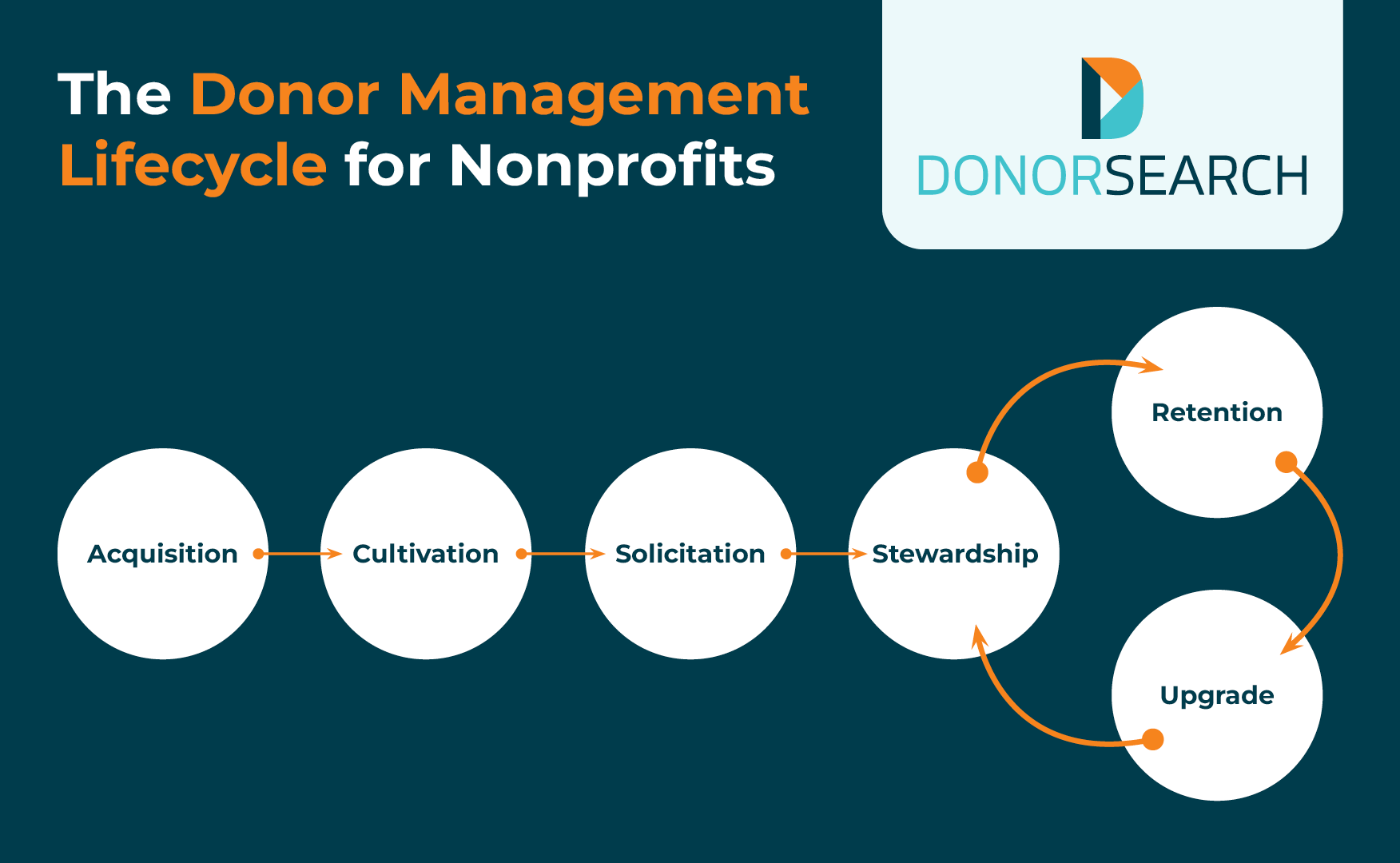
To make the most of prospect research, the process and the information you find shouldn’t be placed on the back burner once you’ve identified donors. Instead, incorporate your prospect research data—and the insights your AI tools provide—at every stage of the donor lifecycle. 

Here is a quick breakdown of how to do this:

  • Acquisition: Use predictive modeling scores to prioritize outreach and prospect reports to choose the best channel to contact each potential donor
  • Cultivation: Generate data-driven materials to guide initial prospect meetings, streamline follow-ups, and use insights to select the right ways to engage prospects in other ways before they give (volunteering, events, etc.)
  • Solicitation: Select a data-backed gift amount and designation to present to each donor, and generate presentation materials and leave-behinds for one-on-one asks
  • Stewardship: Choose methods and create materials to thank donors in a way that makes each of them feel appreciated
  • Retention: Determine the impact information and stories that are most relevant to each donor and re-establish a regular, streamlined communication cadence to keep them engaged
  • Upgrade: Pick the right time to ask each donor to level up their support and decide what upgrades would be reasonable to request.

As you can see, all three types of AI prospect research solutions play essential roles throughout donors’ entire journey with your organization. Continue gathering and analyzing data throughout the process as well so you always have the most up-to-date information on each prospect’s wealth and philanthropic activity to inform your strategy.

A Note on Using AI Responsibly

Although AI can greatly benefit your nonprofit when used effectively, it’s still an emerging field, and there are risks associated with using AI improperly. However, your organization can minimize these risks (and maximize the benefits of AI!) by committing to responsible AI use before you start incorporating it into your prospect research processes.

To help nonprofits like yours leverage AI responsibly, the Fundraising.AI collaborative has developed a framework you can use to inform your organization’s AI guidelines. Some of the areas it covers include:

  • Data security. Especially when used for prospect research, nonprofit AI tools often process personal, sensitive information. As explained in Double the Donation’s donor data management guide, your organization should protect this information by working with trusted AI providers, implementing access controls, encrypting systems, and regularly updating your tools.
  • Inclusiveness. Depending on the data your AI tools are trained on, they could introduce unintended biases into your decision-making and content creation. Actively combat these biases by carefully checking new data inputs and your solutions’ outputs to ensure they represent your organization’s community equitably and fairly.
  • Transparency. Your nonprofit’s donors, board, sponsors, funders, and other stakeholders will likely be interested in how your team leverages AI and the steps you’re taking to ensure it’s used ethically. Clearly communicate your AI policies, methodologies, and results to these audiences to hold your nonprofit accountable to its community.

Additionally, because AI is constantly evolving, it’s essential to stay on top of developments in the field, whether they’re legal, ethical, or technical. Regularly update your policies and create continuous learning opportunities for your team to keep your AI practices—and, therefore, your prospect research activities—up to date.

4 Steps to Successful Peer-to-Peer Team Fundraisers

4 Steps to Successful Peer-to-Peer Team Fundraisers

While artificial intelligence might be on the rise in the nonprofit sector, personal, human connections still reign supreme when it comes to fundraising. Technology can certainly back up your efforts, but most major gifts are given based on one-on-one relationships, personal recommendations are more effective than algorithmic ads, and peer-to-peer campaigns remain one of the most promising types of fundraisers.  

Peer-to-peer fundraisers leverage individual supporters’ connections to earn funding on your behalf. However, participants don’t have to work alone through a peer-to-peer team fundraiser. 

Perfect for schools, sports teams, and advocacy groups, this guide will dive into tips for running a successful team peer-to-peer fundraiser. But first, let’s explain how this twist on a classic fundraiser works. 

What is a Peer-to-Peer Team Fundraiser?

Peer-to-peer fundraisers involve supporters fundraising on your behalf by asking their friends and family to donate to a personalized donation page. This fundraiser leverages supporters’ networks to bring in donors who might not otherwise know about your nonprofit but are motivated to give due to their relationship with the supporter who is fundraising. 

Peer-to-peer campaigns usually involve many individuals fundraising. In a peer-to-peer team fundraiser, a group of people leverage their personal networks and direct donors to a fundraising page shared by the whole team. 

For example, a school might host a peer-to-peer team fundraiser to raise money for the fifth graders’ annual field trip. First, the school would create a fundraising page for each fifth-grade classroom. Then, the school would challenge the classrooms to raise as much as possible and earn more than the other classrooms.

Peer-to-peer team fundraisers combine the effectiveness of peer-to-peer fundraisers’ reliance on personal networks and the motivational power of working as a group to bring in major funding. 

1. Determine Your Format

Peer-to-peer campaigns generally have two possible formats: 

  • Rolling campaigns operate continuously, and supporters can jump in at any time to start their own peer-to-peer fundraiser. Rolling campaigns are easier to do for individual peer-to-peer fundraisers than team-based ones, but it is still possible to host a team fundraiser this way.
  • Deadline campaigns have a specific endpoint, usually marked by an event. For instance, schools might pit classrooms against each other in a read-a-thon-based team fundraiser to earn funding and promote childhood reading. The read-a-thon lasts for a month, classrooms compare their fundraising totals, and the top-earning class earns a pizza party. 

Rolling campaigns inspire continued participation and are a good format for nonprofits running peer-to-peer campaigns where individuals or teams can participate. This format tends to be less competitive since there is no set endpoint where a winner is chosen. 

However, a deadline campaign will likely better serve nonprofits interested in capitalizing on the friendly competition peer-to-peer team fundraisers can inspire. 

2. Recruit Supporters

Peer-to-peer team fundraisers need supporters to fill out those teams. Normally, peer-to-peer campaigns recruit participants like you would recruit volunteers for any other type of initiative. 

For instance, you might send personalized messages to top supporters, share stories about the impact your past campaigns have made, or stress the benefits of participating, such as directly supporting a good cause. 

When adapting to a team fundraiser, your recruitment messages should instead focus on a sense of community and competition. For example, you might create messages like:

We know you care about homeless dogs and cats, and now’s your chance to make an impact! Gather five or more friends to form a team and fundraise for animals in need. All proceeds will support our local shelters, and top teams will be recognized at our year-end event. Prove you’re a true furr-end to pets in need!

Messages like this emphasize the agency of peer-to-peer fundraisers and issue a challenge to supporters, encouraging them to get competitive and do their best to fundraise for your cause. 

3. Host Onboarding Sessions

For the most part, peer-to-peer fundraisers run themselves, and this does doubly so for peer-to-peer team fundraisers, where supporters can work with their teammates to answer questions and overcome challenges. However, your nonprofit should still ensure all fundraisers start off on the right track by hosting onboarding sessions. 

During these training meetings, prepare your fundraising participants by:

  • Walking through any software. Your peer-to-peer fundraising software should be intuitive, but participants will still likely benefit from a brief walkthrough of how your donation tools work. 99Pledge’s guide to team fundraising platforms recommends purchasing from a vendor who will set up your fundraising pages for you, so individual teams won’t need to worry about designing their pages. 
  • Going over behavioral expectations. While individual fundraisers will operate independently, ultimately, they represent your nonprofit. As such, discuss how representatives of your cause are expected to conduct themselves and share brand assets so they can create content consistent with your brand identity
  • Answering questions. In a peer-to-peer team fundraiser, participants can work together to brainstorm solutions and implement creative strategies. However, it’s still normal for new fundraisers to have questions, and your onboarding process is the perfect time to answer them. 

If your nonprofit is hosting a rolling peer-to-peer campaign, consider if any changes at your organization will impact the supporters who are fundraising on your behalf. For instance, if you’re changing CRMs and need to sync your peer-to-peer platform to your new software, implement a thorough change management strategy so supporters using your peer-to-peer tools won’t be interrupted or will only need to pause their campaigns for a short period of time.

4. Instill Friendly Competition

Peer-to-peer team fundraisers should encourage teams to compete to try to outraise one another. Supporters ultimately understand that rival teams are still raising money for the same cause, but they’ll also feel challenged to fundraise as much as they can knowing that others are trying to outdo them. 

You can encourage competition by:

  • Naming teams. Give teams a sense of identity by letting them name themselves. You may even take this a step further by assigning them team colors or mascots. 
  • Creating a leaderboard. Host a leaderboard on your website that teams can track to see their real-time progress. Every time a donation is made to one team’s donation page, your leaderboard will update to show who earns the most for your cause. 
  • Offering a prize. While participants want to support a good cause, an award is also always appreciated. This might be a trophy, a pizza party, or free t-shirts. 

No matter how well teams performed, be sure to thank all participants for their hard work. eCardWiget’s donor recognition guide shares one memorable way to do this: eCards. eCards take typical thank-you emails up a notch by adding eye-catching visuals that represent your brand, like this one from the nonprofit Youth for Understanding: 

Additionally, thank those who contribute to your peer-to-peer campaign to boost donor retention. First-time peer-to-peer donors can be difficult to retain since they’re likely giving due to a connection with one of your fundraiser’s participants rather than your cause. Your thank-you message is an opportunity to invite them to explore your nonprofit and encourage them to continue donating even after your peer-to-peer campaign wraps up.

Peer-to-peer team fundraisers are an effective way to engage your supporters, raise funds, and spread awareness of your cause to new audiences. Of course, if it’s your first time running one of these campaigns, it may be overwhelming. If this is the case, consider working with a fundraising consultant to ensure your nonprofit is ready and implement the best practices for managing a successful campaign. 

Hosting Successful Virtual Fundraising Events: 5 Considerations

Hosting Successful Virtual Fundraising Events: 5 Considerations

Modern life is more fast-paced than ever. In fact, according to a recent poll, 60% of American adults believe there aren’t enough hours in the day to get everything done. Many of your nonprofit’s donors likely feel the same. They may have every intention to support your cause, but life gets in the way.

That’s where virtual fundraising events come in—eliminating the need for your supporters to worry about travel, childcare, or mobility issues when attending. Plus, there are plenty of virtual event ideas to engage your community, from auctions to scavenger hunts.

With all of your attendees separated by screens, however, planning a seamless and engaging event experience is essential. Let’s walk through five considerations to set your next virtual fundraising event up for success.

1. Building a Virtual Event Toolkit

Before you can plan and execute a stand-out virtual event, you need reliable, comprehensive technology to facilitate it.

For example, if your nonprofit is planning a virtual auction, you might research online auction software with tools and features such as:

  • Mobile bidding. Streamline the bidding process by allowing your attendees to view, track, and update their bids in real time from their smartphones. 
  • Livestreaming. Capture the live excitement and broadcast your event in real time, helping attendees feel like part of the action. Many live-streaming platforms include chat features, enabling guests to connect with each other and find a sense of community from afar.
  • Sponsorships. Integrating sponsorship features into your event software allows you to showcase partners prominently, offering them valuable exposure while helping you cut down on event costs and boost your fundraising potential.
  • Payment processing. Efficient payment processing solutions are crucial for handling donations and bids quickly and securely, providing attendees with a hassle-free way to support your cause during the event.

Once you’ve done your research, it’s time to choose the right virtual event software—this decision involves setting a budget, reading reviews, and requesting demos. Take this opportunity to identify any additional tools that could enhance your event and streamline processes for your planning team, such as generative AI platforms to support marketing content creation.

2. Securing Corporate Sponsorships

According to 360MatchPro, corporate sponsorships are a mutually beneficial partnership between a company and a nonprofit. The company funds your event or project, and in exchange, your organization publicly recognizes the support on its website and other marketing materials.

Follow these best practices when securing sponsorships for your nonprofit:

  • Research local businesses that align with your mission and values. Start by identifying local companies whose corporate social responsibility goals match your nonprofit’s mission. This alignment increases the chances of securing a sponsorship and fosters a long-term partnership that benefits both parties.
  • Create virtual event sponsorship packages. Design tiered sponsorship packages that offer businesses different levels of visibility and benefits. These packages can include options like logo placement on event materials, mentions during the event, and featured content on social media platforms.
  • Draft up a sponsorship agreement. Prepare a clear and detailed agreement that defines what each party can expect and gain from the partnership. It should detail the length of the sponsorship, ways your sponsor will be recognized, and all logistical aspects to ensure everyone understands their roles and contributions.

Beyond covering event costs, many companies are willing to provide volunteers and in-kind donations, such as auction items. These could include signed memorabilia from popular sports teams, exclusive experiences like private vineyard tours or cooking classes with renowned chefs, or high-tech gadgets such as the latest smartphone or tablet. 

3. Promoting the Event

While virtual events allow your nonprofit to reach a broader audience, you still need to get the word out to these potential attendees first.

Incorporate a variety of marketing channels into your strategy, such as:

  • Your website. This should serve as the central hub for your event information. Update it regularly with event details, compelling calls to action, and easy registration links to ensure visitors have all they need in one place.
  • Email. Utilize email campaigns to connect with both past and potential supporters. Craft messages that spotlight the special features of your virtual event, and send personalized invitations that speak to the interests of different audience segments.
  • Social media. Leverage your social media platforms to create buzz and foster engagement around your event. Post regular updates, behind-the-scenes content, and interactive posts and polls that encourage followers to share and comment.
  • Text messages. Send concise, timely text message reminders and updates leading up to your event. This direct line of communication is perfect for last-minute announcements and helps keep your event fresh in everyone’s minds.

To maximize the impact of these efforts, use the information in your nonprofit’s database to segment your audience and send tailored communications to each group. For instance, you might send a message to past event attendees highlighting previous event moments they might have enjoyed and promoting new guest appearances at your upcoming event.

4. Engaging Virtual Attendees

While virtual fundraising events offer many benefits, the format can make it challenging for attendees to feel connected with one another. It’s easy for them to get distracted by their surroundings when participating through a screen.

Use these tips to maintain attendee engagement throughout your virtual fundraising event:

  • Create live polls and Q&A sessions. These interactive elements keep your guests actively involved and allow them to share their opinions, making your event more personalized and responsive to your audience’s interests.
  • Incorporate gamification through challenges and quizzes. Spice up your event with interactive quizzes about your cause or fun challenges, such as a virtual scavenger hunt. These elements keep the energy high and are a great way to break up the fundraiser aspects of your event. 
  • Use breakout rooms to encourage attendees to socialize. Facilitate smaller, more intimate group interactions with breakout rooms. This setting allows attendees to discuss topics in depth, network with their peers, and build connections that can deepen their sense of community and involvement.

Put yourself in an attendee’s shoes. What would inspire you to attend a virtual fundraising event? Many people are drawn to help make a difference and connect with like-minded individuals who are passionate about the same cause. Use these insights to guide the engagement strategies you implement during your event.

5. Follow Up After the Event

A successful nonprofit event not only fulfills its immediate fundraising goals but also sets the stage for higher attendance and engagement the next time around. Immediately following your event, SchoolAuction.net recommends sending personalized thank-you messages to attendees without any additional monetary requests. Instead, focus on the impact of their donations and everything you’ll be able to accomplish thanks to their support.

To effectively gauge attendee satisfaction and gather valuable insights, consider sending a post-event survey. You might ask questions such as:

  • On a scale of 1-5, how satisfied were you with your overall experience?
  • What did you enjoy most about the event?
  • On a scale of 1-5, how easy was it to access and navigate the event?
  • What improvements, if any, would you like to see at our next event?
  • Would you attend another virtual event hosted by our organization? Why or why not?

Although it may not be possible to act on every piece of feedback, analyzing these responses will help you understand which elements of your event were most effective and which areas you should prioritize improving in the future.

Track metrics such as attendance, total funds raised, and average donation amount to assess your virtual event performance. By doing so, you’ll be able to make strategic improvements and plan more successful virtual events year after year.

AI for Good: How Nonprofits Can Use Artificial Intelligence

AI for Good: How Nonprofits Can Use Artificial Intelligence

Technology moves quickly; and organizations in every industry—including the nonprofit sector—are eager to keep up. With major advances in artificial intelligence (AI), it’s only natural that many nonprofits are wondering whether they should use this technology and what the ramifications of using it are.

In this brief walkthrough, we’ll go over how AI can play a role in data-driven marketing, day-to-day operations, and long-term nonprofit planning. Before exploring practical applications of AI, let’s first explain exactly what AI is.

What is AI for Nonprofits?

Today’s AI platforms typically perform one of two tasks: content generation or data prediction. Let’s take a close look at these two AI types:

  • Generative AI. Most popular AI platforms, like ChatGPT, are language learning models (LLM), which can mimic human writing by analyzing large, text-based datasets and using that information to make educated guesses about what words and phrases make sense together. AI that generates images, videos, and music operates similarly, using pre-existing content to create new work.
  • Predictive AI. Nonprofits have been using predictive AI tools for years before the rise of AI in the public zeitgeist. These tools can analyze your nonprofit’s data to predict future trends. For instance, you might use AI to examine your total fundraising revenue every month for the past five years and predict how much you’ll be able to raise each month next year.

Ultimately, AI is a tool, and the better data you provide it with, the better your results will be. With that in mind, let’s explore how nonprofits can use generative and predictive AI.

Generative AI

Generative AI, as the name implies, generates content. As such, it has several potential use cases for nonprofits. A few of these include:

Content Creation

Large Language Models (LLMs) are designed to create written content, from fundraising emails to presentations to flyers and more. 

While AI should not be your sole means of copywriting, it can still be useful in your content creation process. A few applications of AI include:

  • Brainstorming. While AI might have quality issues, it excels at quantity. For example, you might ask AI to generate 20, 50, or even 100 blog topic ideas and pick out the best ones for your copywriters to write.
  • Outlining. AI can quickly assemble rough outlines for a variety of content types. This is especially useful for content with rigid formatting. For instance, you might ask AI to outline a request for proposal (RFP) and fill in the details for each potential partner yourself.
  • Proofreading. LLMs have existed since long before ChatGPT in the form of spell checkers. Use AI to catch spelling, grammar, and stylistic errors in your content.

Some types of written content are better suited for generative AI than others. For instance, a story from one of your beneficiaries likely needs little, if any, input from AI, whereas a thank-you message template could be almost entirely AI-created.

Dangers of AI

Due to its limitations, it’s best to view AI as your partner, rather than relying on it exclusively to generate your content. Some issues with AI include:

  • False information. AI often makes up facts and reports false information as if it were true.
  • Unoriginal content. AI cannot perform its own research or make connections the way a human can. As a result, AI content is often vague or generic.
  • An “AI style” tone. Since AI platforms base their outputs on data and algorithms, the resulting writing can lack the human touch that skilled human writers provide. Consequently, most AI writing sounds similar to other content written by AI, which can hurt your branding and fail to resonate with your audience unless you train it to generate content in your organization’s brand voice.”
  • Privacy and ethical considerations. Talk with your legal team about how you use donor information and know that unless you are using a proprietary AI system, all information you feed into AI (and that it generates for you), is fed back into its algorithm. 

Administrative Tasks

Additionally, LLMs can analyze writing for your nonprofit. For instance, Zoom and other meeting systems can transcribe and summarize conversations, and generate To Do lists.

This is just one example of the role AI can play in administrative tasks. From scheduling to email management, AI can step in to handle time-consuming tasks and generate basic messages that don’t require a human touch.

Predictive AI

AI learns by analyzing data. As such, predictive AI can assess your nonprofit’s past data to make educated guesses about your organization’s future.

For instance, Deep Sync’s guide to marketing analytics explains ways predictive analytics can make sense of your data:

  • Learn about your supporters. Analyze your donors’ actions to find behavioral trends. For example, your AI software might discover the characteristics of a donor at risk of lapsing or a supporter who is likely to be receptive to an upgrade request.
  • Build lookalike audiences. Some AI tools can use your donor data to build an AI-powered lookalike audience, helping you reach new prospective donors with similar attributes to your current donors.
  • Customize donation forms. Using predictive analysis, AI is being used to serve up custom donation amounts on donation forms to specific donors by analyzing the donor’s giving history and combining that with other data (such as the user’s IP address).
  • Increase revenue. Data-informed decisions typically produce more positive results. For nonprofits, this means improved fundraising, leading to increased growth and capacity to fulfill your mission.

To ensure your AI has extensive data needed to make it useful, you may need to expand and refine your data collection practices. Look to collect first-party data at every touchpoint with your audience — such as on donation forms, registration forms, event registration, social media polls, etc. All of this should be fed into your constituent relationship management platform (CRM).

Artificial intelligence is a flexible tool, and when used right, it can elevate your nonprofit’s efficiency and effectiveness. Get started with AI by researching tools designed to complete the content creation, administrative, and analytic tasks you need to be done.

How Nonprofits Can Keep Their Brands Relevant With Howard Levy

How Nonprofits Can Keep Their Brands Relevant With Howard Levy

The Nonprofit MBA Podcast

Keeping a nonprofit brand relevant is an ongoing process that requires a strategic and proactive approach. By staying true to the mission, adapting to societal changes, engaging effectively with the audience, leveraging technology, innovating programs and services, building trust and transparency, and investing in brand identity, nonprofits can ensure their brand remains vital and impactful. In such a dynamic world of ours, a relevant nonprofit brand is not just an asset—it’s a necessity for lasting impact and success. In today’s podcast, Howard Levy from Red Rooster Group and Stephen Halasnik from Financing Solutions, a leading provider of business loans for nonprofits, discuss how nonprofits can keep their brands relevant.

Read an Executive Summary or Listen to the Podcast HERE

GUEST SPEAKER: Howard Levy, President of Red Rooster Group

Howard Levy is President of Red Rooster Group, and he’s been helping nonprofit organizations overcome hurdles and inertia to wake up their brands and achieve their missions for decades. Right out of college, he founded one of the first marketing agencies focused specifically on the needs of the nonprofit sector. In the three decades since, he’s helped hundreds of organizations across a range of causes to revitalize their brands, shore up their marketing, and raise millions for their organizations.

HOST: Stephen Halasnik, The Nonprofit MBA Podcast, and Financing Solutions

Stephen Halasnik co-founded Financing Solutions, the leading provider of lines of credit for nonprofits and church financing. The credit line program for nonprofits and churches is fast, easy, inexpensive, and costs nothing to set up, making it a great backup plan when cash flow is temporarily down. Mr. Halasnik is also the host of the popular Nonprofit MBA Podcast. The podcast brings experts to discuss fundraising, nonprofit grants, executive director leadership, nonprofit boards, and other important topics. You can learn more about the nonprofit line of credit program here or call 862-207-4118.

Nonprofit Impact Reports: How to Create and Share Them

Collage of woman holding document with graphic of impact report

Nonprofit Impact Reports

How to Create and Share Them

Collage of woman holding document with graphic of impact report

Imagine you’re a donor. You hear about a nonprofit’s cause, feel compelled to support it, and donate through one of the organization’s various fundraising methods. After clicking “Submit,” your work is done.

As a nonprofit professional, you know that this seemingly simple process is actually far from simple—it takes a lot to spread awareness of your cause, cultivate relationships with donors, and use their contributions wisely to drive your mission-centric tasks. 

That’s why nonprofit impact reports are essential to building trust with donors and encouraging continued support. These reports detail your organization’s progress and achievements, bridging the gap between donors’ contributions and the tangible effects of your work. Let’s take a closer look at the steps your nonprofit should take to create your own impact report.

1. Plan and Prepare Your Materials

Foundation Group describes nonprofit bookkeeping as the first step your organization must take to prepare for every deep dive into your assets, including impact reports. Since the purpose of the report is to show how your organization turns donations into meaningful results, your bookkeeping data is the first place you should look. 

Other than financial data, there are a few other elements most nonprofit impact reports include:

  • Opening statement, which is a brief introduction at the beginning of your report
  • Impact numbers, including key metrics and statistics that quantify your nonprofit’s achievements and impact
  • Updates and announcements regarding significant developments in your nonprofit within the time frame covered by the report
  • Stories and quotes from beneficiaries, volunteers, donors, staff members, board members, and other people deeply involved in your organization
  • Visuals such as photos, videos, infographics, and charts used to demonstrate the power of your nonprofit’s work

If you need help determining what elements should be included, start by establishing the primary goals of the report based on your target audience. This will help you narrow down elements to include. Then, start gathering the data you’ll need to include. You may delegate data collection to a specific team to streamline the task. Be sure to establish clear deadlines for when all data should be consolidated.

2. Choose a Format

Next, use your data to gauge how long your impact report should be and how you’ll structure it. Organize each element into clear sections, such as:

  • Introduction
  • Activities
  • Outcomes
  • Financial data
  • Stories 

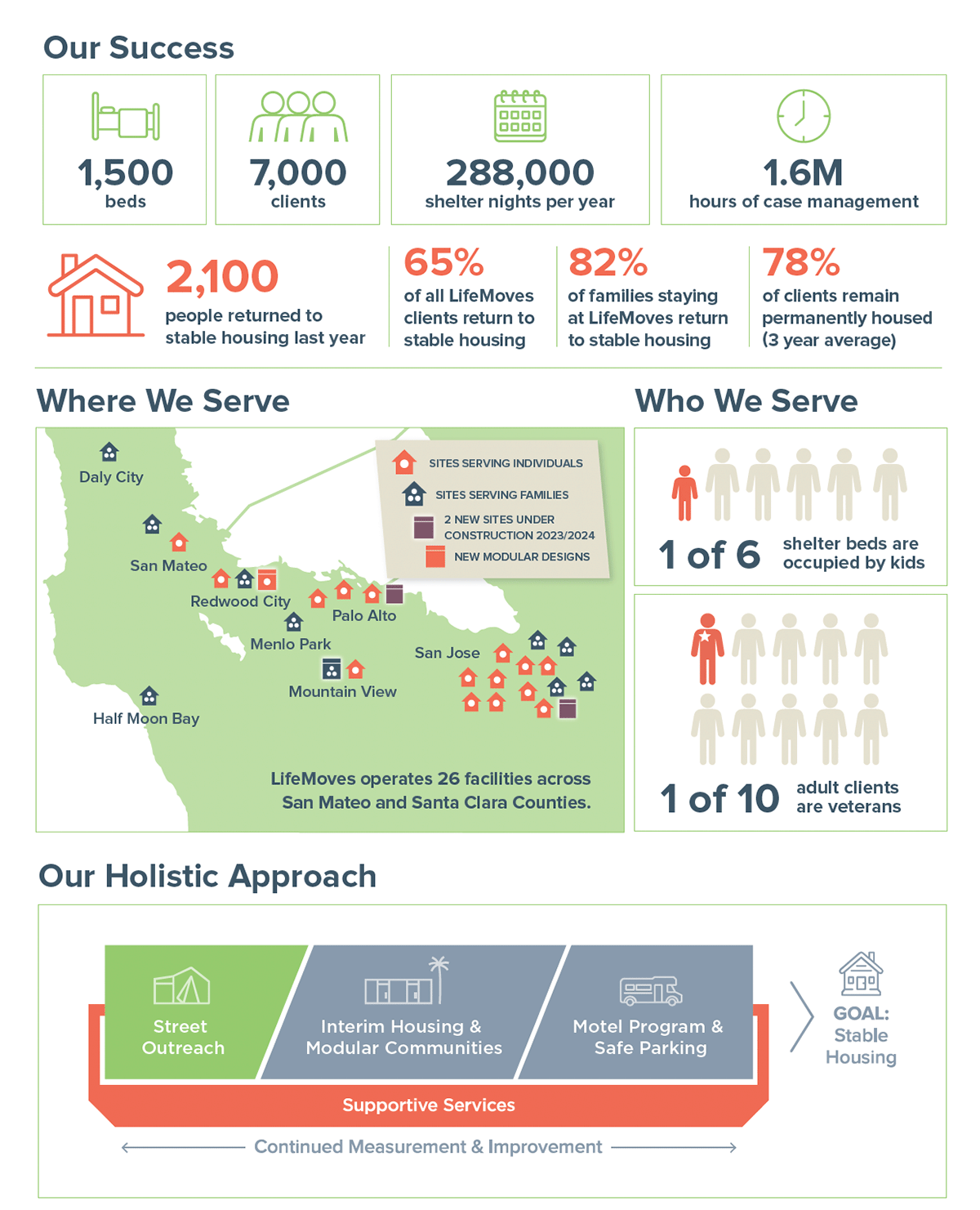
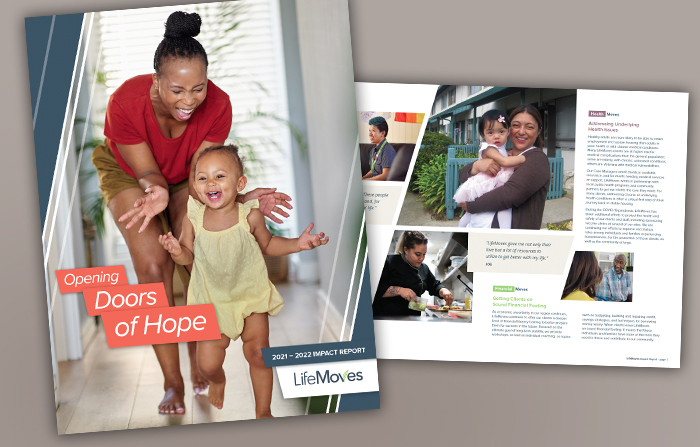
For example, consider the categories included in this example of a nonprofit impact report from LifeMoves:

Impact report page showing impact measurements

This report breaks down Lifemoves’s activities into several categories: location, target population, approach, and results. In addition to using clear categories, the report uses infographics and illustrations to condense data points into an eye-catching summary.

As you begin sorting your content into their respective categories, you’ll begin to have an idea of the layout your report should follow. Use this outline to decide how you’ll format the report. For example, will it exist as a page on your website or a downloadable file?

When choosing a format, prioritize readability and accessibility. Remember, the goal is to break down your nonprofit’s complex activities into an easily digestible report. It should be well-organized so all readers can glean valuable insights.

3. Fill in The Details

With a basic plan in mind for what you’ll include and how you’ll structure your report, it’s time to start filling it in! Start with a compelling introduction to capture readers’ attention and clarify the purpose of the report, then dive into the data you want to share.

Treat your report like a window into your nonprofit’s behind-the-scenes work. For example, you might briefly explain what a 501(c)(3) is and how your organization is committed to maintaining that status. This helps donors better understand the way your nonprofit operates, which, in turn, will increase their trust in your organization. 

Use cohesive language and branding throughout the report. Break down any industry terms and offer insights for each data point you provide. Saying that your program helped 7,000 people, for example, would be less significant to readers without the context that your program only reached 3,000 the year before.

4. Publish & Share Your Report

While it’s clear you should share your report with existing donors and stakeholders, you should also show it to prospective supporters. Use a variety of channels to share your report, including:

  • Your website: Whether your report exists as its own page or is simply featured as a downloadable resource, connecting it to your nonprofit’s website is vital to directing readers to learn more about your organization. For example, the activities of a private foundation will differ greatly from those of a public charity.
  • Emails: Send your impact report to your email list using segmentation and personalized messages to pique interest. You may contextualize the report differently for volunteers, for example, than you would for major donors. Use snippets and quick highlights in the email to encourage recipients to read through the report.
  • Social media: Make your report stand out on social media by recapping key findings and impactful statistics in visually appealing ways across various channels. Post images, videos, and other visual elements included in your report to quickly capture followers’ attention and compel them to read the full report. 

You can also encourage your community to explore the report by hosting a live webinar or event to go over the report’s data. For example, discussing a specific program’s performance, as summarized in the impact report, can help your team identify areas for improvement and show your community where you need their help the most.

While your nonprofit’s impact report is not a fundraising channel, it still holds immense power to compel readers to give. Approach the report as a story in which your supporters are the heroes—at the end of the day, they’re the ones who made your accomplishments possible. Don’t be afraid to include calls to action throughout your report to remind readers that their involvement is still needed.

Nonprofit Impact Reports

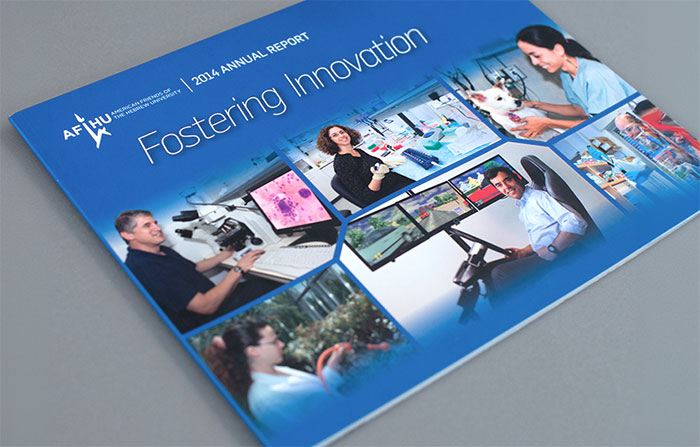
Cover of annual report for American Friends of the Hebrew University of Jerusalem
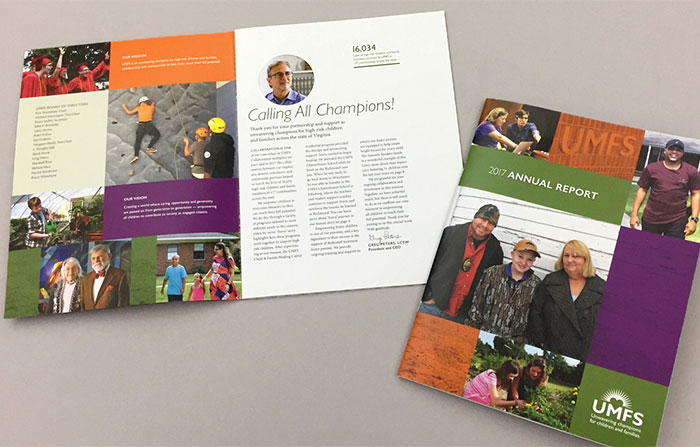
Cover and spread of UMFS annual report

3 Tips to Use Donor Data to Improve Nonprofit Storytelling

3 Tips to Use Donor Data to Improve Nonprofit Storytelling

Throughout the course of managing your nonprofit’s donors, you likely gather a lot of information about them. Your donor data is a treasure trove of insights about the individuals who power your nonprofit’s mission.

In addition to supporting your fundraising, relationship-building, and prospect research efforts, did you know donor data can also play a supporting role in nonprofit storytelling? Donor data can help you tell more impactful stories and tailor your storytelling to each donor’s preferences.

In this guide, we’ll explore these three tips for using donor data to enhance your storytelling efforts: 

  1. Incorporate data into your impact stories.
  2. Use donor data to enhance social proof. 
  3. Develop donor segments for tailored outreach.

Data can enhance your storytelling in two primary ways: it can support your narratives with credible facts and help you choose the right ways to tell stories based on donors’ interests. These tips will help you make the most of these benefits to tell stories that inspire your audience to get more deeply involved in your mission. 

1. Incorporate data into your impact stories.

Data can help your audience understand complex concepts or provide context for trends and patterns. However,  data points on their own aren’t the most engaging addition to your marketing efforts. 

Marketing research has found that stories are much more memorable than facts alone (some figures say stories are 22 times more likely to be remembered). Stories include rich details and emotional moments that provide context for data. 

That’s why you should seek to intertwine narrative storytelling with hard facts and data. Doing so will help you tell stories that not only have an impact but also stick with donors well after they hear them. 

Enhance your data storytelling by using data to: 

    • Show results and progress made over time. For example, perhaps your nonprofit has expanded its geographic reach over the years and you want to tell a story about your outreach into new communities. An interactive map and timeline can illustrate this progress and show donors the depth of your impact. 
    • Explain trends and patterns. Let’s say you’ve noticed a new trend at your nonprofit of more volunteers getting involved with peer-to-peer fundraising. By sharing data about how many volunteers participate in fundraising, you can illustrate this trend and inspire more volunteers to get involved. 
  • Break down complex topics. Your nonprofit’s mission could involve complex topics like research or complicated legal scenarios. Using data, especially infographics, is an effective way to make these concepts easier to understand. 

Incorporate these data storytelling examples into nonprofit marketing materials, from your annual report to your monthly newsletter. Make your stories more engaging by combining written text, data visualizations, and images that bring your tales to life and make them even more memorable. 

2. Use donor data to enhance social proof. 

Donor data can help you tell more compelling stories to potential donors by leveraging social proof. Social proof is the concept that people will imitate the behaviors of others in a given situation. 

Incorporating social proof into your nonprofit’s marketing and storytelling efforts can help you recruit new supporters and solidify relationships with existing donors. Here are a few ways you can increase donor engagement using data-driven social proof: 

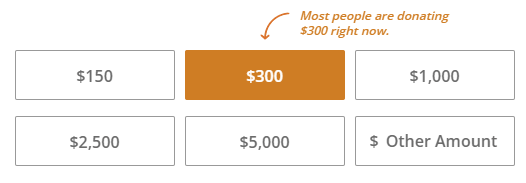
    • Drive conversions on your online donation form. Including data on your donation page can help you increase online giving. For example, you could reference past donation trends to offer suggested donation amounts and highlight the most popular donation amount. This can influence new donors to choose that amount to align with established norms. Check out an example of this on the CARE online donation page:
Suggested donation amounts on the CARE donation form. The $300 donation amount is highlighted with a note saying “Most people are donating $300 right now.”
  • Increase involvement in giving programs. Supporters may be interested in joining certain giving programs at your organization, like your monthly giving program, but need extra encouragement to get involved. Compile data about current donors to give prospective supporters the additional motivation they need. For instance, you could include a note on your online giving page that says 70% of all your nonprofit’s donors are members of your monthly giving program. 
  • Recruit more advocates. Social proof can also help you recruit more supporters to advocate for your mission, whether through peer-to-peer fundraising, word-of-mouth promotions, or full-fledged advocacy campaigns. For example, you could share that 97% of current donors say they feel more connected to their fellow community members after joining your advocacy program.  

Ultimately, most people just want to feel part of something bigger than themselves, and that motivates many individuals to support nonprofits over the long term. You can inspire greater participation in your programs by enhancing the feeling of community among supporters and using data to demonstrate the power of your donor base. 

3. Develop donor segments for tailored outreach.

In addition to enhancing your stories themselves, the other major way that donor data can support your storytelling efforts is by helping you develop tailored messaging approaches that fit each donor’s unique needs and interests. 

Naturally, different types of stories will resonate with different segments. Determine which stories will resonate with each audience by using donor data to group audience members in a process called segmentation. According to Bloomerang’s donor segmentation guide, this process involves “separating your nonprofit supporters into groups based on common qualities and characteristics they share.” 

To segment donors, you’ll use your nonprofit’s CRM database to filter donors based on certain criteria and create dedicated groups based on the patterns that emerge. For example, segments can be based on:

  • How recently donors started supporting your nonprofit (whether new donors, established donors, or long-time donors) 
  • How frequently donors give (annually, quarterly, monthly, sporadically, etc.) 
  • How much donors give (this could include major, mid-level, and small donors) 
  • What motivates donors to give (whether past involvement as a beneficiary, participation as a volunteer, or a strong personal conviction for your mission) 

After creating these segments, strategize ways to reach out to each group using storytelling techniques that resonate with them. Let’s say you’re creating a storytelling and marketing strategy for an upcoming crowdfunding campaign. You could segment donors based on the reason they give to your nonprofit to send each group stories that resonate with their motivations. 

For instance, donors who give because they’re former beneficiaries would likely be interested in stories about other beneficiaries who you’ve been able to support recently. Donors who also volunteer may respond positively to stories about how donations keep your volunteer program stocked with the resources it needs to be successful. 

Donors will be more likely to give to your upcoming campaign when you make an effort to connect with them using messages that resonate with their values and life experiences. 

Although it may seem like cold, hard data and the emotional beats of nonprofit storytelling would be odds, the truth is they can work together to enhance your organization’s overall marketing approach. Data can help you understand your audience as individuals to craft stories that speak to them on multiple levels. Ultimately, this allows you to grow stronger bonds with existing donors and expand your reach to new audiences. 

Event Networking Made Easy

Event Networking Made Easy

5 Tips to Maximize Connections

Attending a nonprofit event or conference involves more than just learning about your industry or hearing from experts in your field. This in-person experience allows you to form valuable connections with others and build relationships that can propel your career forward.

When your organization hosts this type of event, you’ll want your attendees to get the most out of it as possible. One of the top ways to create value for your attendees and provide a memorable experience is to facilitate networking opportunities.

By prioritizing networking opportunities, you’ll not only help attendees mingle but also achieve a higher return on investment (ROI) due to the increased value you’ll offer event participants. Check out these tips for maximizing attendee connections that your nonprofit can easily implement for your next event.

1. Use Attendee Badges

During the check-in process, you may provide attendee badges to help guests identify each other and capture event analytics using the attached QR codes. These badges are ideal for networking because they allow attendees to easily learn more about each other and engage in conversation.

To enhance their networking capabilities, make sure your badges feature:

  • Your event or nonprofit logo. Your badges should reflect your organization’s branding and reinforce the connection between your event and nonprofit. If your event has a logo of its own, make sure to include it on the badges as well.
  • The attendee’s name. Make it easy for attendees to learn and remember each other’s names by placing them on their badges. Ensure the font size is large enough for attendees to read.
  • The attendee’s role. Including each attendee’s job title and organization on their badges can break the ice during networking conversations. For instance, if two attendees find that they are both volunteer coordinators or work for animal-related nonprofits, that similarity can form the basis of their connection.
  • QR code. Use badge QR codes to scan attendees into specific speaker or networking sessions. Afterward, you can use your event management platform to analyze the resulting data and determine which opportunities were most popular.

Additionally, your badges should feature an eye-catching design that matches your event or nonprofit’s branding to add consistency throughout your event.

2. Offer Designated Networking Areas

Sometimes, the largest barrier to event networking is the lack of a quiet, uncrowded space to meet with fellow attendees and engage in conversation. To solve this problem, consider sectioning off specific areas of your event venue intended for networking. 

Examples of potential networking areas include:

  • Lounges with comfortable seating and a relaxed atmosphere
  • Networking zones with high-top tables
  • Coffee and refreshment stations
  • Outdoor spaces like patios or courtyards
  • Private meeting or conference rooms

No matter what your networking areas look like, they should be accessible and conducive to conversation. Remember to keep potential networking spaces in mind when choosing a venue to ensure your attendees have ample room to meet and chat with each other.

3. Enable Appointment Booking

When looking for the right event or conference app, there are many considerations to keep in mind. The platform you select should support your goals and be easy for attendees, sponsors, and staff members alike to use.

If networking is a top priority for your team, seek out an app that supports appointment booking. Here’s an example of what the attendee networking process may look like with appointment booking:

  1. Attendees create profiles within your event app that contain their name, contact information, and employment information.
  2. An attendee named Brian Daniels briefly meets another attendee named Ella Smith in between speaker sessions. They soon realize they are both board members of environmental organizations and would benefit from meeting to discuss their roles.
  3. Later in the day, Brian searches for Ella’s profile within the event app.
  4. Brian requests to schedule a meeting with Ella through the app.
  5. Ella receives a notification and accepts Brian’s invitation.
  6. Brian and Ella meet in a networking area of the venue and exchange ideas.

What makes the appointment booking feature so integral to event networking is its ability to streamline networking communications and spark further collaboration. While Brian and Ella met in person during the event, they quickly got wrapped up in the day’s agenda and didn’t get a chance to have a proper conversation at the time. With appointment booking, they had the opportunity to choose a time during the event that they could both dedicate to fostering a connection and easily set up a meeting.

4. Create a Networking Challenge

In the event world, there are tried and true ways to engage attendees, from hosting raffles to creating interactive booths. However, one of the most impactful methods for grabbing attendees’ attention is gamification.

Gamification involves incorporating game-like elements and challenges into your event to generate excitement and develop healthy competition among attendees. The challenges you create may use points, leaderboards, and prizes and will depend on your event’s specific goals.

To encourage networking, try creating a challenge in which attendees earn points for each new connection they form or appointment they book at your event. At the end of the event, grant the attendee who earned the most points a prize like branded merchandise or free admission to your next event.

EventMobi’s event gamification guide discusses how real companies and organizations have used gamification to successfully fuel their own networking goals. Specifically, they mention how TD Bank developed a networking game for their Diversity & Inclusion Event that kept attendees engaged and excited about the experience.

5. Provide Post-event Networking Opportunities

Networking doesn’t have to end when your event does. Help your attendees build upon the relationships they formed at your event by providing post-event networking opportunities.

For example, eCardWidget’s work eCard software guide explains how you can use eCards to encourage attendee connections. Attendees can make interactive eCards branded to your organization and send them to fellow attendees they met at your event, thanking them for their time, inviting them to connect on LinkedIn, or setting up another meeting.

You can also help attendees form new connections through your event platform by opening up the activity feed to attendee submissions even after the event has ended. Guests can post their images, thoughts, and reactions to the event and interact with each other’s content. Then, they can click on the profiles of fellow attendees and network with them.

Networking opportunities can be a big selling point that draws attendees in and encourages them to sign up for your event. Promote your networking offerings in your marketing materials, and emphasize how attending your event will help attendees forge valuable connections.

What the Liberals Don’t Understand About Conservatives

Avoiding Perspective Bias by Connecting With People’s Identities

It’s a constant refrain: this is the most consequential election ever. Democratic pundits are getting their knickers in a twist about a possible Trump victory and the ostensible devastation that it will bring. “We must win. Biden is doing a great job — if only more people knew about his accomplishments, they would vote for him.”

But does this argument hold?

Some polls show that this knowledge will persuade some people. But knowledge has not moved people when it comes to taking vaccines. Or on climate change. Or on the claims of a stolen election. Why would more facts make a difference now?

The liberal argument suffers from perspective bias.

Fundamental differences exist between the ways liberals and conservatives see the world, and using one perspective (a fact-based approach) to try to convince the other party is not an effective solution. 

This deficit of insight is critical. Despite the huge bifurcation of the electorate, persuadable voters are out there and can be reached if their motivations are understood.

To effectively communicate with Republicans or Independent voters (or any marketing audience), perspective bias must be overcome. Arguments must be crafted around other people’s worldviews, values, and identities. Failure to do so risks creating a message that falls on deaf ears or, worse, alienates the intended audience.

So, what are the primary ways our perspective can blind us?

The Importance of Identity

The great dislocation in this country disproportionately affects lower and middle-income people. While the elites laud globalization for connecting the international economy — lifting millions out of poverty and creating middle classes in India and China — they have not empathized with the people who lost out in this country. And a substantial number of people have been marginalized.

Non-college-educated white men have lost more than jobs. Their very identities are threatened.

These men — most of whom vote — are being left behind in our economy, caught between the changing nature of manufacturing in the United States, the rise of the intelligence workforce, and the specter of AI. But, most importantly, increased diversity in our population removes white men as the dominant cultural force.  They feel that their place in society is being threatened. 

Pulling the rug out from under a significant sector of the population without providing a path to continued cultural relevance? Well, that is not helpful.  

Educated liberals fail to connect with this reality. They make a mistake in thinking that everyone is like them. In fact, only four in 10 Americans ages 25 and older have a bachelor’s degree as of 2021 (although that share has grown over the last decade). According to a Pew Research Center survey in 2021, men said a major reason they have not received a four-year college degree is that they didn’t want to. Men were also more likely to say they didn’t have a four-year degree because they didn’t need more education for the job or career they wanted.

And, in 2021, roughly 62% of people ages 18-24 were not enrolled in college, according to the Census Bureau’s population estimates. That’s about 19.3 million people. These people are not heard or respected by liberals. But Trump is giving them credence, reinforcing their identity, and assuring them that they still matter by promoting a white Christian nationalist agenda.

The Democrats need to realize that If a person’s identity is threatened, they will double down to keep it intact. This is why so many Republican voters stick with Trump. They feel like he sees them and values them in a way liberals don’t. It’s not an easy argument to tell them they are wrong and should be happy to abandon their identity. 

For example, coal miners, whose identity is tied to creating the energy to build this country into the most powerful nation on Earth, will not easily abandon that potent image of themselves just because of climate change. Their sense of purpose and role in this country must be nurtured — not just with skills training for green energy. That’s the mistake that Hillary Clinton made in saying, “We’re going to put a lot of coal miners and coal companies out of business.” It didn’t matter that she also mentioned the millions of dollars going for job training. Who wants to be a trainee again instead of a part of a proud legacy?

Bridging the gap between liberals and conservatives requires acknowledging and understanding the diverse perspectives that shape political beliefs. Merely bombarding individuals with facts overlooks the fundamental worldview and identity differences underpinning their allegiances.

Whether coal miners clinging to a sense of purpose or disenfranchised voters seeking validation, the path forward lies in acknowledging and respecting diverse identities. Only by transcending perspective bias can we hope to foster genuine dialogue and enact meaningful change that resonates across the political spectrum.

Need help framing your message in a way that engages your audience?