
Types of Nonprofit Names

For the second year in a row, participants in the 2010 New Jersey Non-Profit Conference were able to take tap into advice from experts in various areas of nonprofit consulting thanks to Red Rooster Group and Nonprofit Central. Through the Ask the Experts segment, conference attendees were able to schedule one-on-one meetings with up to three different consultants in area including Marketing & Branding, Publicity, Fundraising & Grants, Fiscal and Financial Management, Strategic Planning, Working With Volunteers, Board Development, and Collaborations.
We are proud to be able to provide nonprofits with the needed advice to drive their organizations forward. Red Rooster Group has been co-producing Ask the Experts events (formerly Advice-Link) for four years. If you would like to bring Ask the Experts to your conference or organization, please contact Howard Adam Levy. For more information, visit Ask the Experts.
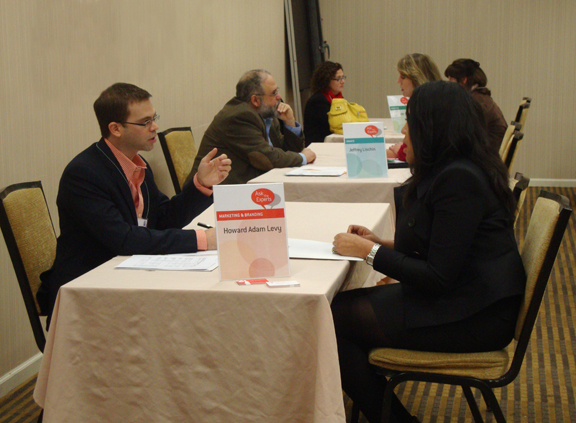

Red Rooster Group principal and nonprofit marketing expert, Howard Adam Levy conducted a session called Make Yourself Memorable! at the 2010 NJ Non-Profit Annual Conference on December 8, 2010. The presentation provides an overview of nonprofit branding, gives 2 case studies showing effective fundraising event promotion, and provides 20 tips for improving the overall visibility and fundraising effectiveness including brochures, websites, social media and tips on writing and design and presentation.
Click on the image to download the PDF (17.1 MB).


Administrators tell me all the time that communication with the board is essential. In practical terms, what does “good” communication or “constant” communication mean to you? How do you achieve that? How do you know when you’ve achieved “good” communication?
Continue reading
Join us for a a free panel discussion on developing your organization’s fundraising capacity. This session brings together 3 points of view about what it takes to succeed in today’s economy. Learn about key fundraising take-aways on the state of fundraising with the Giving USA report on philanthropic trends, learn about the importance of building your nonprofit’s brand and positioning your organization for success, and the role of planned giving programs as an essential part of your fundraising strategy. This crucial session combines big picture thinking with tactical ideas to impact your 2011 fundraising program.
Full description of Free Fundraising Panel Discussion.

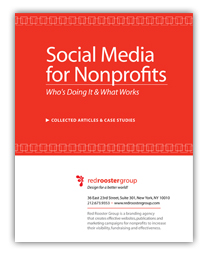
There’s a lot of buzz about social media, but are small and medium sized nonprofits actually making money through social media? We scoured the web for examples and organized them into one document for easy access. You’ll find case studies of nonprofits using social media as well as for fundaising events and resources on corporate philanthrophic programs. We start the document with articles that explore strategic issues of using social media for nonprofits.
Download your free copy of the PDF by clicking the document.
Red Rooster Group is a New York based graphic design firm that creates effective brands, websites and marketing campaigns for nonprofits to increase their visibility, fundraising and communications effectiveness. Contact us at info@redroostergroup.com.
 How to Develop a Breakthrough Brand for Your Nonprofit

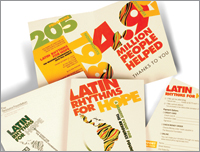
Don’t waste that opportunity to promote your organization to 80% of the people on your event list. Take advantage of your event invitation mailing to engage these potential donors in your organization.
Here are 5 things that an effective event invitation can do for your nonprofit organization.
Tell people what your organization is all about. Believe or not, not everyone on your mailing list really knows what your organization is about. They may have given a donation once or be on your mailing list for many reasons, or may have last heard from you last year, and may have forgotten. If your invitation only mentions your event, but not much about your organization, you are missing out on creating awareness about your organization to many people who will not be attending your event.
For some organizations, this is the only printed mailing they do (or one of very few), so why waste this opportunity to create a positive impression on your donors? The overall look of the design of the invitation, the quality of the printing and the paper, reflects the professionally-run people perceive your organization to be and how seriously they should take your organization. If a staff person who is not a designer creates your invitation, is it really going to have a level of professionalism that stands up to all the other professionally-designed mail that your donor is receiving that day and create the positive impression that you want to convey?
Donors are more likely to attend your event when they understand the impact that your organization has on people’s lives, so use your invitation as an opportunity to let them know. The fact that you are honoring a specific person at you gala, might interest a few people, but showing how you help lift thousands of kids out of poverty will appeal to a much wider audience.
If your invitation looks mundane, then unless they have a strong affinity for your organization to begin with, they probably won’t give it a second glance. Every opportunity to catch a potential donor’s interest should not be wasted. Since you are going through the expense of printing and mailing, why not create something dramatic to intrigue those who don’t know much about your organization to learn more about it.
Your invitation is not a stand alone mailing. It is part of an ongoing communication you have with your donors. Instead of just seeing the invitation as a way to promote the event, you can use this mailing to deepen your relationship with your donors. If they can’t attend the event, provide other ways to engage them with your organization. Ask them if they would like to see photos from the event, sign up for your email newsletter, become a fan on Facebook, or refer someone they know to your organization.
• • •
As you can see, your event invitation can accomplish much more than simply collecting money from a small percent of people on your list. With some foresight, it can be a strategic tool in your overall marketing communications tool box. Don’t waste the opportunity – use a professional designer to maximize this opportunity to build your brand, connect with your donors, and drive results.

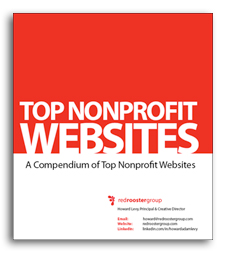
Looking for a quick glimpse of top nonprofit websites? We put together this PDF that shows the homepage and a secondary page for 50 leading nonprofit organizations. It’s a compendium is a great resource to review the best practices for leading nonprofit website design.
Click on the image to download the PDF (12.8 MB).
(It’s a large file, so it may take a little while.)

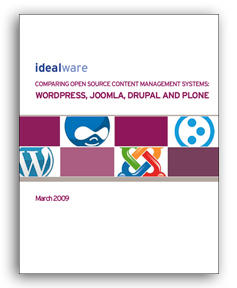
Creating a website with a Content Management Systems allow you to update the information on your site without knowledge of programming. But how do you know which content management system to use? This white paper from idealware helps you compare the pros and cons of 4 major systems: WordPress, Drupal, Joomla and Plone.
Click on the image to view or download the PDF (4.1 MB).

Wondering how to track your marketing? Here is a list of metrics to consider following. What you choose to monitor depends upon what you are looking to accomplish and where you are with your marketing.
Continue reading
I received the mailing showing the new paper ballot and I am shocked how poorly designed it is. The fill in dot is in the bottom of the box for each candidate and is actually located closest to the name right under it. Given the huge white space separating the candidate’s name from fill in dot and the proximity of the dot to the next candidate, it is entirely logical that many people will assume that the dot is for the candidate closest to it (the one below). I wonder how many people will make that mistake. Unfortunately, we will never know.
Also, why is all the type set flush right? That is counter to the most natural and most common formatting. For a piece of communication addressed to the widest possible audience and lowest possible literacy level, it would make sense to use the most common conventions that most people understand.
After the fiasco around the design of the butterfly ballot in the 2004 election, one would assume the utmost of care in the design of the ballot. It is reprehensible that our democracy is jeopardized by such short-sightedness. It just shows you the importance of good design. What do you think?

Fundraising event invitation for the Resource Foundation
Continue reading