3 Tips to Use Donor Data to Improve Nonprofit Storytelling

3 Tips to Use Donor Data to Improve Nonprofit Storytelling

Throughout the course of managing your nonprofit’s donors, you likely gather a lot of information about them. Your donor data is a treasure trove of insights about the individuals who power your nonprofit’s mission.

In addition to supporting your fundraising, relationship-building, and prospect research efforts, did you know donor data can also play a supporting role in nonprofit storytelling? Donor data can help you tell more impactful stories and tailor your storytelling to each donor’s preferences.

In this guide, we’ll explore these three tips for using donor data to enhance your storytelling efforts: 

  1. Incorporate data into your impact stories.
  2. Use donor data to enhance social proof. 
  3. Develop donor segments for tailored outreach.

Data can enhance your storytelling in two primary ways: it can support your narratives with credible facts and help you choose the right ways to tell stories based on donors’ interests. These tips will help you make the most of these benefits to tell stories that inspire your audience to get more deeply involved in your mission. 

1. Incorporate data into your impact stories.

Data can help your audience understand complex concepts or provide context for trends and patterns. However,  data points on their own aren’t the most engaging addition to your marketing efforts. 

Marketing research has found that stories are much more memorable than facts alone (some figures say stories are 22 times more likely to be remembered). Stories include rich details and emotional moments that provide context for data. 

That’s why you should seek to intertwine narrative storytelling with hard facts and data. Doing so will help you tell stories that not only have an impact but also stick with donors well after they hear them. 

Enhance your data storytelling by using data to: 

    • Show results and progress made over time. For example, perhaps your nonprofit has expanded its geographic reach over the years and you want to tell a story about your outreach into new communities. An interactive map and timeline can illustrate this progress and show donors the depth of your impact. 
    • Explain trends and patterns. Let’s say you’ve noticed a new trend at your nonprofit of more volunteers getting involved with peer-to-peer fundraising. By sharing data about how many volunteers participate in fundraising, you can illustrate this trend and inspire more volunteers to get involved. 
  • Break down complex topics. Your nonprofit’s mission could involve complex topics like research or complicated legal scenarios. Using data, especially infographics, is an effective way to make these concepts easier to understand. 

Incorporate these data storytelling examples into nonprofit marketing materials, from your annual report to your monthly newsletter. Make your stories more engaging by combining written text, data visualizations, and images that bring your tales to life and make them even more memorable. 

2. Use donor data to enhance social proof. 

Donor data can help you tell more compelling stories to potential donors by leveraging social proof. Social proof is the concept that people will imitate the behaviors of others in a given situation. 

Incorporating social proof into your nonprofit’s marketing and storytelling efforts can help you recruit new supporters and solidify relationships with existing donors. Here are a few ways you can increase donor engagement using data-driven social proof: 

    • Drive conversions on your online donation form. Including data on your donation page can help you increase online giving. For example, you could reference past donation trends to offer suggested donation amounts and highlight the most popular donation amount. This can influence new donors to choose that amount to align with established norms. Check out an example of this on the CARE online donation page:
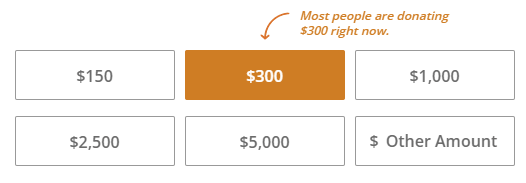
Suggested donation amounts on the CARE donation form. The $300 donation amount is highlighted with a note saying “Most people are donating $300 right now.”
  • Increase involvement in giving programs. Supporters may be interested in joining certain giving programs at your organization, like your monthly giving program, but need extra encouragement to get involved. Compile data about current donors to give prospective supporters the additional motivation they need. For instance, you could include a note on your online giving page that says 70% of all your nonprofit’s donors are members of your monthly giving program. 
  • Recruit more advocates. Social proof can also help you recruit more supporters to advocate for your mission, whether through peer-to-peer fundraising, word-of-mouth promotions, or full-fledged advocacy campaigns. For example, you could share that 97% of current donors say they feel more connected to their fellow community members after joining your advocacy program.  

Ultimately, most people just want to feel part of something bigger than themselves, and that motivates many individuals to support nonprofits over the long term. You can inspire greater participation in your programs by enhancing the feeling of community among supporters and using data to demonstrate the power of your donor base. 

3. Develop donor segments for tailored outreach.

In addition to enhancing your stories themselves, the other major way that donor data can support your storytelling efforts is by helping you develop tailored messaging approaches that fit each donor’s unique needs and interests. 

Naturally, different types of stories will resonate with different segments. Determine which stories will resonate with each audience by using donor data to group audience members in a process called segmentation. According to Bloomerang’s donor segmentation guide, this process involves “separating your nonprofit supporters into groups based on common qualities and characteristics they share.” 

To segment donors, you’ll use your nonprofit’s CRM database to filter donors based on certain criteria and create dedicated groups based on the patterns that emerge. For example, segments can be based on:

  • How recently donors started supporting your nonprofit (whether new donors, established donors, or long-time donors) 
  • How frequently donors give (annually, quarterly, monthly, sporadically, etc.) 
  • How much donors give (this could include major, mid-level, and small donors) 
  • What motivates donors to give (whether past involvement as a beneficiary, participation as a volunteer, or a strong personal conviction for your mission) 

After creating these segments, strategize ways to reach out to each group using storytelling techniques that resonate with them. Let’s say you’re creating a storytelling and marketing strategy for an upcoming crowdfunding campaign. You could segment donors based on the reason they give to your nonprofit to send each group stories that resonate with their motivations. 

For instance, donors who give because they’re former beneficiaries would likely be interested in stories about other beneficiaries who you’ve been able to support recently. Donors who also volunteer may respond positively to stories about how donations keep your volunteer program stocked with the resources it needs to be successful. 

Donors will be more likely to give to your upcoming campaign when you make an effort to connect with them using messages that resonate with their values and life experiences. 

Although it may seem like cold, hard data and the emotional beats of nonprofit storytelling would be odds, the truth is they can work together to enhance your organization’s overall marketing approach. Data can help you understand your audience as individuals to craft stories that speak to them on multiple levels. Ultimately, this allows you to grow stronger bonds with existing donors and expand your reach to new audiences. 

Event Networking Made Easy

Event Networking Made Easy

5 Tips to Maximize Connections

Attending a nonprofit event or conference involves more than just learning about your industry or hearing from experts in your field. This in-person experience allows you to form valuable connections with others and build relationships that can propel your career forward.

When your organization hosts this type of event, you’ll want your attendees to get the most out of it as possible. One of the top ways to create value for your attendees and provide a memorable experience is to facilitate networking opportunities.

By prioritizing networking opportunities, you’ll not only help attendees mingle but also achieve a higher return on investment (ROI) due to the increased value you’ll offer event participants. Check out these tips for maximizing attendee connections that your nonprofit can easily implement for your next event.

1. Use Attendee Badges

During the check-in process, you may provide attendee badges to help guests identify each other and capture event analytics using the attached QR codes. These badges are ideal for networking because they allow attendees to easily learn more about each other and engage in conversation.

To enhance their networking capabilities, make sure your badges feature:

  • Your event or nonprofit logo. Your badges should reflect your organization’s branding and reinforce the connection between your event and nonprofit. If your event has a logo of its own, make sure to include it on the badges as well.
  • The attendee’s name. Make it easy for attendees to learn and remember each other’s names by placing them on their badges. Ensure the font size is large enough for attendees to read.
  • The attendee’s role. Including each attendee’s job title and organization on their badges can break the ice during networking conversations. For instance, if two attendees find that they are both volunteer coordinators or work for animal-related nonprofits, that similarity can form the basis of their connection.
  • QR code. Use badge QR codes to scan attendees into specific speaker or networking sessions. Afterward, you can use your event management platform to analyze the resulting data and determine which opportunities were most popular.

Additionally, your badges should feature an eye-catching design that matches your event or nonprofit’s branding to add consistency throughout your event.

2. Offer Designated Networking Areas

Sometimes, the largest barrier to event networking is the lack of a quiet, uncrowded space to meet with fellow attendees and engage in conversation. To solve this problem, consider sectioning off specific areas of your event venue intended for networking. 

Examples of potential networking areas include:

  • Lounges with comfortable seating and a relaxed atmosphere
  • Networking zones with high-top tables
  • Coffee and refreshment stations
  • Outdoor spaces like patios or courtyards
  • Private meeting or conference rooms

No matter what your networking areas look like, they should be accessible and conducive to conversation. Remember to keep potential networking spaces in mind when choosing a venue to ensure your attendees have ample room to meet and chat with each other.

3. Enable Appointment Booking

When looking for the right event or conference app, there are many considerations to keep in mind. The platform you select should support your goals and be easy for attendees, sponsors, and staff members alike to use.

If networking is a top priority for your team, seek out an app that supports appointment booking. Here’s an example of what the attendee networking process may look like with appointment booking:

  1. Attendees create profiles within your event app that contain their name, contact information, and employment information.
  2. An attendee named Brian Daniels briefly meets another attendee named Ella Smith in between speaker sessions. They soon realize they are both board members of environmental organizations and would benefit from meeting to discuss their roles.
  3. Later in the day, Brian searches for Ella’s profile within the event app.
  4. Brian requests to schedule a meeting with Ella through the app.
  5. Ella receives a notification and accepts Brian’s invitation.
  6. Brian and Ella meet in a networking area of the venue and exchange ideas.

What makes the appointment booking feature so integral to event networking is its ability to streamline networking communications and spark further collaboration. While Brian and Ella met in person during the event, they quickly got wrapped up in the day’s agenda and didn’t get a chance to have a proper conversation at the time. With appointment booking, they had the opportunity to choose a time during the event that they could both dedicate to fostering a connection and easily set up a meeting.

4. Create a Networking Challenge

In the event world, there are tried and true ways to engage attendees, from hosting raffles to creating interactive booths. However, one of the most impactful methods for grabbing attendees’ attention is gamification.

Gamification involves incorporating game-like elements and challenges into your event to generate excitement and develop healthy competition among attendees. The challenges you create may use points, leaderboards, and prizes and will depend on your event’s specific goals.

To encourage networking, try creating a challenge in which attendees earn points for each new connection they form or appointment they book at your event. At the end of the event, grant the attendee who earned the most points a prize like branded merchandise or free admission to your next event.

EventMobi’s event gamification guide discusses how real companies and organizations have used gamification to successfully fuel their own networking goals. Specifically, they mention how TD Bank developed a networking game for their Diversity & Inclusion Event that kept attendees engaged and excited about the experience.

5. Provide Post-event Networking Opportunities

Networking doesn’t have to end when your event does. Help your attendees build upon the relationships they formed at your event by providing post-event networking opportunities.

For example, eCardWidget’s work eCard software guide explains how you can use eCards to encourage attendee connections. Attendees can make interactive eCards branded to your organization and send them to fellow attendees they met at your event, thanking them for their time, inviting them to connect on LinkedIn, or setting up another meeting.

You can also help attendees form new connections through your event platform by opening up the activity feed to attendee submissions even after the event has ended. Guests can post their images, thoughts, and reactions to the event and interact with each other’s content. Then, they can click on the profiles of fellow attendees and network with them.

Networking opportunities can be a big selling point that draws attendees in and encourages them to sign up for your event. Promote your networking offerings in your marketing materials, and emphasize how attending your event will help attendees forge valuable connections.

What the Liberals Don’t Understand About Conservatives

Avoiding Perspective Bias by Connecting With People’s Identities

It’s a constant refrain: this is the most consequential election ever. Democratic pundits are getting their knickers in a twist about a possible Trump victory and the ostensible devastation that it will bring. “We must win. Biden is doing a great job — if only more people knew about his accomplishments, they would vote for him.”

But does this argument hold?

Some polls show that this knowledge will persuade some people. But knowledge has not moved people when it comes to taking vaccines. Or on climate change. Or on the claims of a stolen election. Why would more facts make a difference now?

The liberal argument suffers from perspective bias.

Fundamental differences exist between the ways liberals and conservatives see the world, and using one perspective (a fact-based approach) to try to convince the other party is not an effective solution. 

This deficit of insight is critical. Despite the huge bifurcation of the electorate, persuadable voters are out there and can be reached if their motivations are understood.

To effectively communicate with Republicans or Independent voters (or any marketing audience), perspective bias must be overcome. Arguments must be crafted around other people’s worldviews, values, and identities. Failure to do so risks creating a message that falls on deaf ears or, worse, alienates the intended audience.

So, what are the primary ways our perspective can blind us?

The Importance of Identity

The great dislocation in this country disproportionately affects lower and middle-income people. While the elites laud globalization for connecting the international economy — lifting millions out of poverty and creating middle classes in India and China — they have not empathized with the people who lost out in this country. And a substantial number of people have been marginalized.

Non-college-educated white men have lost more than jobs. Their very identities are threatened.

These men — most of whom vote — are being left behind in our economy, caught between the changing nature of manufacturing in the United States, the rise of the intelligence workforce, and the specter of AI. But, most importantly, increased diversity in our population removes white men as the dominant cultural force.  They feel that their place in society is being threatened. 

Pulling the rug out from under a significant sector of the population without providing a path to continued cultural relevance? Well, that is not helpful.  

Educated liberals fail to connect with this reality. They make a mistake in thinking that everyone is like them. In fact, only four in 10 Americans ages 25 and older have a bachelor’s degree as of 2021 (although that share has grown over the last decade). According to a Pew Research Center survey in 2021, men said a major reason they have not received a four-year college degree is that they didn’t want to. Men were also more likely to say they didn’t have a four-year degree because they didn’t need more education for the job or career they wanted.

And, in 2021, roughly 62% of people ages 18-24 were not enrolled in college, according to the Census Bureau’s population estimates. That’s about 19.3 million people. These people are not heard or respected by liberals. But Trump is giving them credence, reinforcing their identity, and assuring them that they still matter by promoting a white Christian nationalist agenda.

The Democrats need to realize that If a person’s identity is threatened, they will double down to keep it intact. This is why so many Republican voters stick with Trump. They feel like he sees them and values them in a way liberals don’t. It’s not an easy argument to tell them they are wrong and should be happy to abandon their identity. 

For example, coal miners, whose identity is tied to creating the energy to build this country into the most powerful nation on Earth, will not easily abandon that potent image of themselves just because of climate change. Their sense of purpose and role in this country must be nurtured — not just with skills training for green energy. That’s the mistake that Hillary Clinton made in saying, “We’re going to put a lot of coal miners and coal companies out of business.” It didn’t matter that she also mentioned the millions of dollars going for job training. Who wants to be a trainee again instead of a part of a proud legacy?

Bridging the gap between liberals and conservatives requires acknowledging and understanding the diverse perspectives that shape political beliefs. Merely bombarding individuals with facts overlooks the fundamental worldview and identity differences underpinning their allegiances.

Whether coal miners clinging to a sense of purpose or disenfranchised voters seeking validation, the path forward lies in acknowledging and respecting diverse identities. Only by transcending perspective bias can we hope to foster genuine dialogue and enact meaningful change that resonates across the political spectrum.

Need help framing your message in a way that engages your audience?

Helping a Homeless Organization Reach New Heights

LifeMoves

Helping a Homelessness Organization Reach New Heights

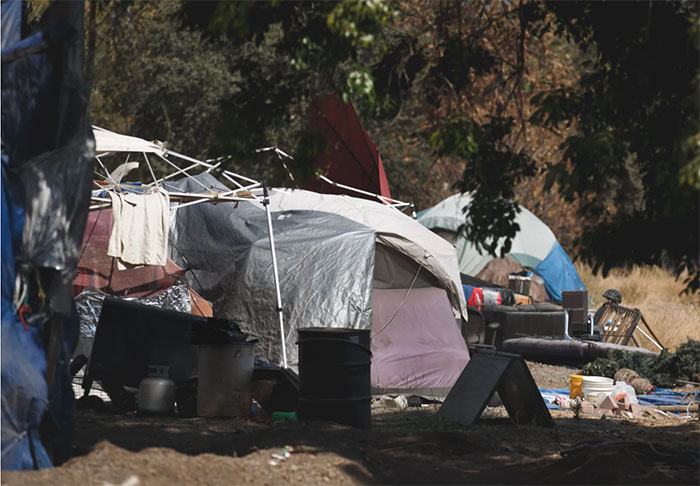
We helped one of the largest providers of services for the homeless in the country reach unprecedented levels of growth to meet increased needs in Silicon Valley.

  • Organizational & Brand Strategy
  • Brand Positioning, Design & Management
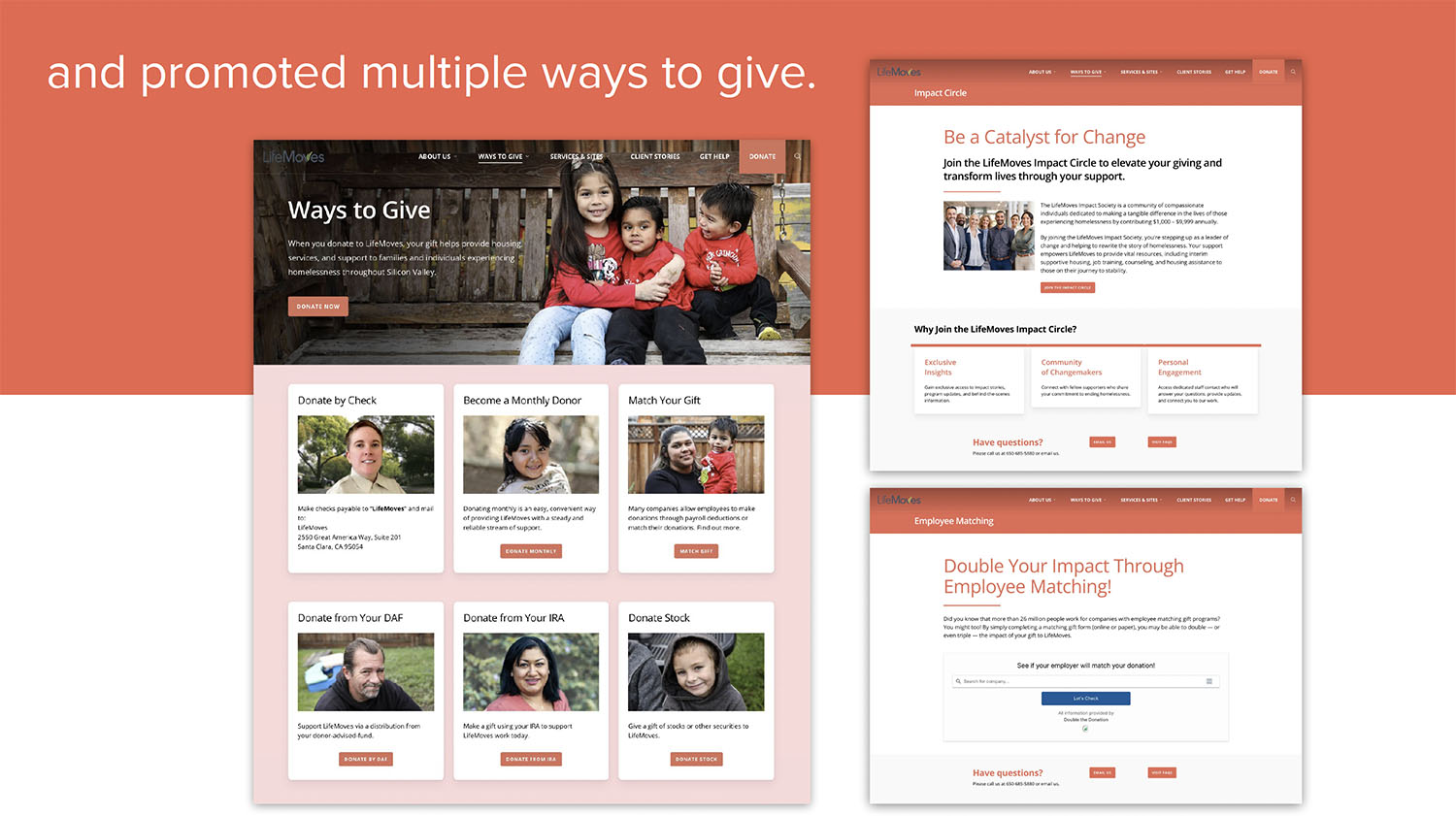
  • Fundraising Campaigns 
  • Fundraising Event Promotion
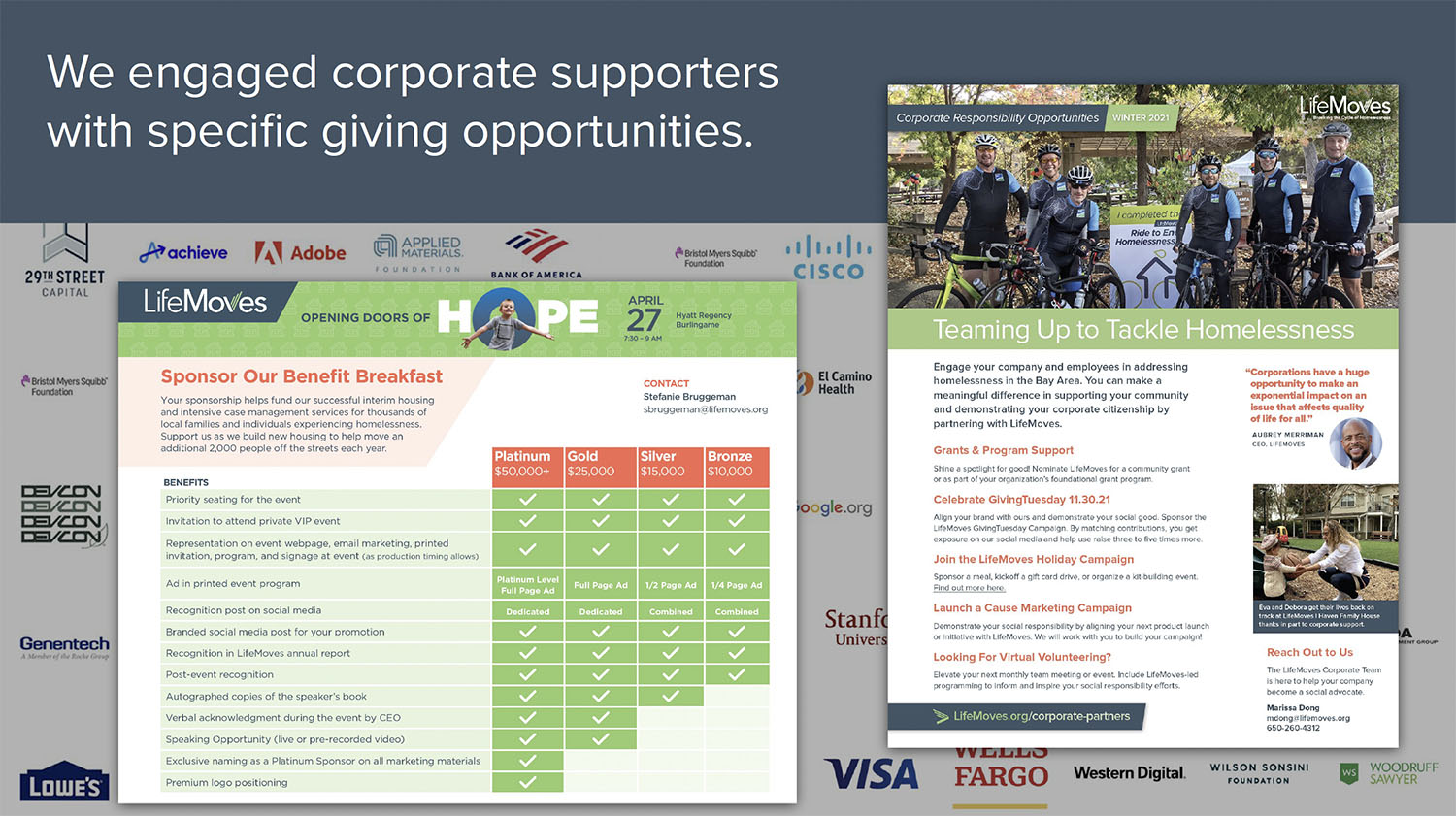
  • Corporate Sponsorship Materials
  • Strategic Messaging & Presentations
  • CEO Letters & Communications
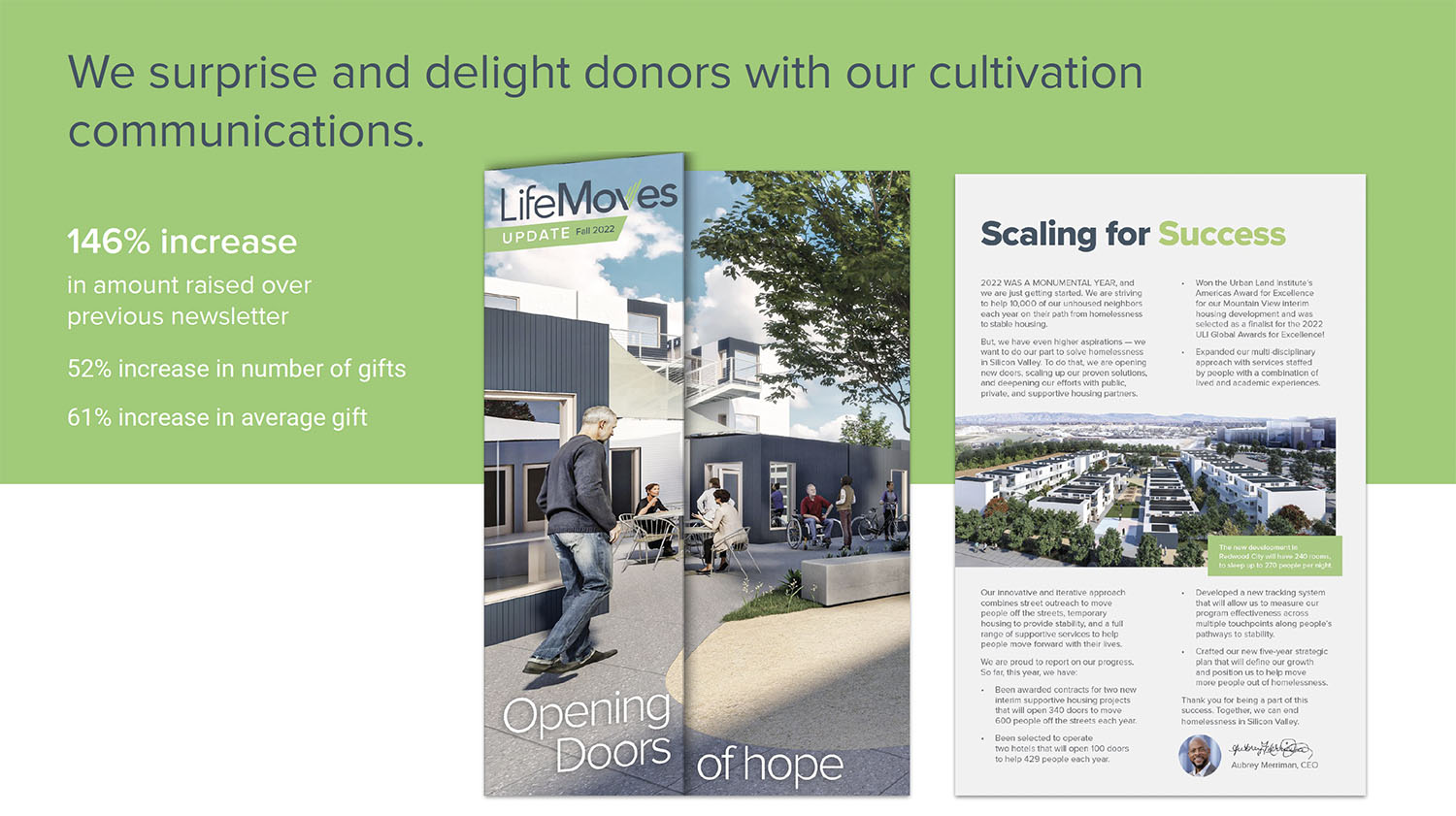
  • Annual Reports & Newsletters
  • Thought Leadership & Client Success Videos
  • Website Pages & Enhancements
  • Google Ad Grant Management

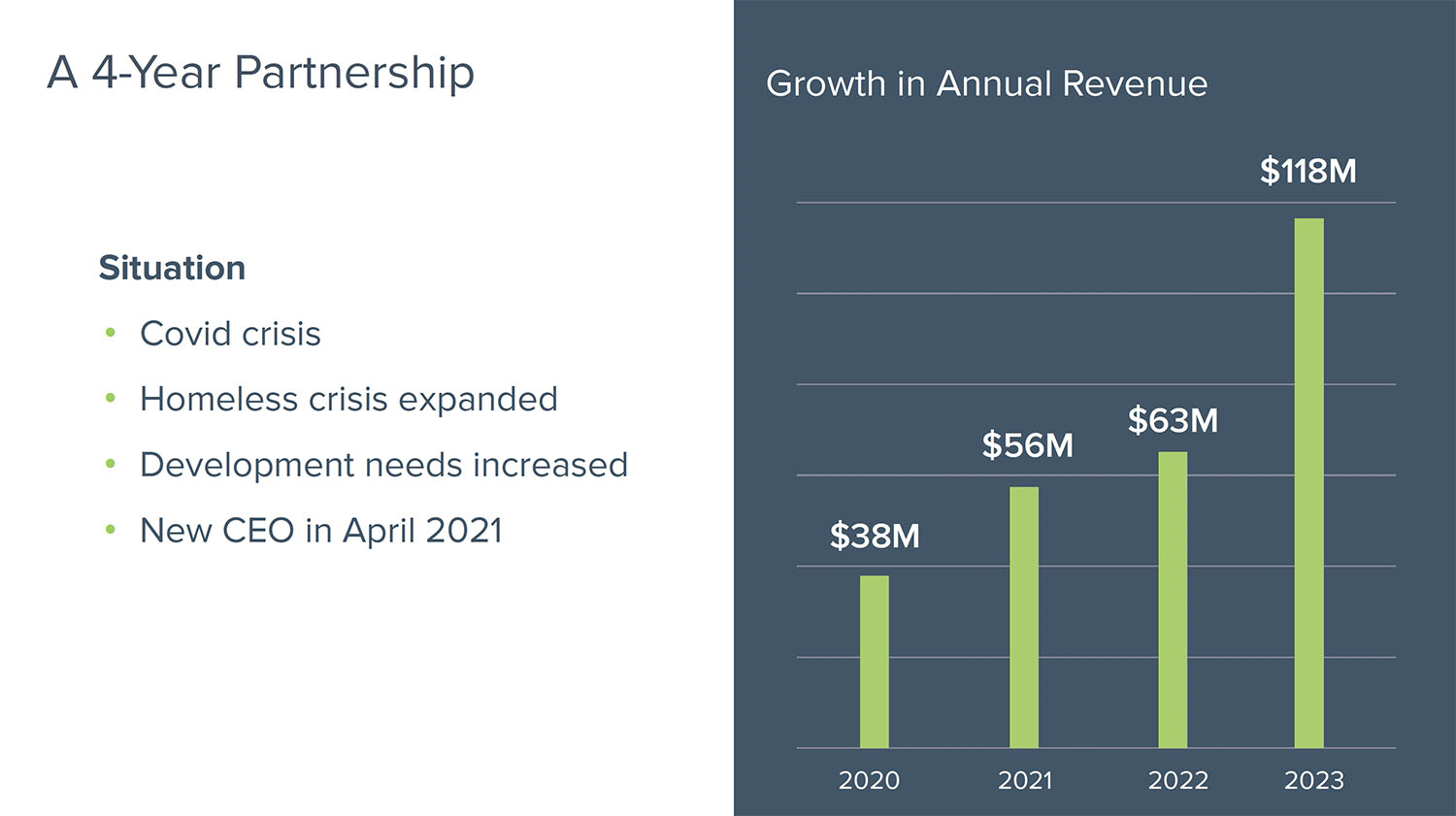
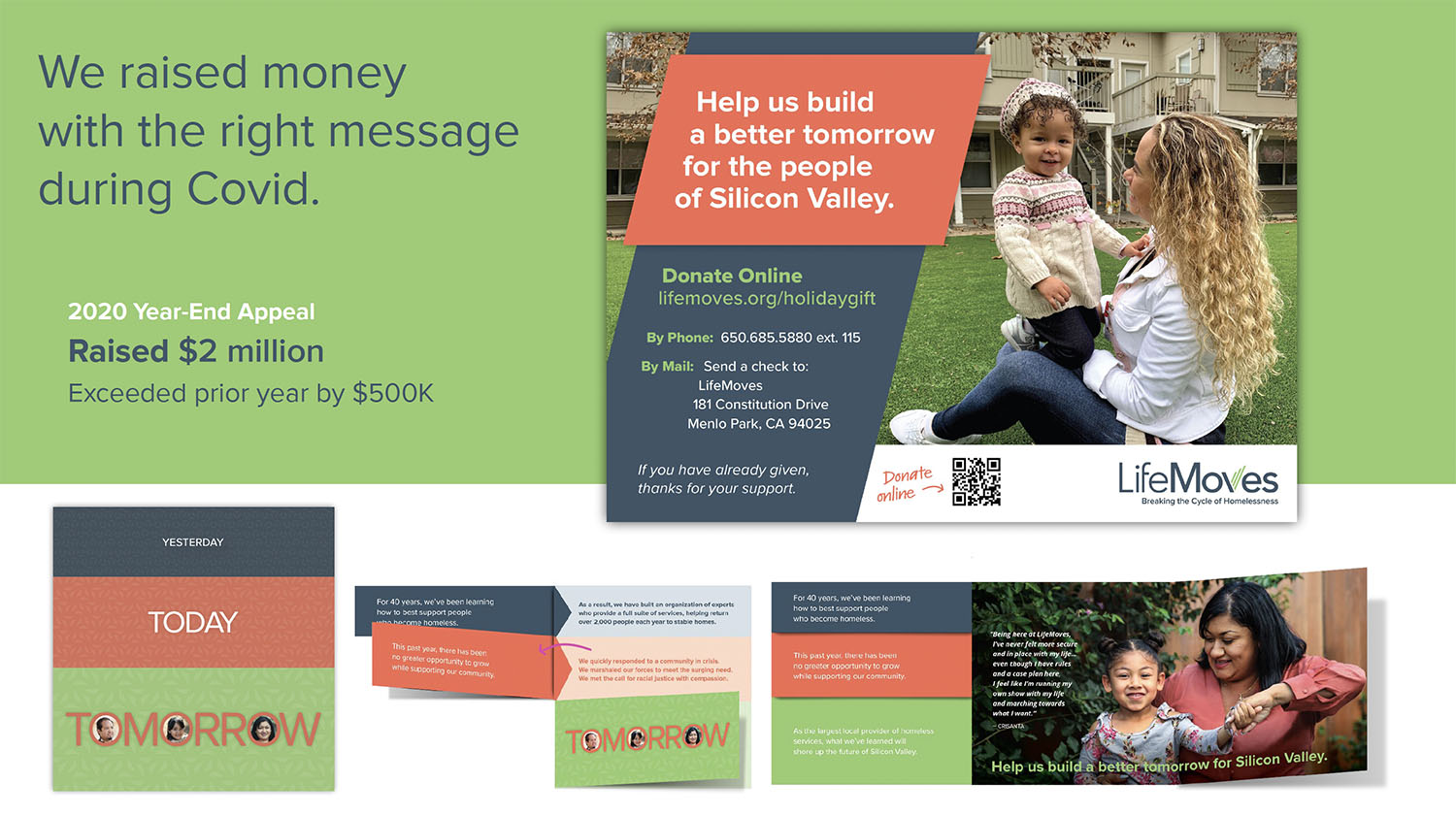
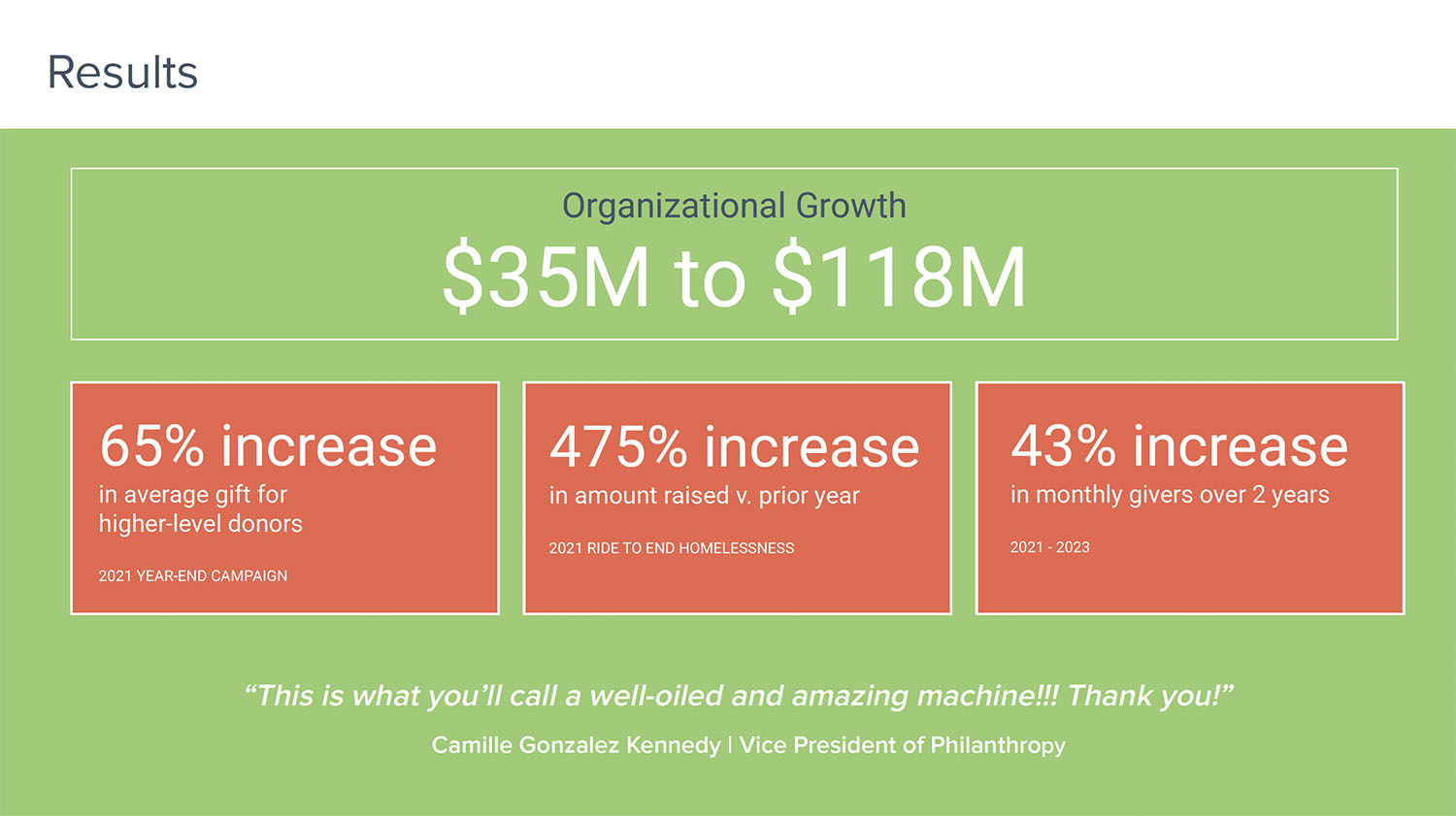
A growing homelessness crisis demands effective approaches and funding. LifeMoves tapped into our strategic branding, marketing, and fundraising services to propel the organization to take on this challenge. With a new CEO at the helm, we helped position LifeMoves for success. Over the four years we have worked with this nonprofit, its annual revenue grew from $38 million to $118 million due largely to new government contracts.

Select Results

19% increase

in total amount raised v. prior year

2020 YEAR-END CAMPAIGN

42% increase

in total amount raised v. prior year

2021 YEAR-END CAMPAIGN

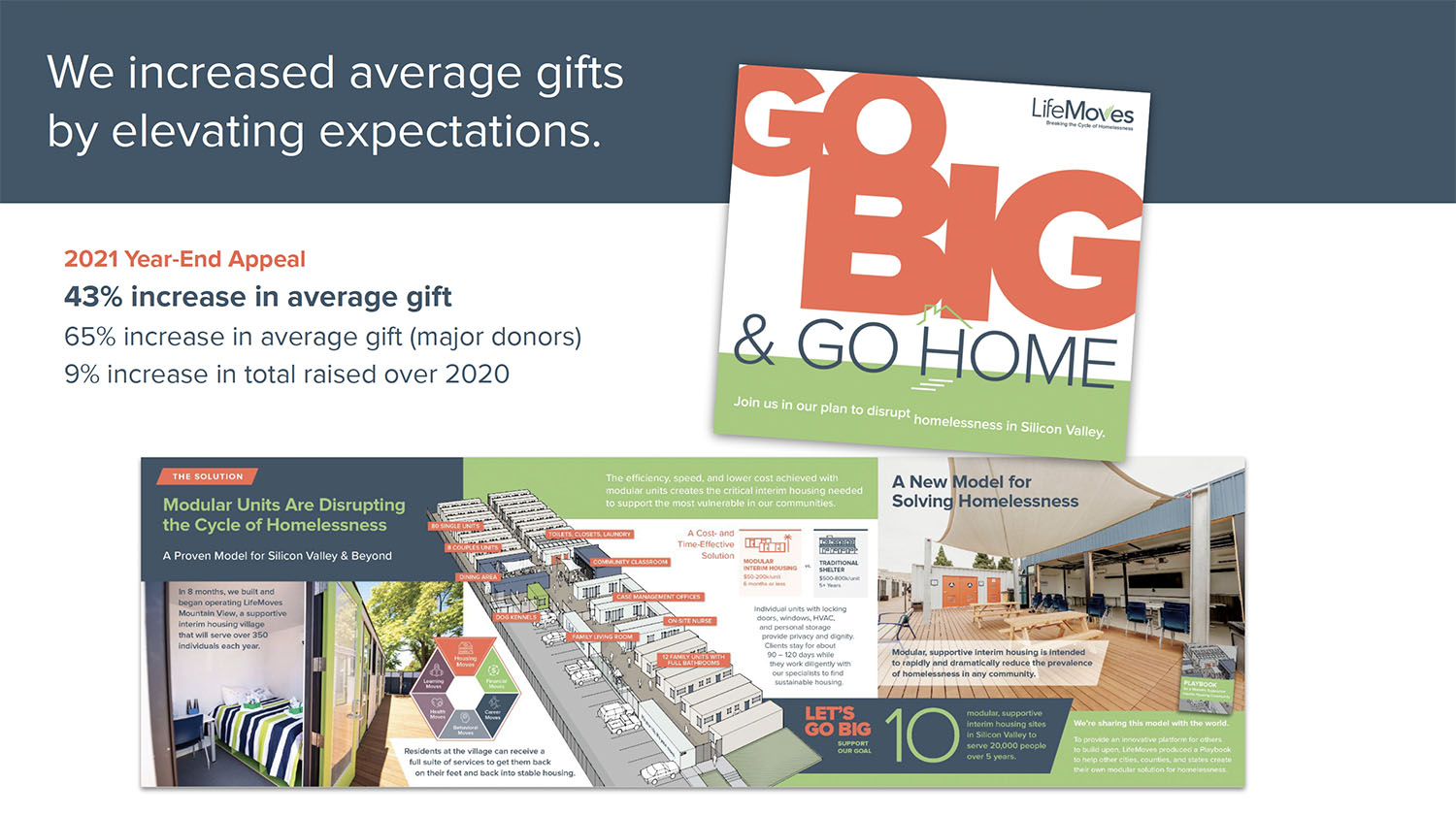
43% increase

in average gift amount for lower-level donors

2021 YEAR-END CAMPAIGN

65% increase

in average gift amount for higher-level donors

2021 YEAR-END CAMPAIGN

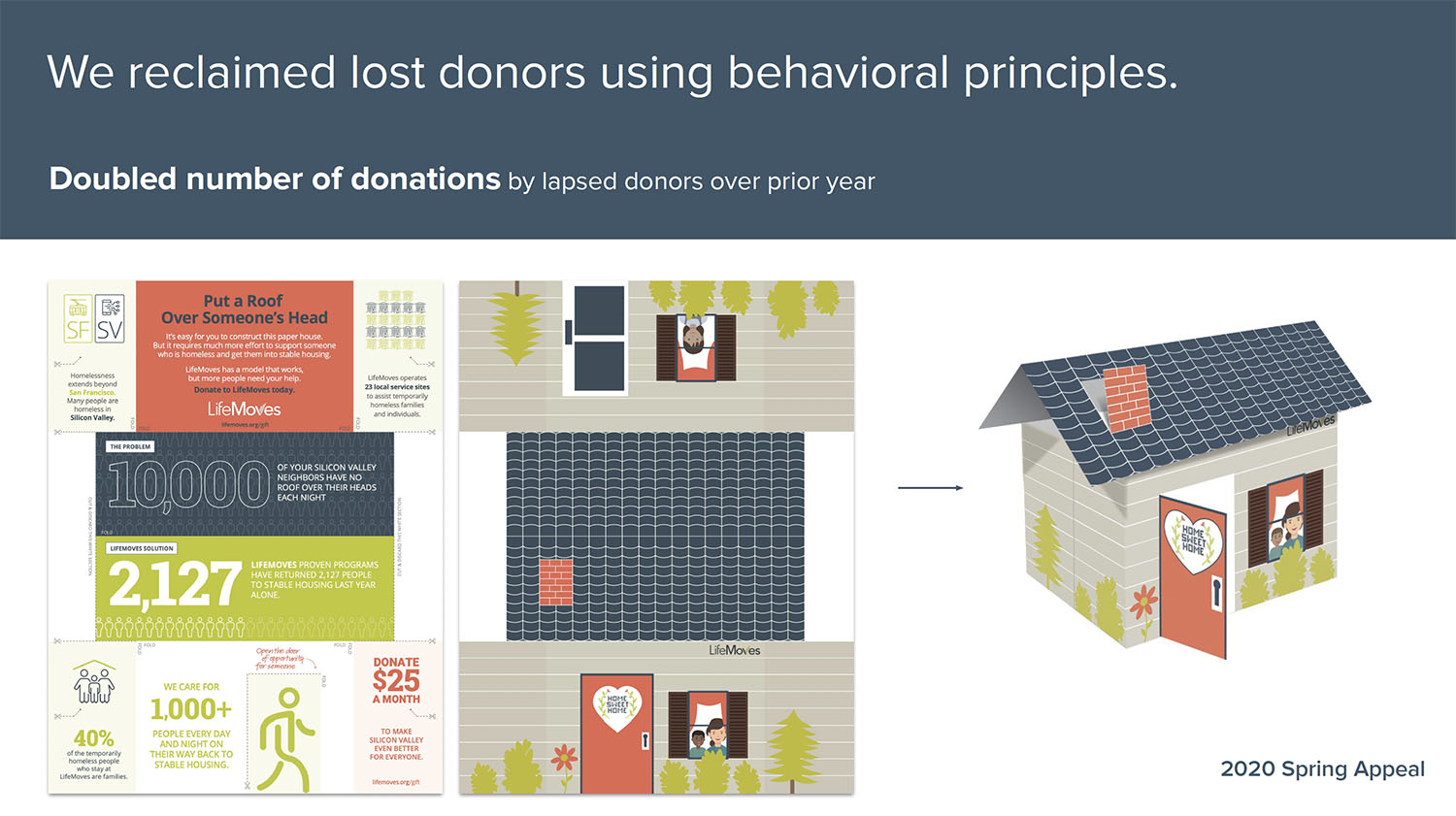
100% increase

in number of donations by lapsed donors v. prior year

2020 SPRING APPEAL

100% increase

in amount donated by lapsed donors v. prior year

2020 SPRING APPEAL

43% increase

in monthly givers over 2 years

2021 – 2023

475% increase

increase in the amount raised v. prior year

2021 RIDE TO END HOMELESSNESS

73% increase

increase in the amount raised v. prior year

2022 RIDE TO END HOMELESSNESS

The Challenge

LifeMoves first brought on Red Rooster Group to improve its fundraising in March 2020, just as COVID started. The organization needed to keep its 7,000 clients safe and re-trench for the new realities of lockdowns. Since then, the closing of businesses exacerbated the already unprecedented homeless situation due to rising home prices in Silicon Valley. LifeMoves needed to raise money for the short term and develop its brand and fundraising outreach to address growing needs.

Transforming an Organization

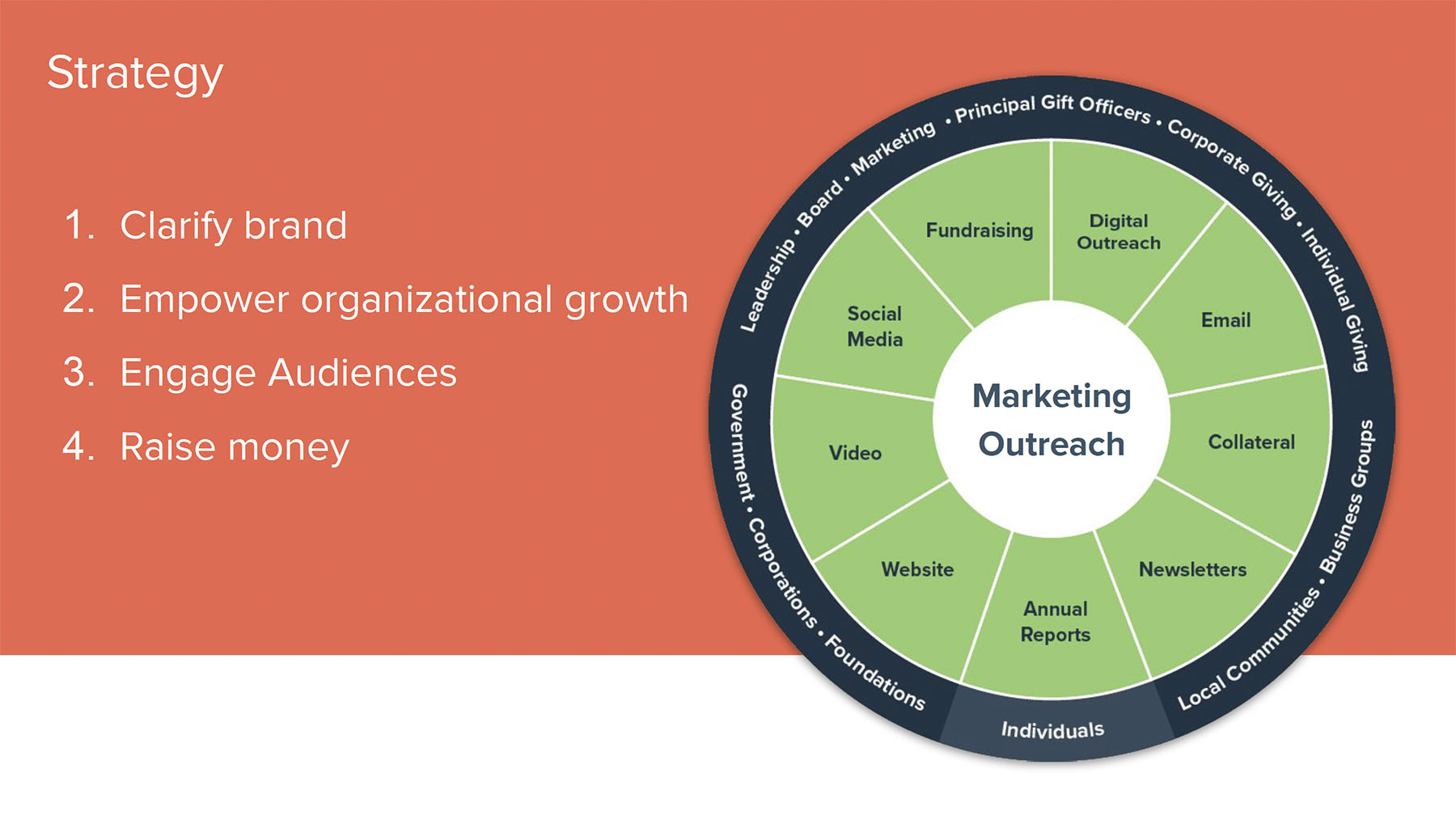
Over four years, Red Rooster Group has worked to enhance the organization’s strategic perspective, brand story, fundraising outreach, and marketing communications.

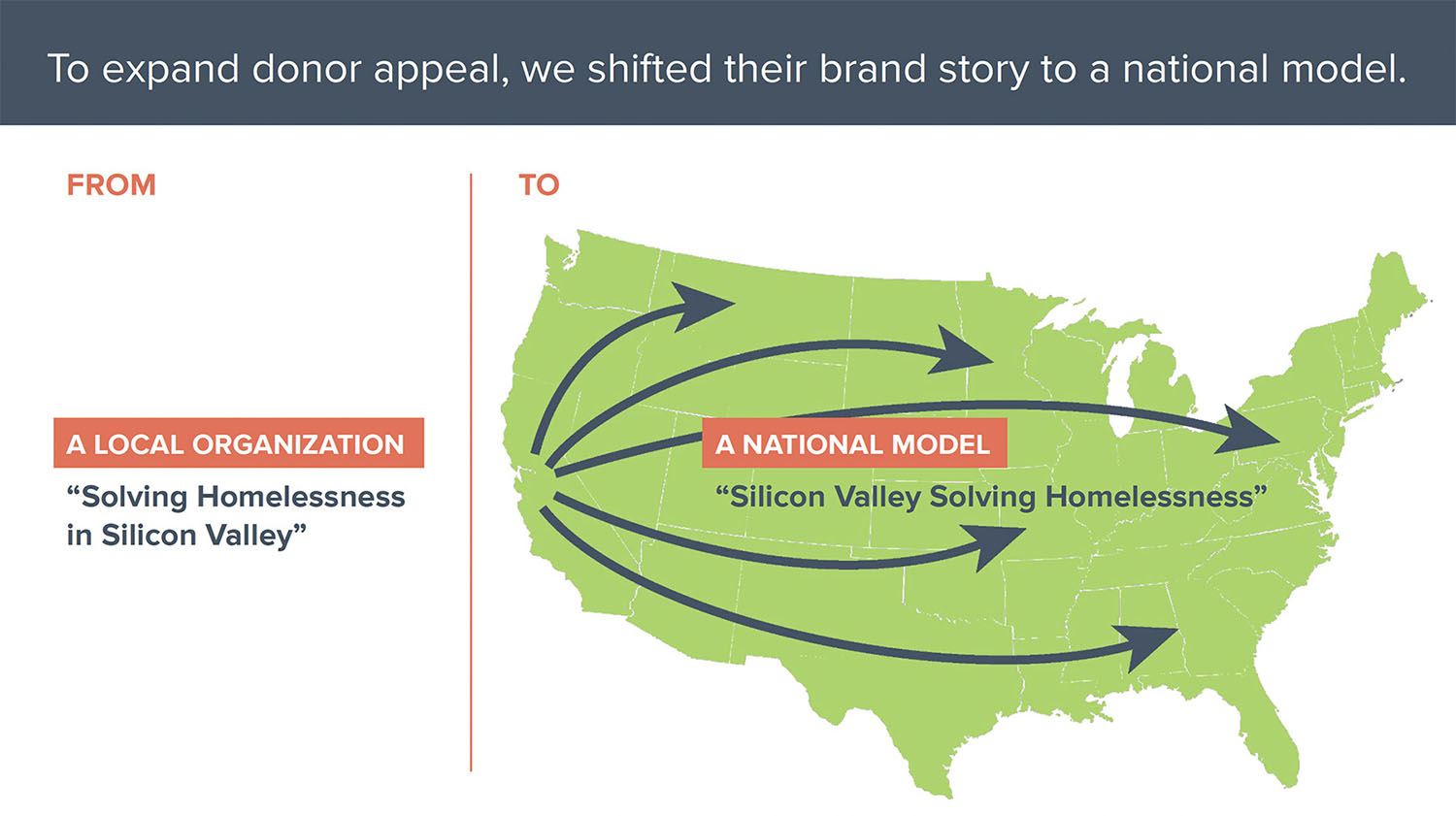
Our brand repositioning work helped reshape perceptions of the organization from a provider of services locally, to a leader that has been recognized by the state with solutions that can be adopted elsewhere. LifeMoves built one of the first modular, interim housing facilities in Northern California (whose opening was attended by the Governor) and won contracts for six more sites, including one of the largest in Northern California.

We have managed fundraising campaigns that have brought back lapsed donors and increased the amounts raised, including their largest campaign ever, and promoted fundraising events that attracted key audiences such as high-level donors and elected officials.

Our strategic advice, research, and communications have elevated the organization as it introduced its strategic plan, attracted new corporate and community partners, and set a strong foundation for success.

By introducing new fundraising ideas and best practices, we have increased the organization’s level of sophistication so that it can continue to improve results.

How We Helped

Strategy

Organizational, Fundraising, Marketing, Branding, & Thought Leadership

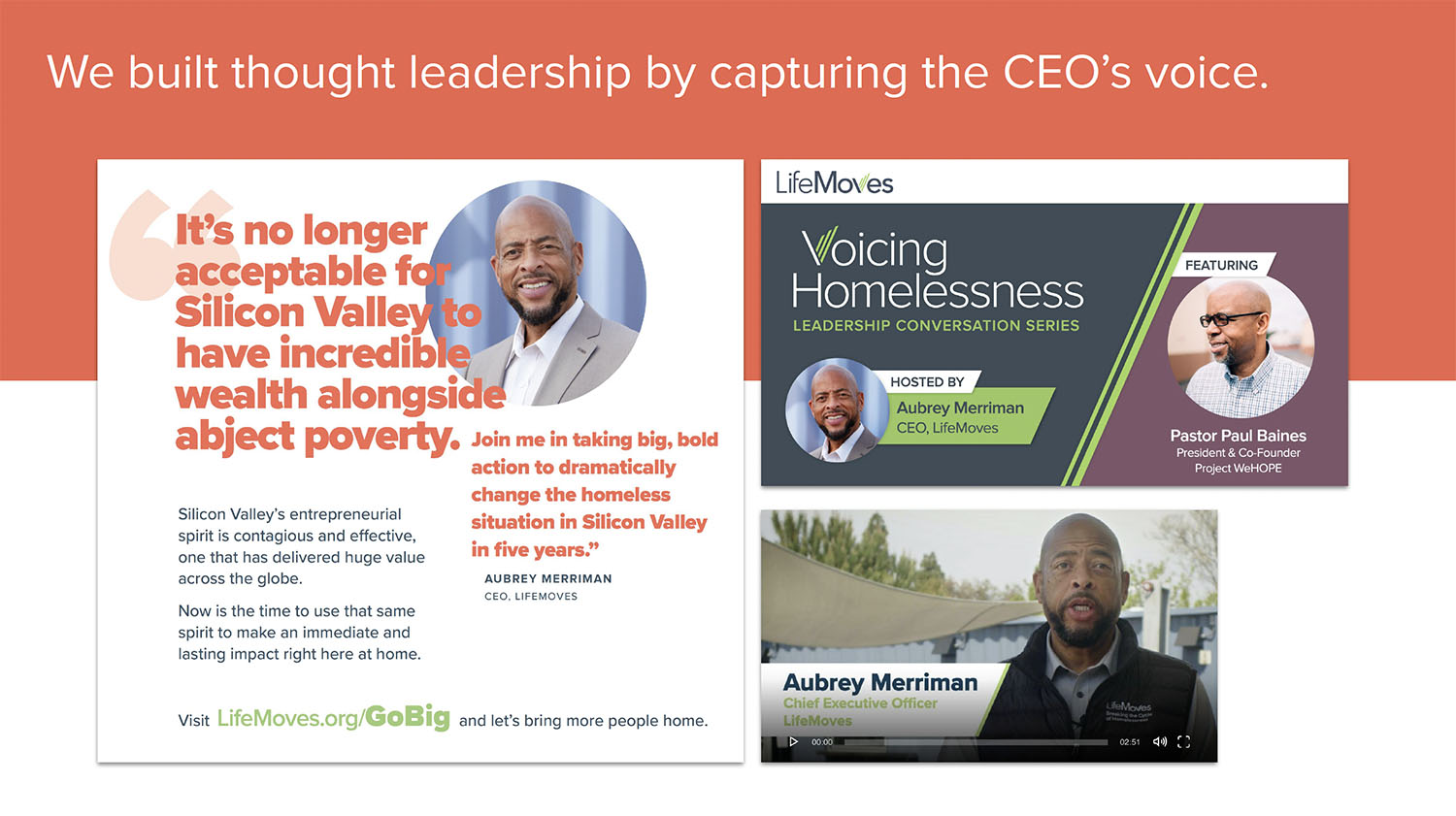
  • Leveraged the CEO as an authoritative voice on the issue to position the organization as a national leader on homelessness.
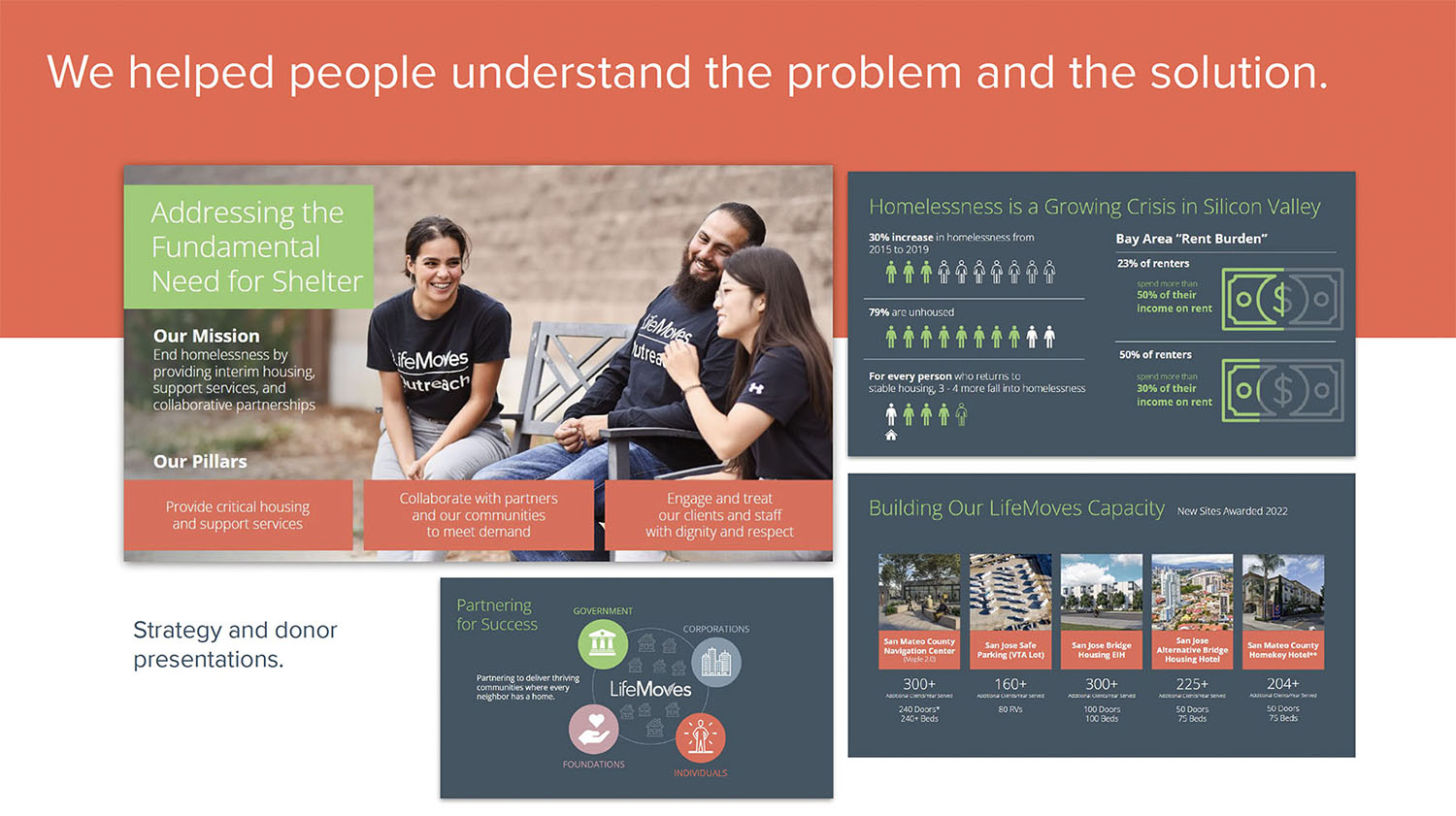
  • Developed strategy presentations to convey the needs of homelessness in Silicon Valley and attract funding from corporations.
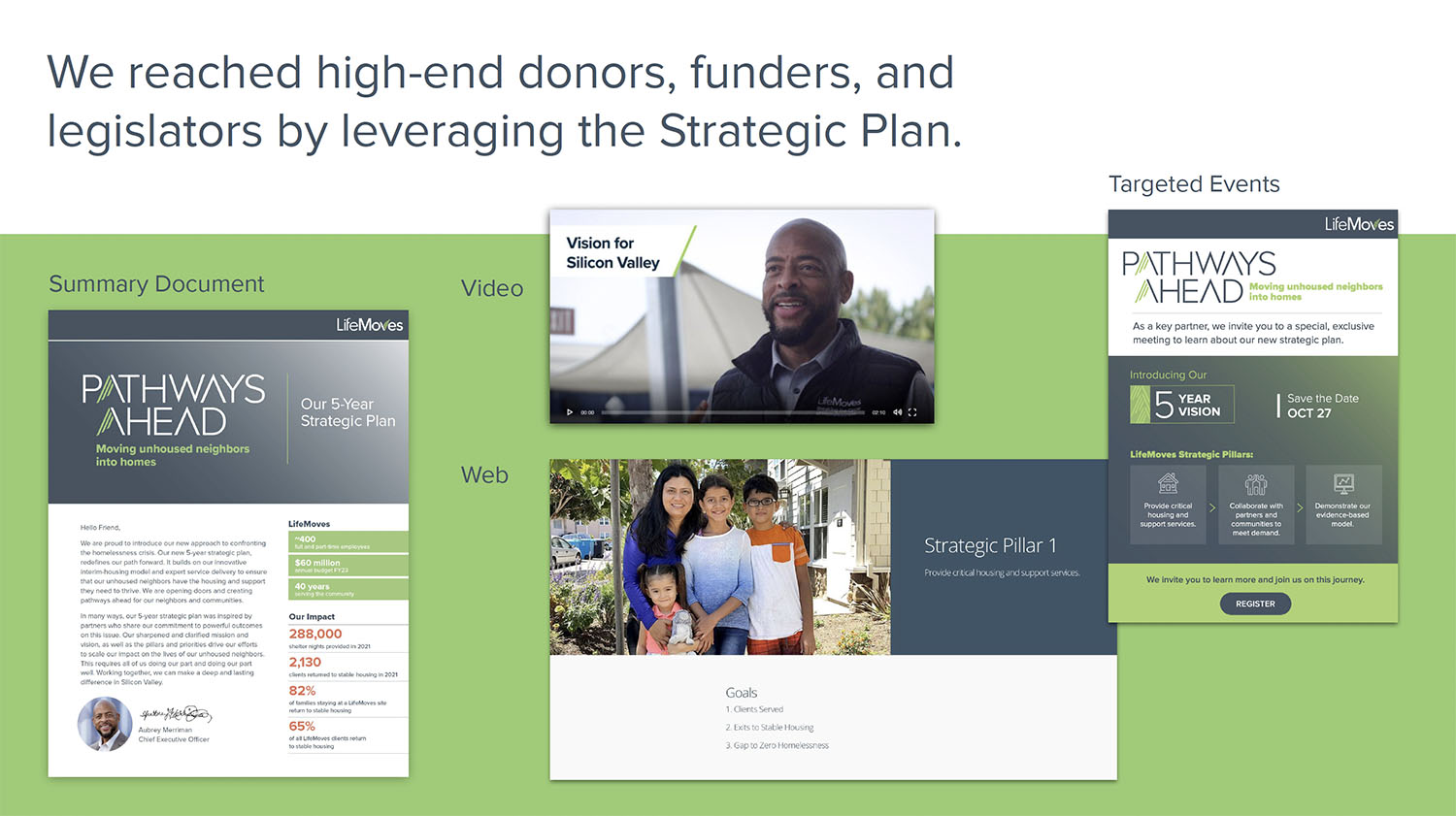
  • Supported the organization’s strategic plan by creating a presentation, summary document, webpage, and promoting a series of online events to introduce the strategic plan to high-end donors, government officials, and community partners.

Individual Fundraising

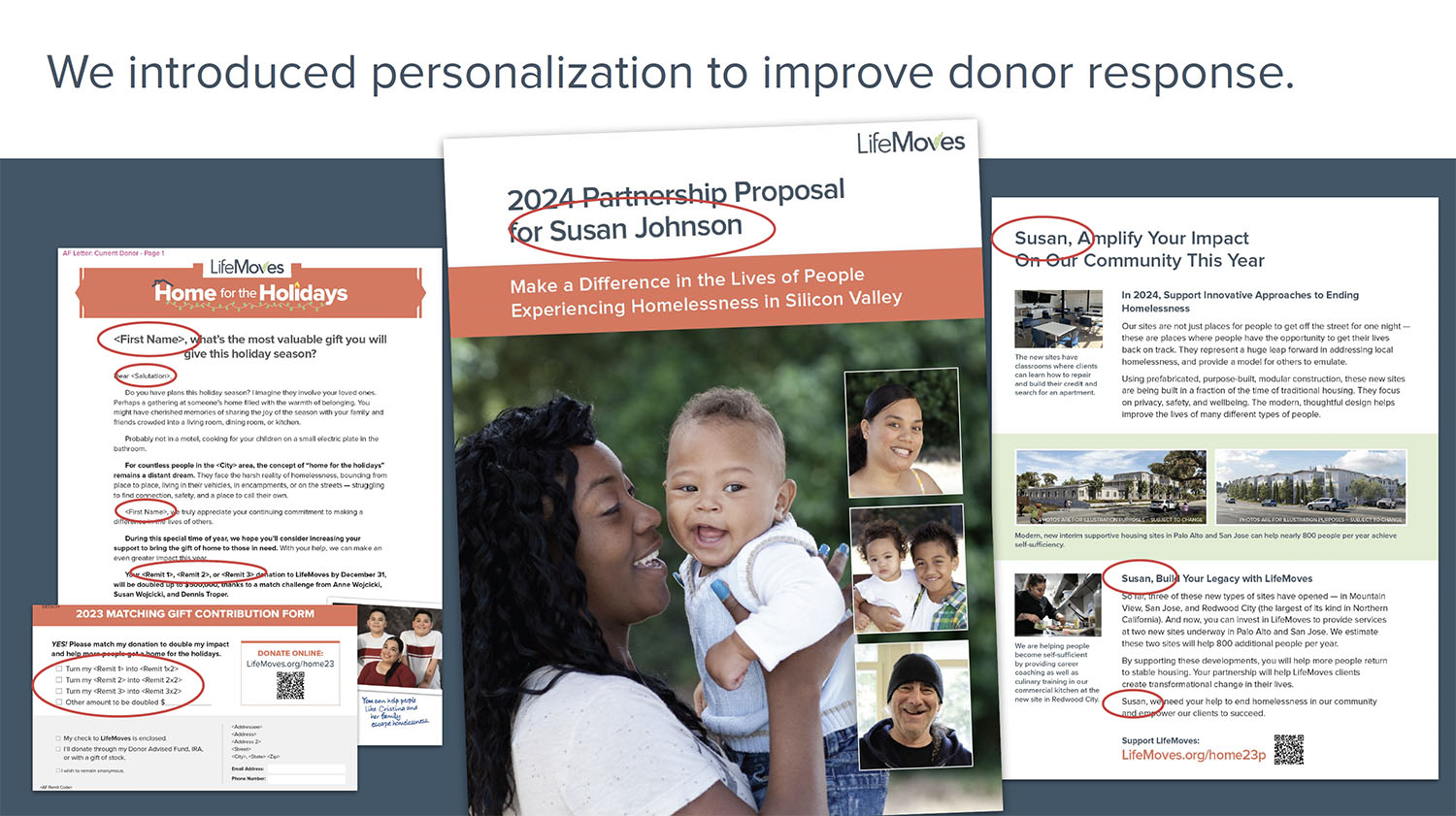
  • Produce two campaigns per year (spring and year-end), including developing concepts, narrative, and theme, writing and designing direct mail packages and email series, producing videos, creating landing pages and donation pages, social media posts, and handling campaign management. Introduced personalization, custom gift arrays, and efficient mailing techniques.

Major Donor Fundraising

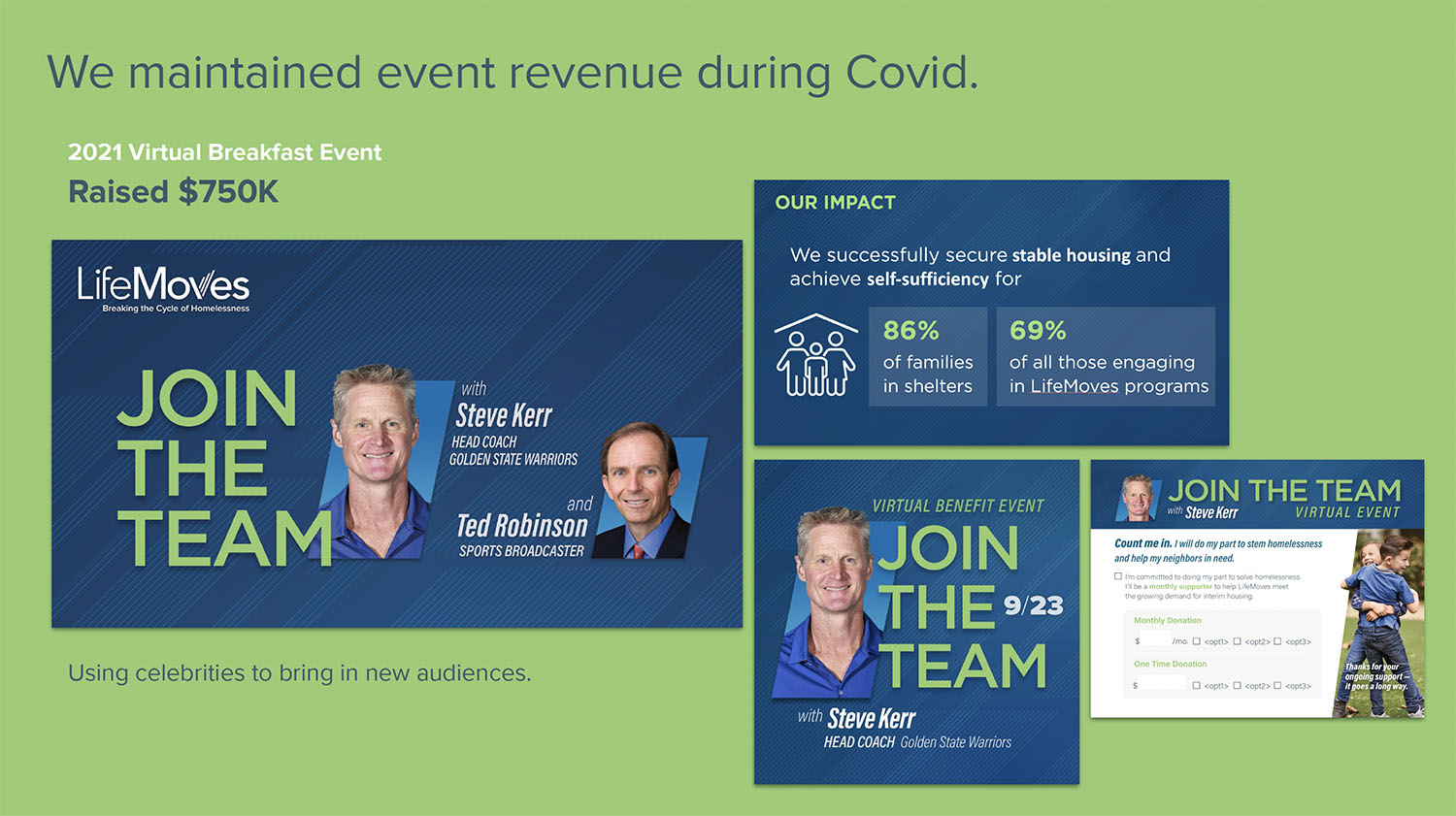
  • Promote two Principal Giving events annually including all digital strategy, outreach, presentation, journals, and sponsorship packages. Created customized materials and managed customized emailing for 7 Principal Gift Officers.

Fundraising Events

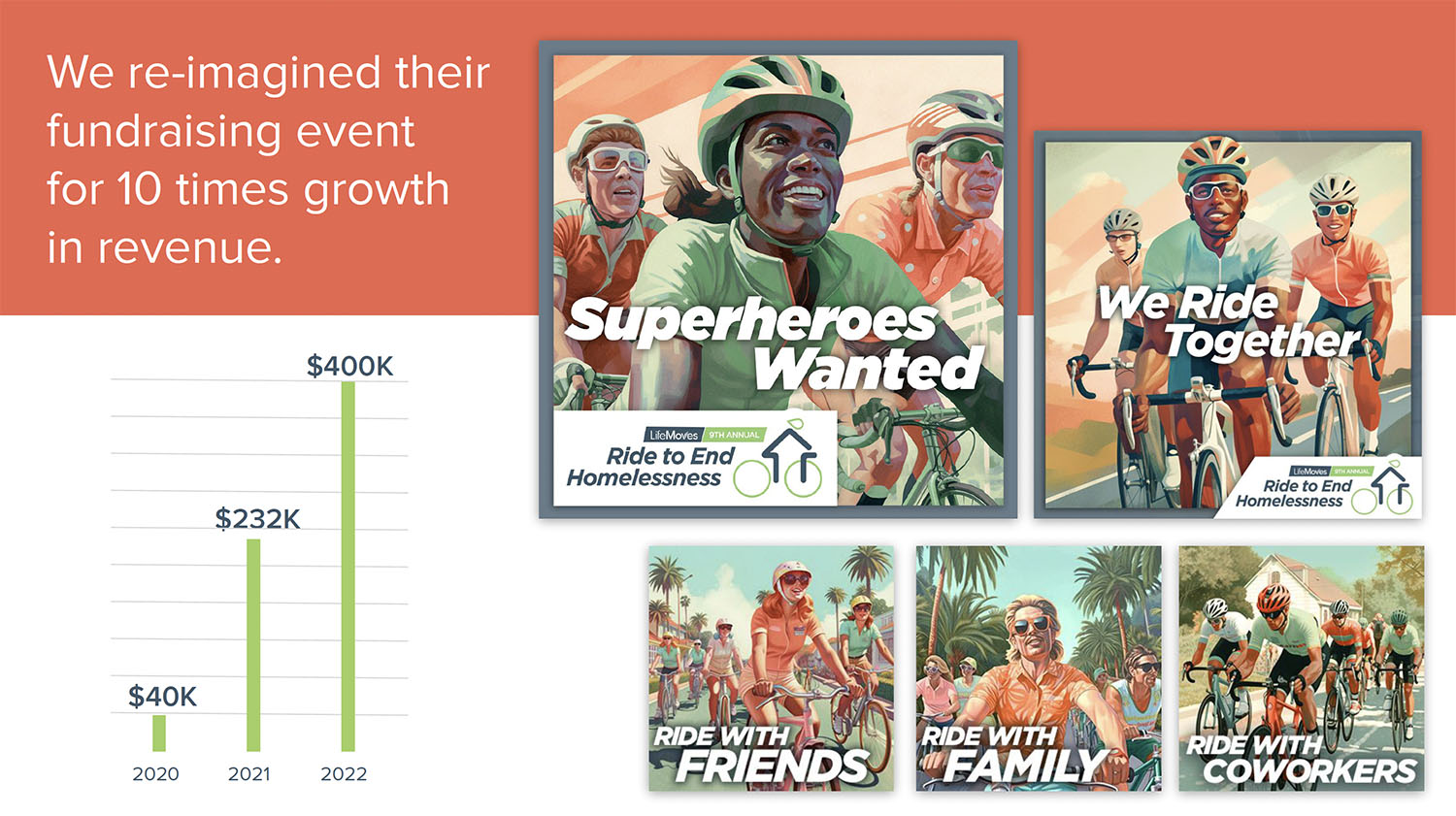
  • Promote the annual Ride to End Homelessness peer-to-peer fundraising event. Created brand strategy, designed new event logo, developed segmented email strategy and managed all emails, and design other promotion (advertising, banners, etc.). The ride has grown from $40K before us, to $400k in revenue.

Corporate Giving

  • Support the corporate sponsorship department with a range of strategic and marketing initiatives to shore up corporate support including researching and developing a presentation on homelessness in Silicon Valley and materials to promote sponsorship opportunities for the new interim housing sites and other opportunities.
  • Created materials to solicit sponsorship naming rights on LifeMoves facilities.

Brand Management

  • Evolved the organization’s brand to be more authentic — from merely showing happy outcomes to conveying the vulnerabilities of people experiencing homelessness and the complexities of their circumstances.
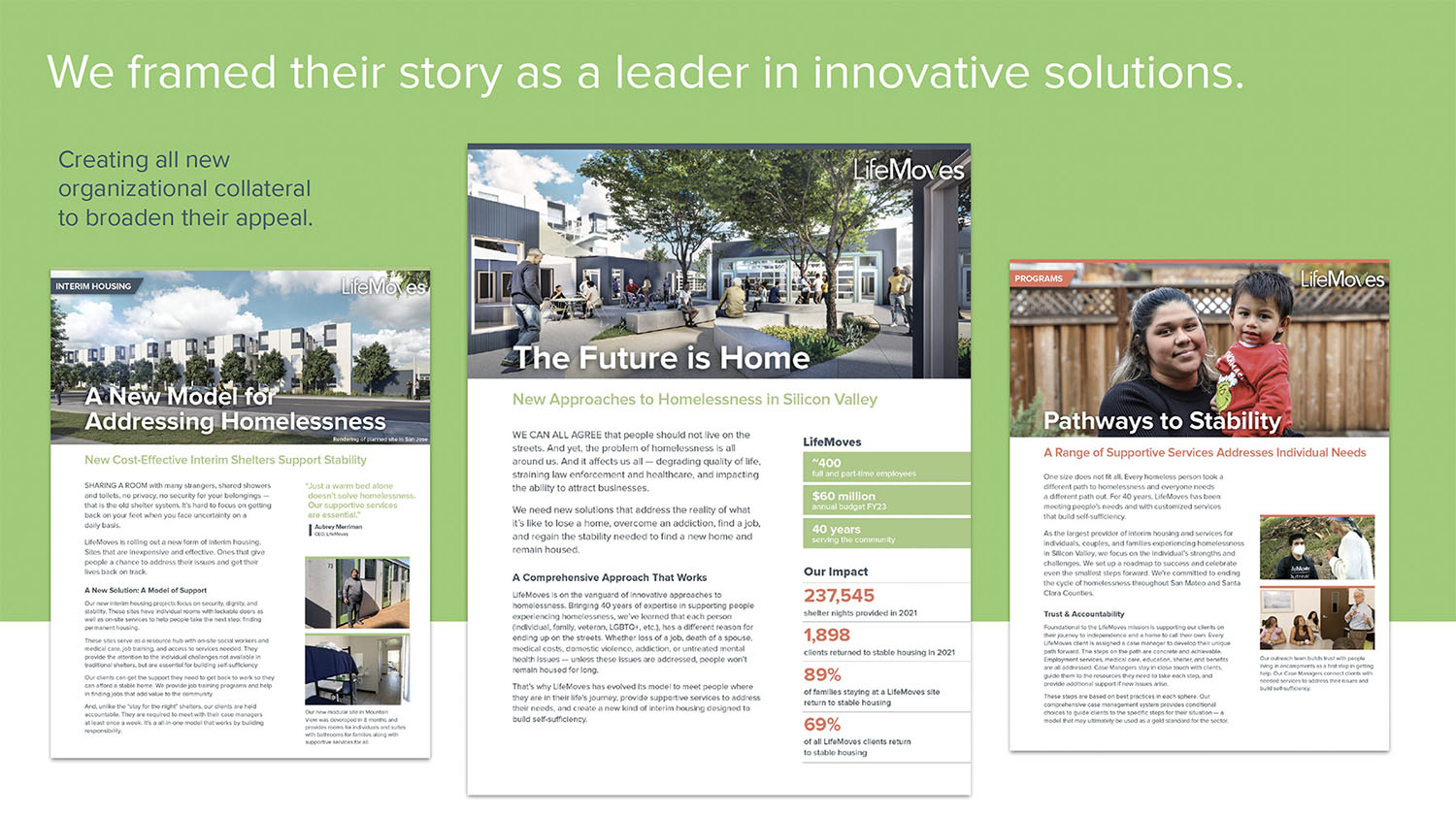
  • Balanced their story of interim housing sites with their services, crafting the narrative around their customized, and comprehensive approaches to helping people achieve stability.
  • Stewarded their brand and updated their colors and overall look to be more dynamic.

Organizational Collateral

  • Crafted their organizational story and corporate collateral materials.
  • Designed banners and pop-up displays for community events.
  • Produce their annual Impact Report.
  • Write and design their quarterly print and email newsletters.
  • Write and design the monthly Keygivers email newsletter for monthly supporters.

Website

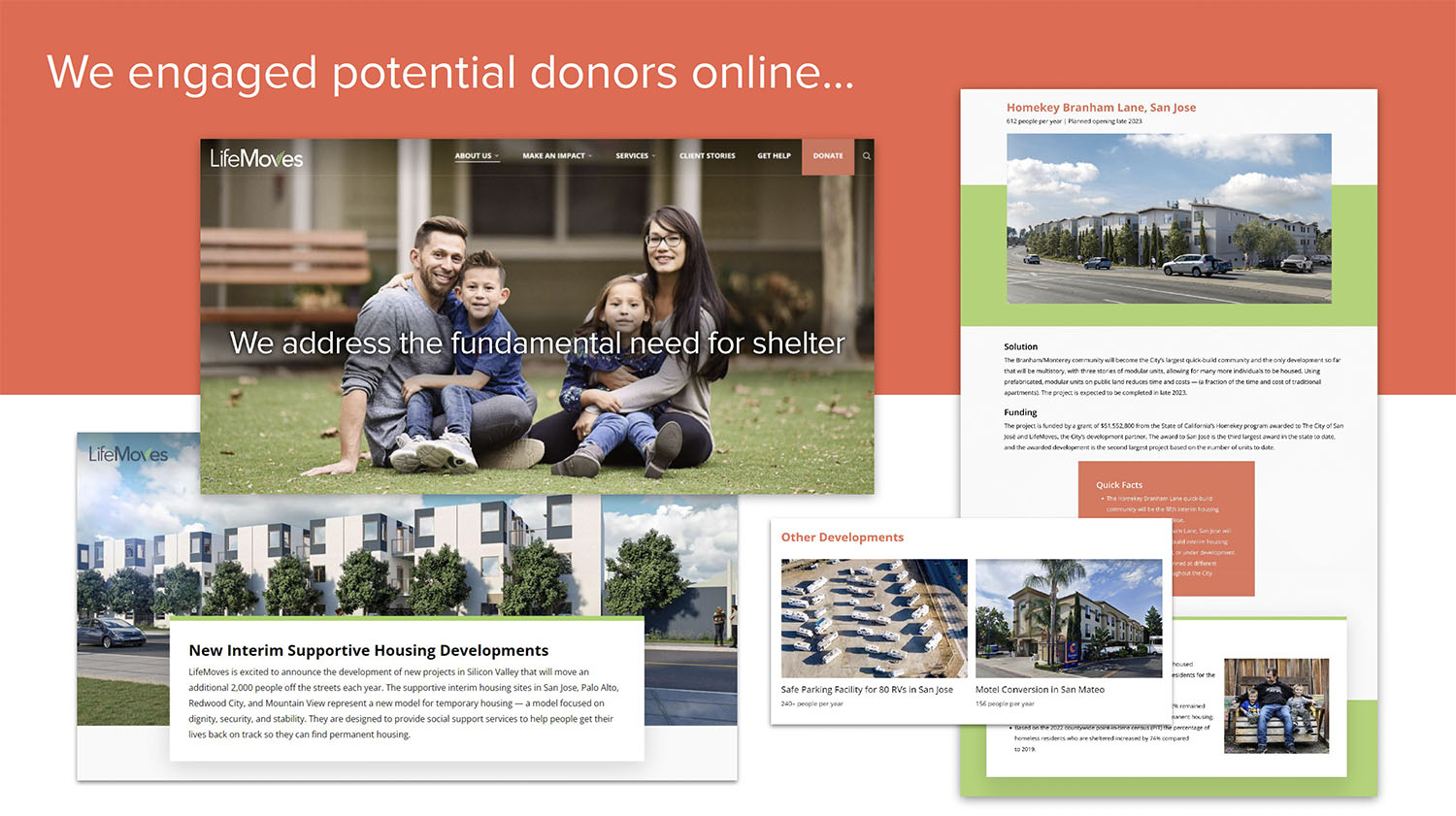
  • Set up landing pages in WordPress and donation pages in Classy to support fundraising campaigns.
  • Create new website sections and pages and update website content as needed.

Videos

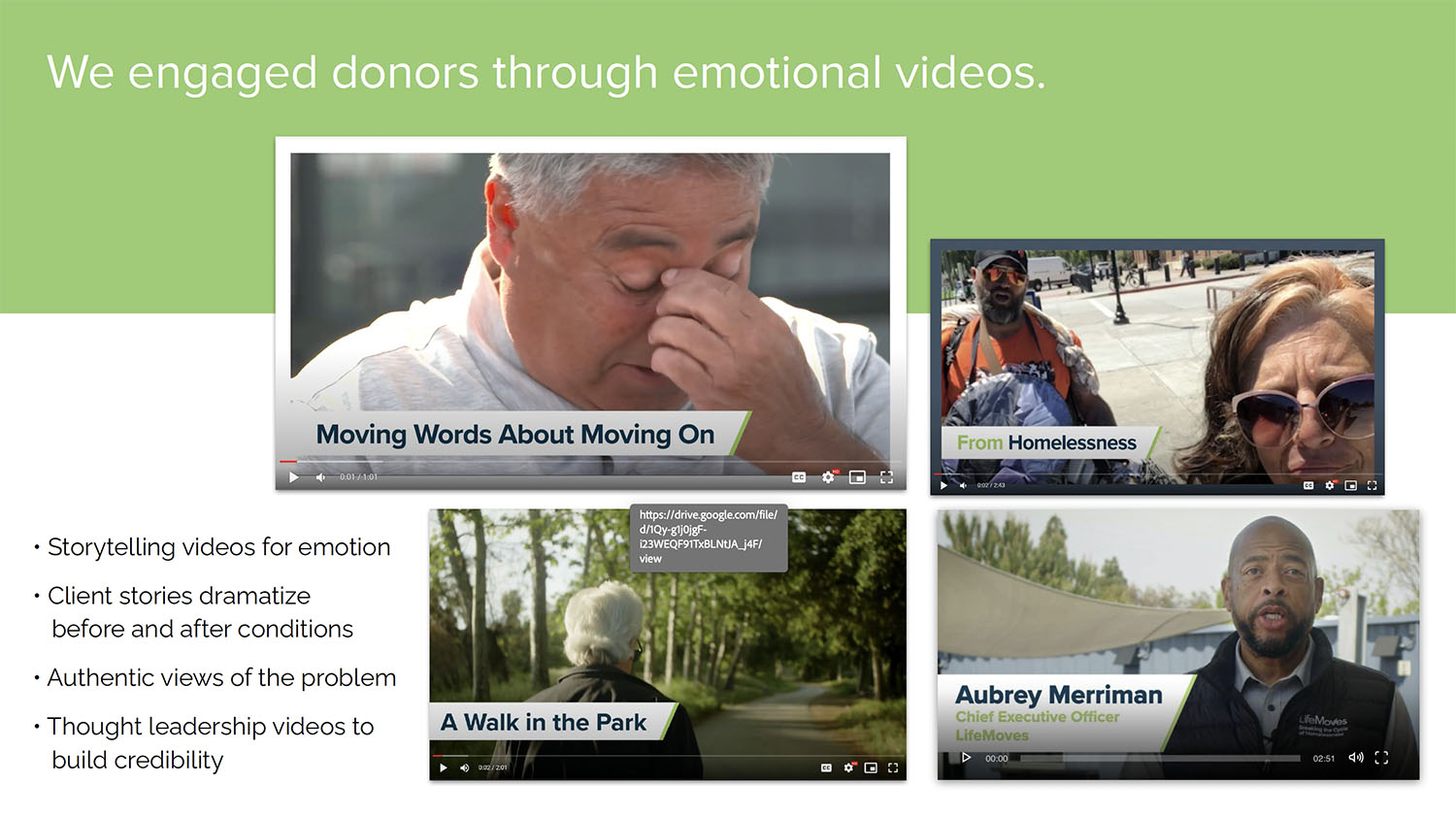
  • Produce videos to tell the organization’s story and elevate its profile. Includes scripting, on-site shooting, and all post-production work.

Communications Planning

  • Conducted an analysis of all emails sent by the organization over a 2-year period by audience and results, open rate, click rate, etc.
  • Handle dozens of emails for the organization over the course of the year (developing schedules. writing, designing, testing and approvals, coordination of URLs and lists, documenting, and reporting).
Fundraising & Marketing Continuity

  • Maintained all outreach, fundraising, website updates, etc. through 2 Executive Directors, a complete turnover of the Marketing Team, and new Chief Philanthropy Officer, and several new VPs of Development, providing stability and continuity throughout the organization’s growth.

What the Client Says

“I had the opportunity to work with Howard and the Red Rooster Group team during organizational change and growth initiatives at LifeMoves, one of the largest providers of homeless services in Silicon Valley. Howard’s talent for blending analytical thinking and creative problem-solving became critical for our transformation. He was a true partner and collaborator in our success.
He and his team are strong in revitalizing brands, launching groundbreaking initiatives, and tackling complex social issues. What truly sets Howard apart is his ability to look beyond immediate challenges. He envisions comprehensive solutions that drive long-term success, blending his expertise in behavioral psychology and fundraising with a genuine passion for creating positive change.
When you work with Howard, you’re not just gaining expertise; you’re partnering with a thought leader who expands your horizons and helps you achieve audacious goals.”

Marie Amoruso Jackson, Chief Marketing Officer

“I’m finally wrapping up my day and wanted to tell you all how great you were today. You totally hit it out of the park (just like my Dodgers last night!). We heard nothing but totally positive comments afterward. Your suggestions on how to engage the team right from the start were spot on. Many, many thanks.” 

Katherine Finnigan, Development

AMAZING….thank you Amit & Erin for making all this happen so quickly after our conversations…

Best“

Marie Jackson, Chief Marketing Officer

“This is such an understatement of what you did, Amit, what with the testing for ALL of these plus sorting out exclusions. Thank you for your amazing work!” 

Erin Hayes, Database Specialist

“This is what you’ll call a well-oiled and amazing machine!!! Thank you!”

Camille Gonzalez Kennedy | Vice President of Philanthropy

[re: our customized sending of emails for spring events]

“Brian, not sure who is doing your videos and online appeals, but I want to give a heartfelt congratulations to the folks responsible for this one. The subject heading is what I always tell nonprofits who want coverage or for people to actually read what you’ve done. As a professional in the business for more than 40 years, I don’t give kudos often. This one works.”

Rita

“You all rocked the webinar this morning…  huge thanks to all that you did as we went through all the learnings and even our ‘interesting’ glitches on the back end. Your calm and expertise really did shine…

We so appreciate you…”

Marie Jackson, Chief Marketing Officer

Nature Israel Website

Nature Israel Website

American Society for the Protection of Nature in Israel

Website Helps Environmental Nonprofit Engage Donors

Creating a website for Israel’s largest environmental organization to appeal to donors in the United States.

Services

  • Brand Strategy
  • Website Strategy
  • Website Copywriting
  • Website Design
  • Website Development

The Challenge

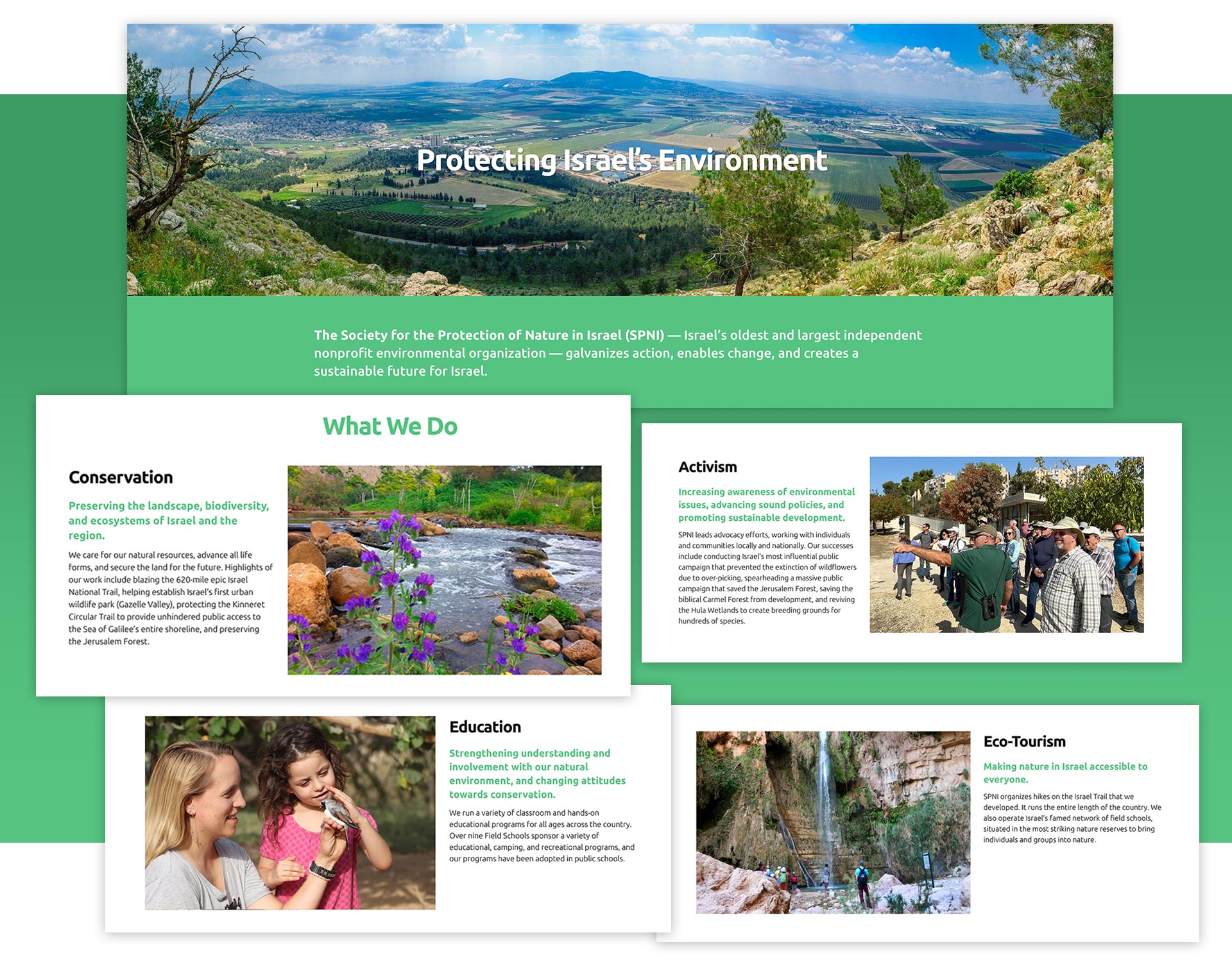
Despite its impressive accomplishments in preserving wildlife, protecting open spaces, and providing environmental education, the Society for the Protection of Nature in Israel, going by the name Nature Israel in the United States, was not well known here. They needed a modern website that introduced the brand to the American public, conveyed the breadth of their programs, and engaged donors in their mission. We delivered.

Creating a Fundraising Website for this Nonprofit

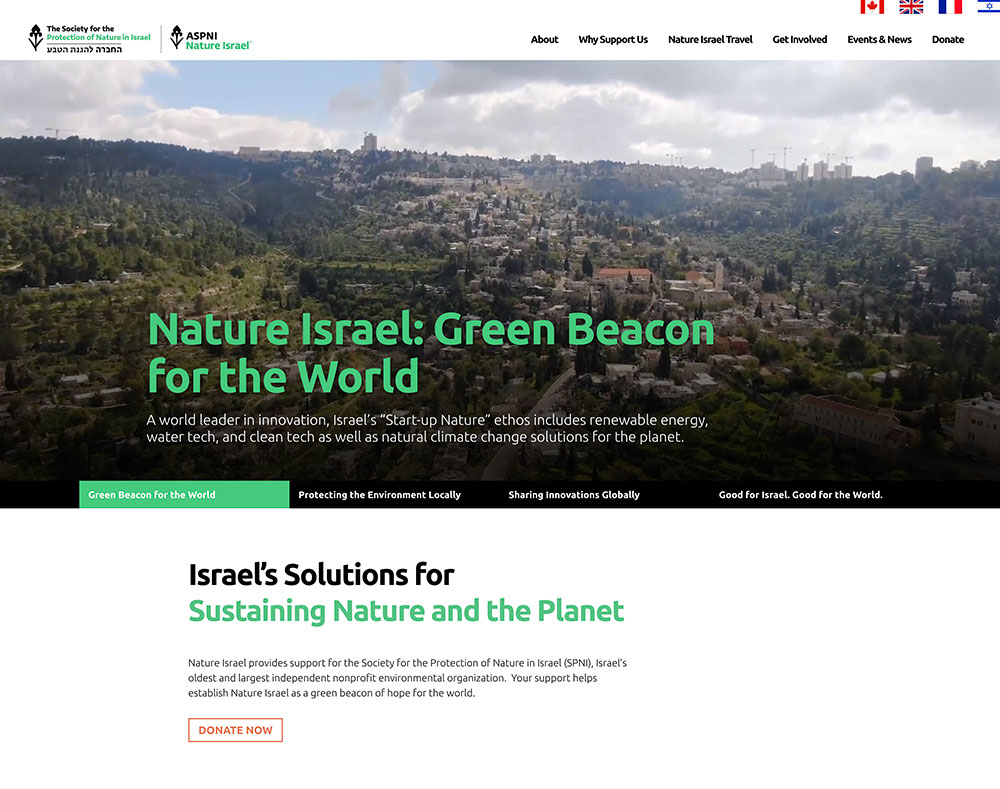
We created a new website to help this nonprofit appeal to donors in the United States. The website was part of our larger nonprofit branding engagement in positioning Nature Israel, establishing the fundraising foundation, and creating campaigns to generate leads.

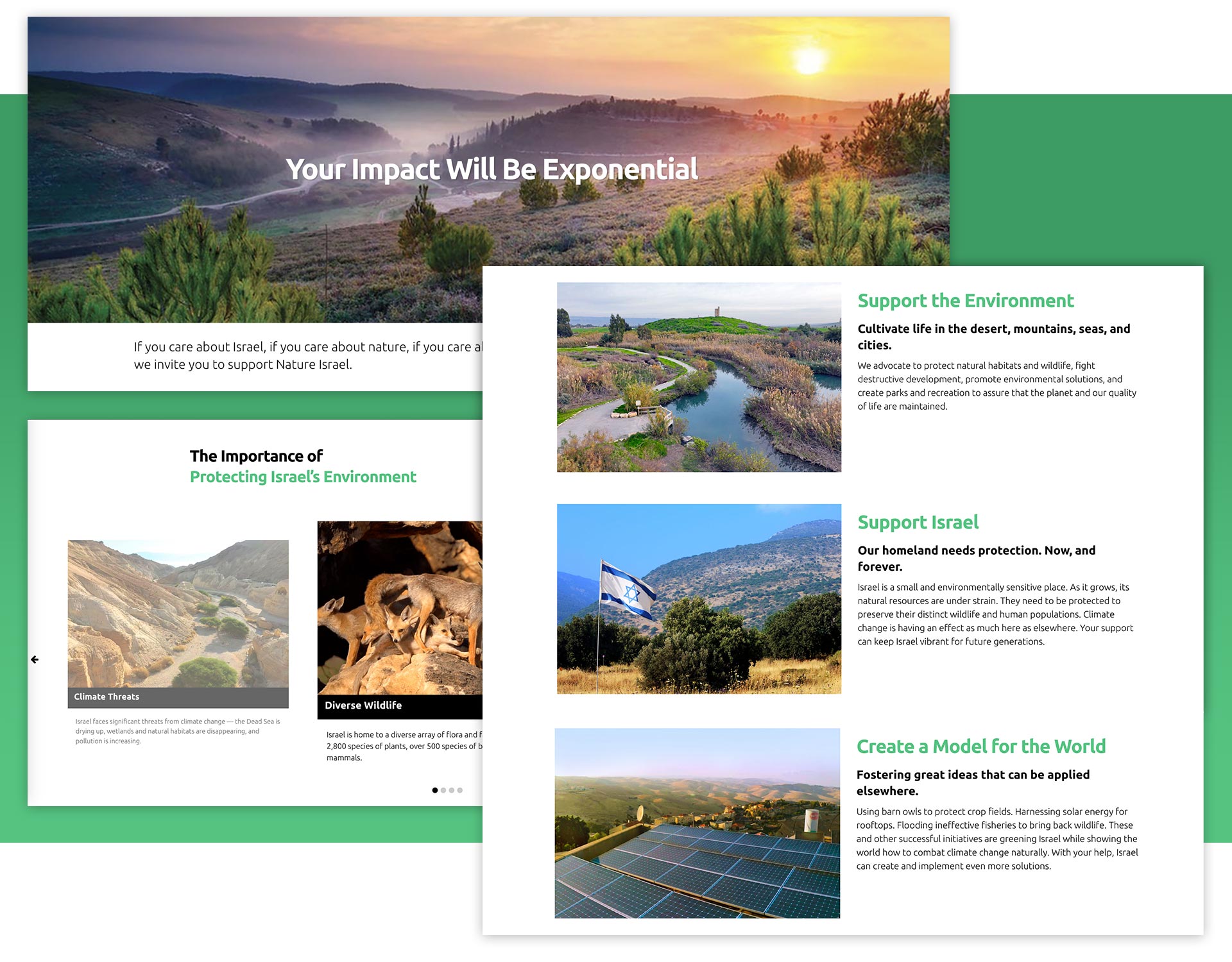
The site leveraged Israel’s reputation as a start-up nation for innovation to position Nature Israel as the green beacon for the world. As one of the most dense, diverse, and developed countries on Earth, Israel’s environmental solutions could have far-ranging impact for other countries.

In creating the website, we started from scratch, reimagining the user experience, writing all the copy, designing the interface, and developing the interactive features to engage donors.

Describing the Organization

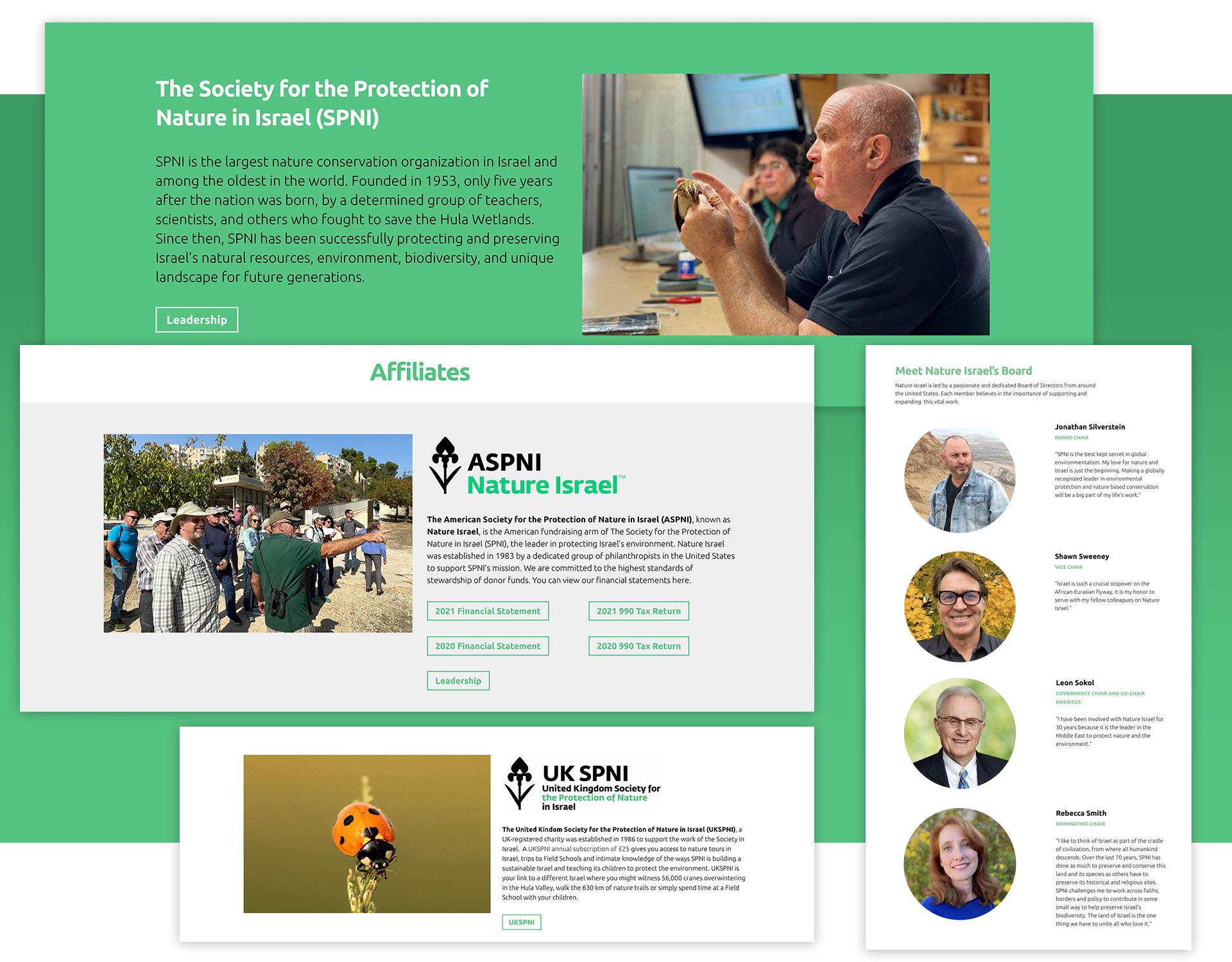
Nature Israel, formally known as the American Society for the Protection of Nature In Israel raises funds for the Society for the Protection of Nature In Israel. It’s the largest of several other international organizations raising funds for the work done in Israel. The website describes the relationship between the two entities.

Conveying Areas of Service

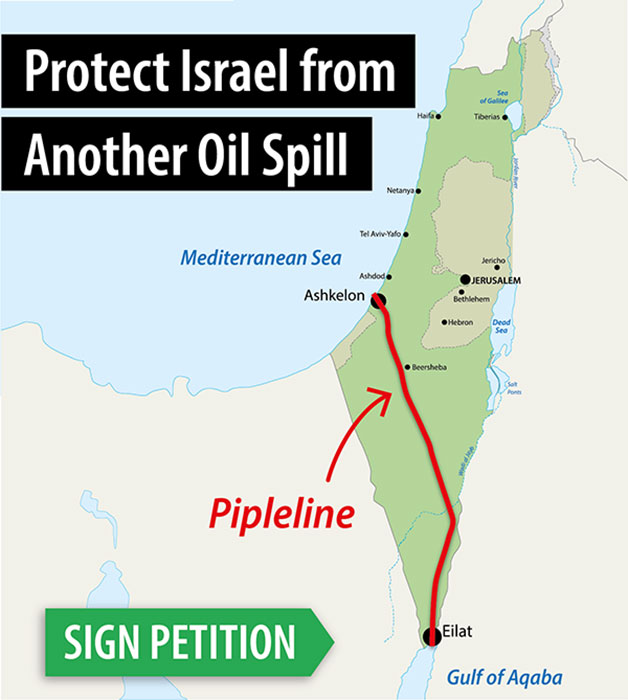
The organization focuses on conservation, education, activism, and eco-tourism. The site features current initiatives and invites site visitors to learn more. An RSS feed brings in news stories about the organizations so people can see how the organization is making an impact through its various programs.

Communicating Impact

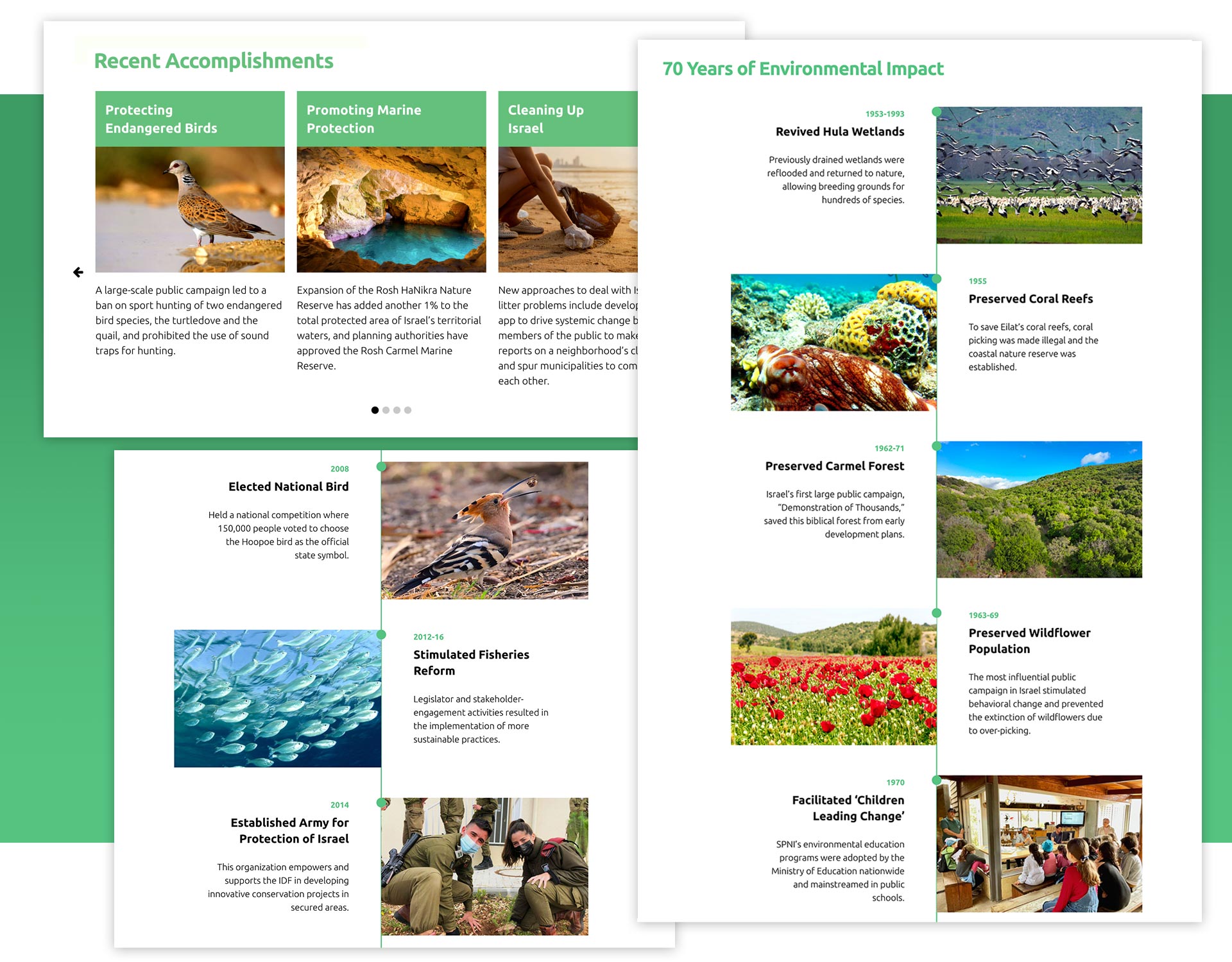
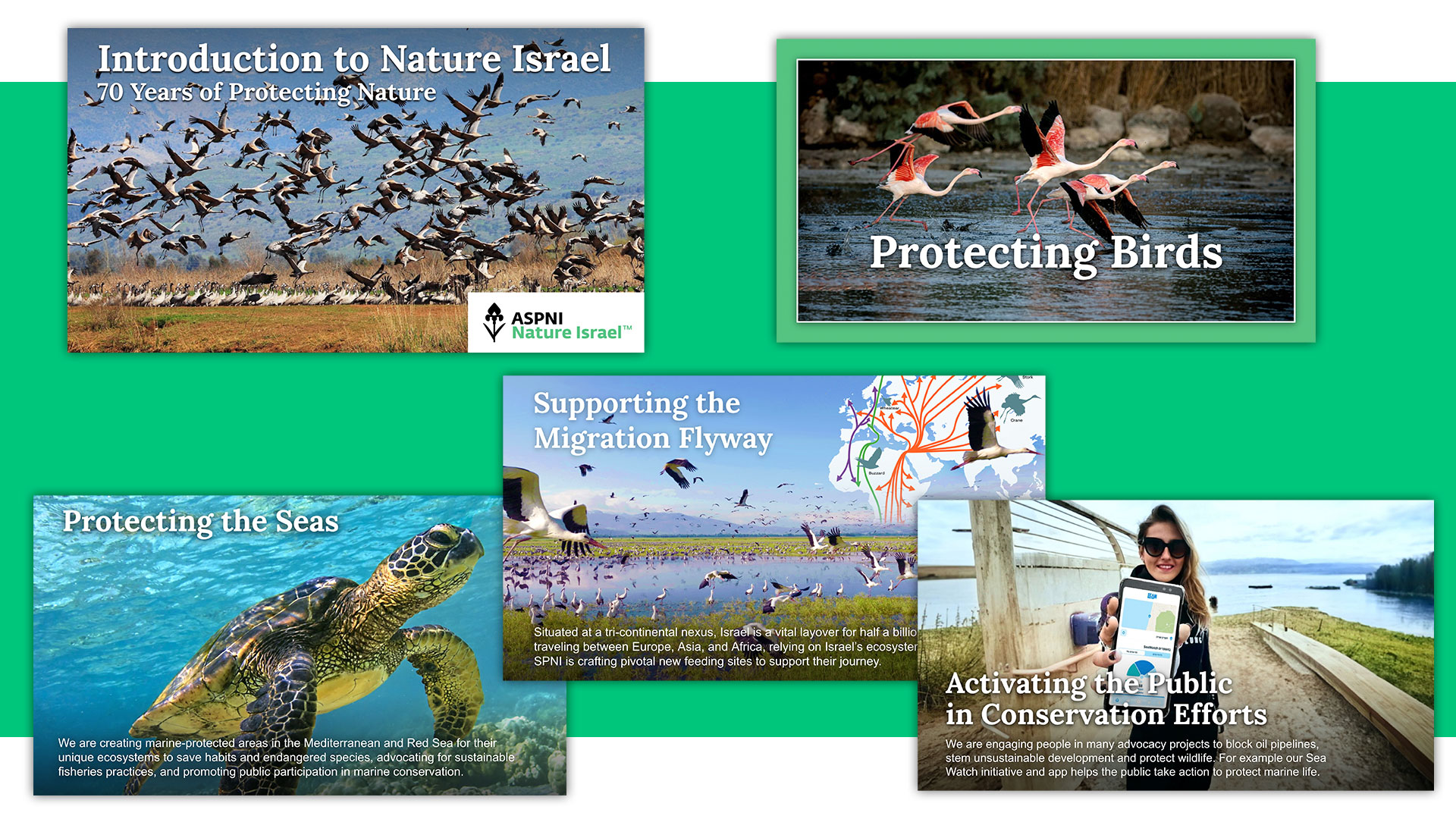
The Society for the Protection of Nature In Israel has an impressive 70-year track record of results in protecting wildlife. A slider showcases recent accomplishments, while a vertical timeline presents seven decades of environmental wins to bolster the credibility of the organization.

Telling the Fundraising Story

To solicit support for the organization, we made a clear case in pages that describe the need and reasons to support Nature Israel. One page builds on the main message about how supporting Israel helps the world, while another page describes how the Middle East is warming at twice the global average and that Israel is increasingly vulnerable to the impacts of climate change.

Engaging Website Visitors

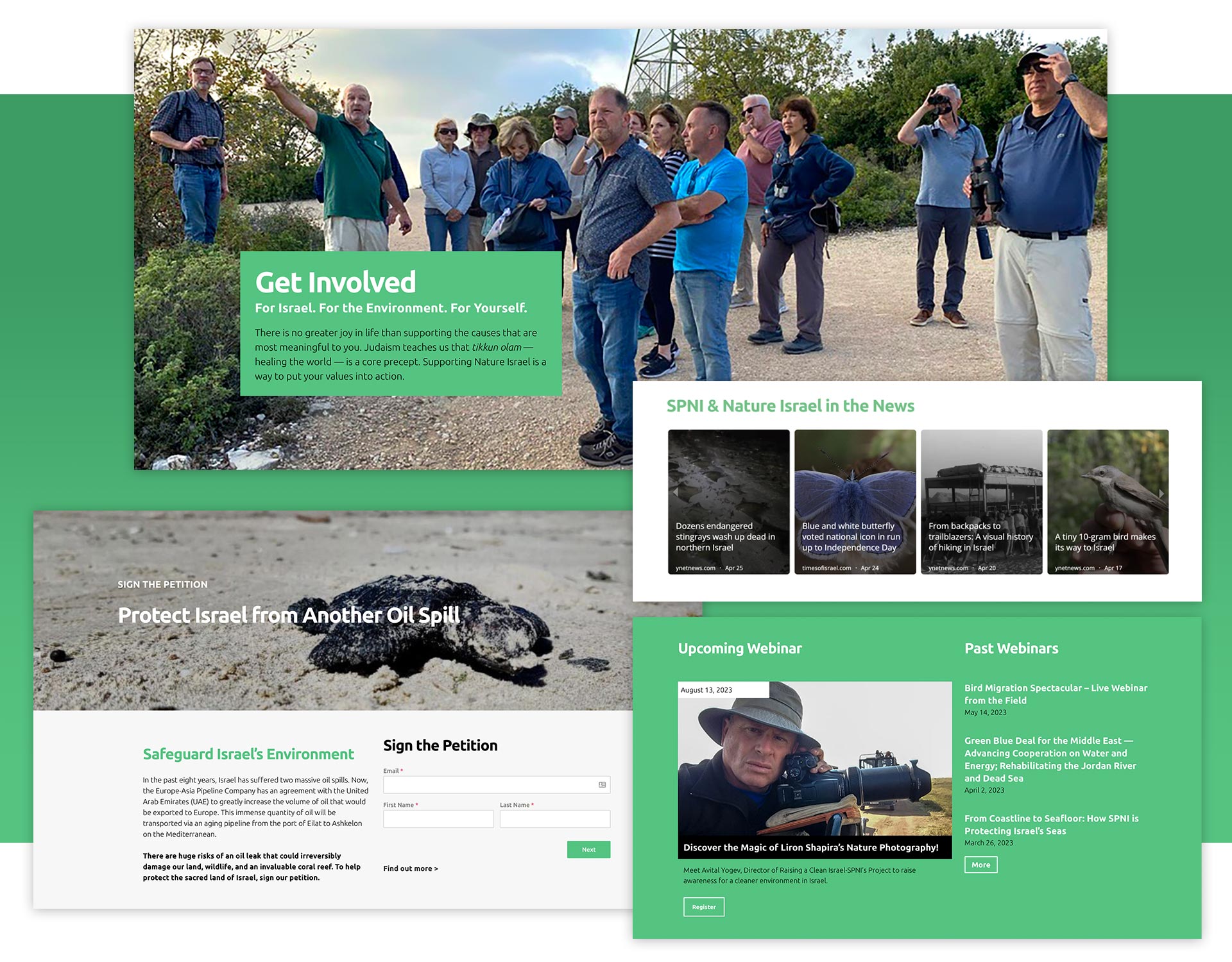
The Society for the Protection of Nature in Israel conducts webinars every two weeks on a variety of environmental topics. The webinars are featured prominently on the site as a way to engage new donors.

Get Involved Features

Promoting Eco-Tourism

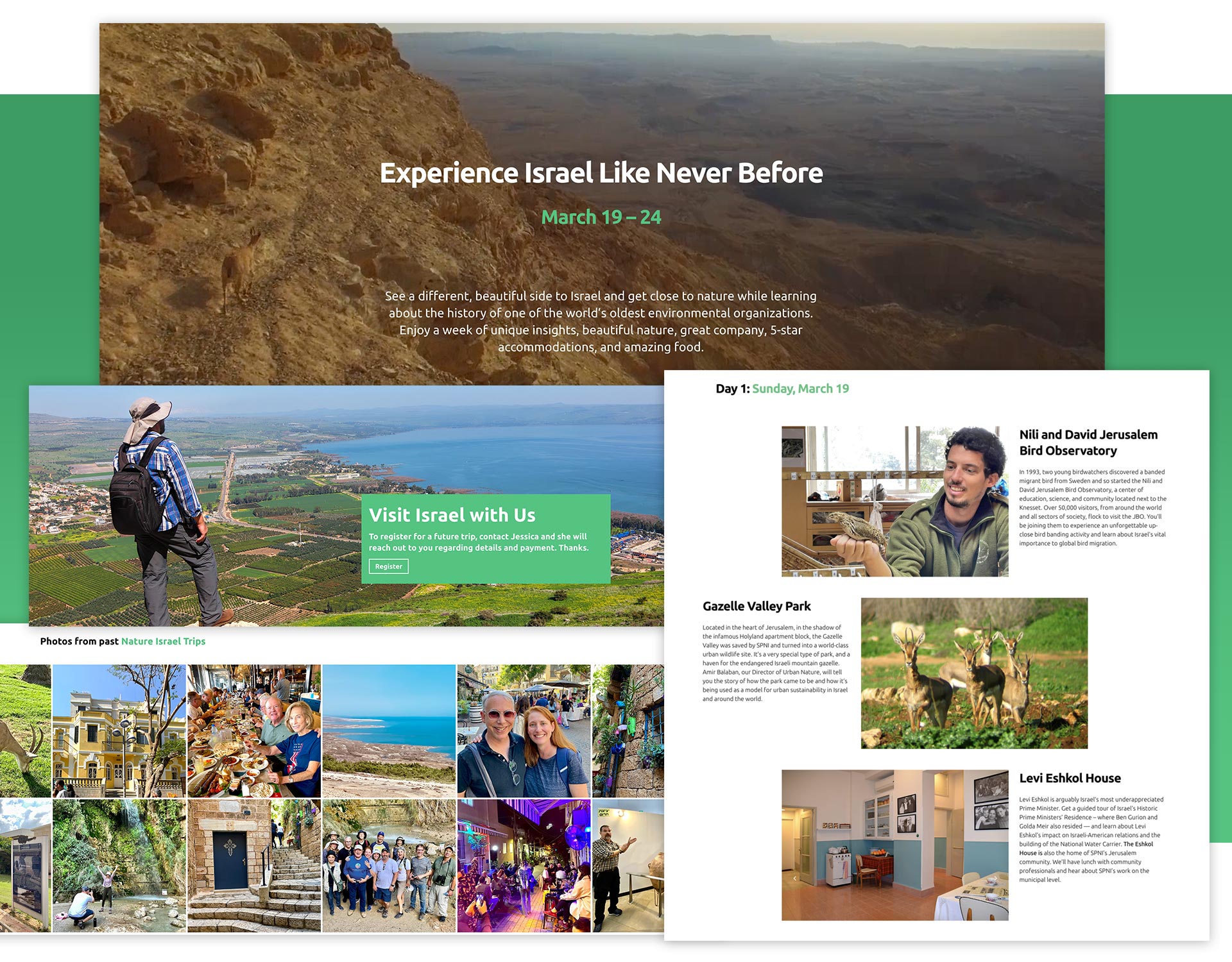
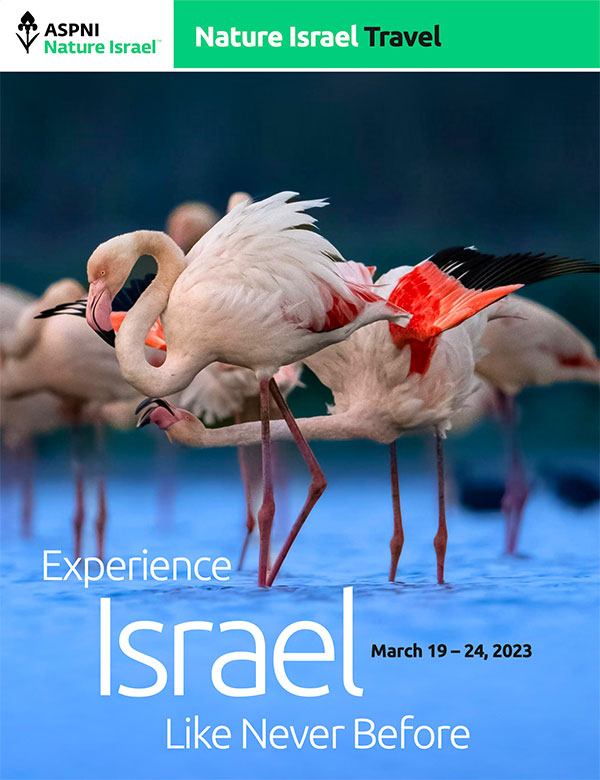
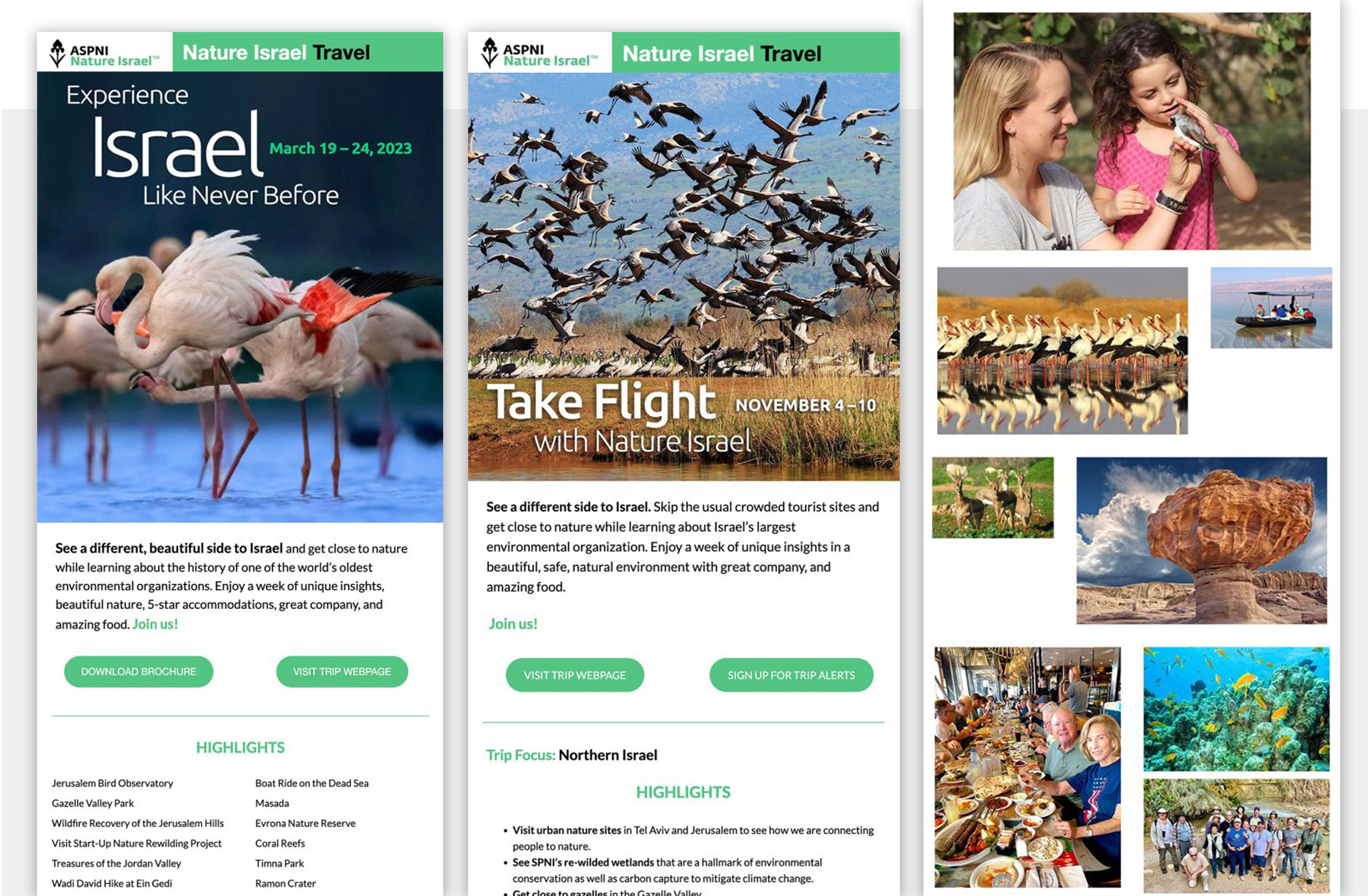
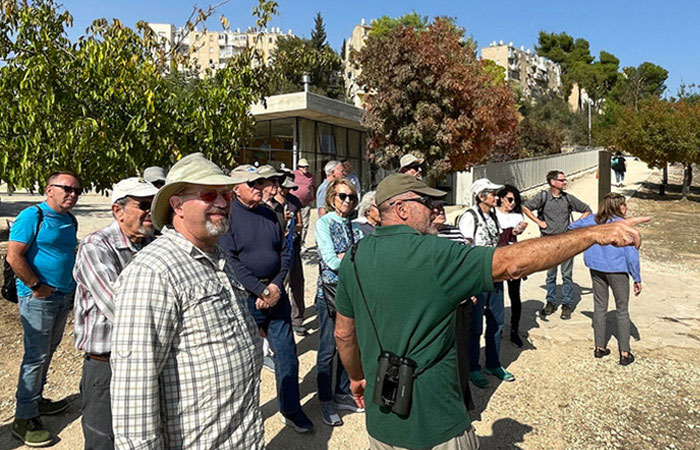
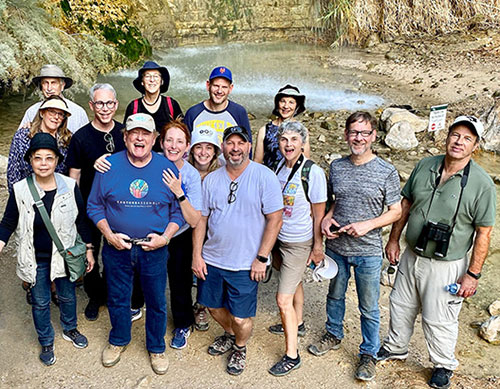
Travel to Israel is an important part of cultivating donors and a core part of the strategy. The trips are positioned as a different way to experience Israel — with access to special wildlife sites. We are promoting trips with web pages, brochures, and emails and encouraging registration and building a list of people interested in the trips.

A Powerful Tool

The organization now has a powerful tool to tell its story and engage donors. The website is part of a larger engagement strategy for cultivating donors in the United States.

Helping an Environmental Organization Take Flight

American Society for the Protection of Nature in Israel

Helping an Environmental Organization Take Flight

We helped Israel’s largest environmental organization build its fundraising capacity and reach donors in the U.S. with a new brand, website, and digital campaigns.

Services

  • Brand & Website Analysis
  • Brand Positioning & Messaging
  • Membership Benefits
  • Website Copywriting
  • Website Design
  • Website Development
  • Digital Donor Acquisition Campaigns
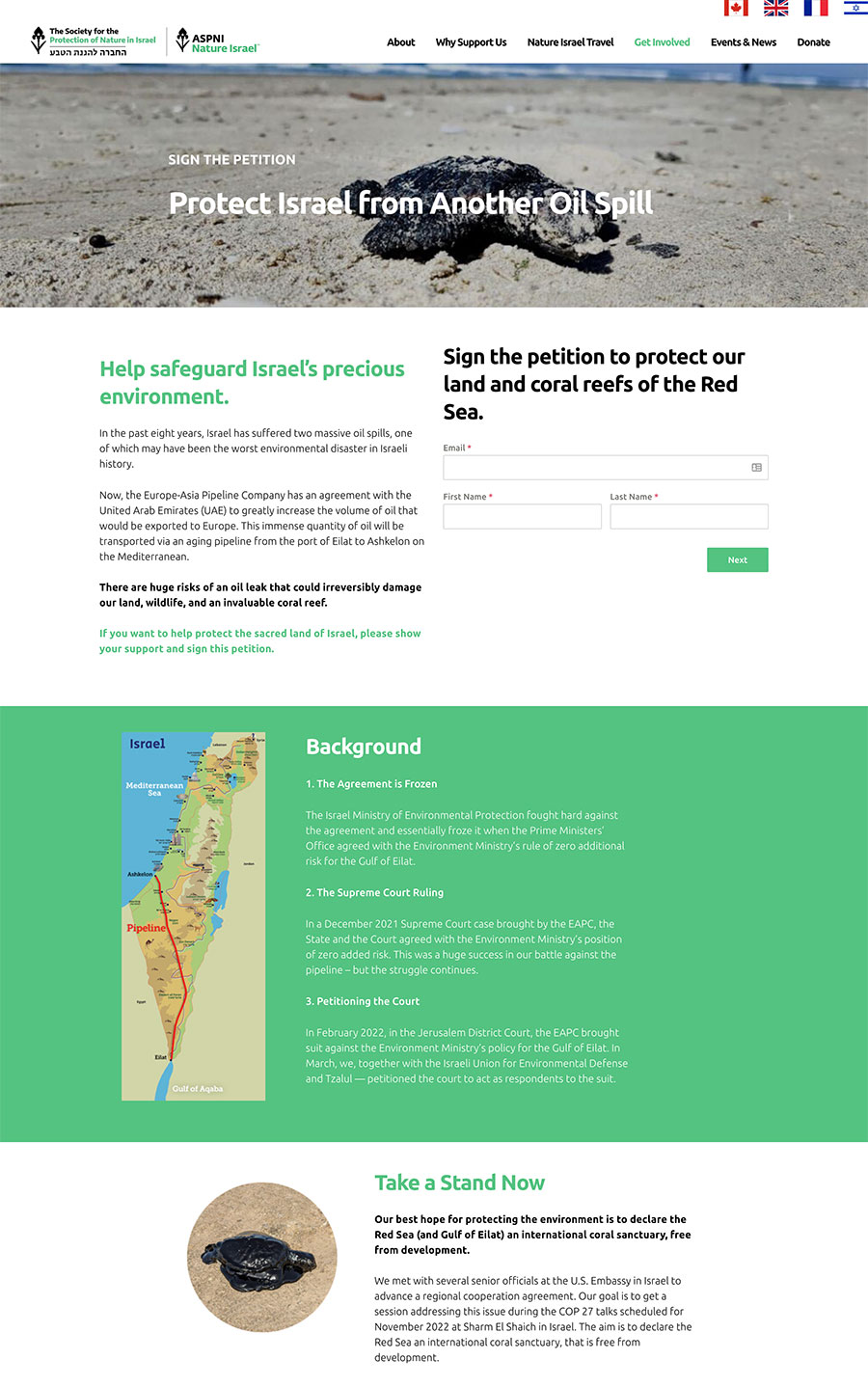
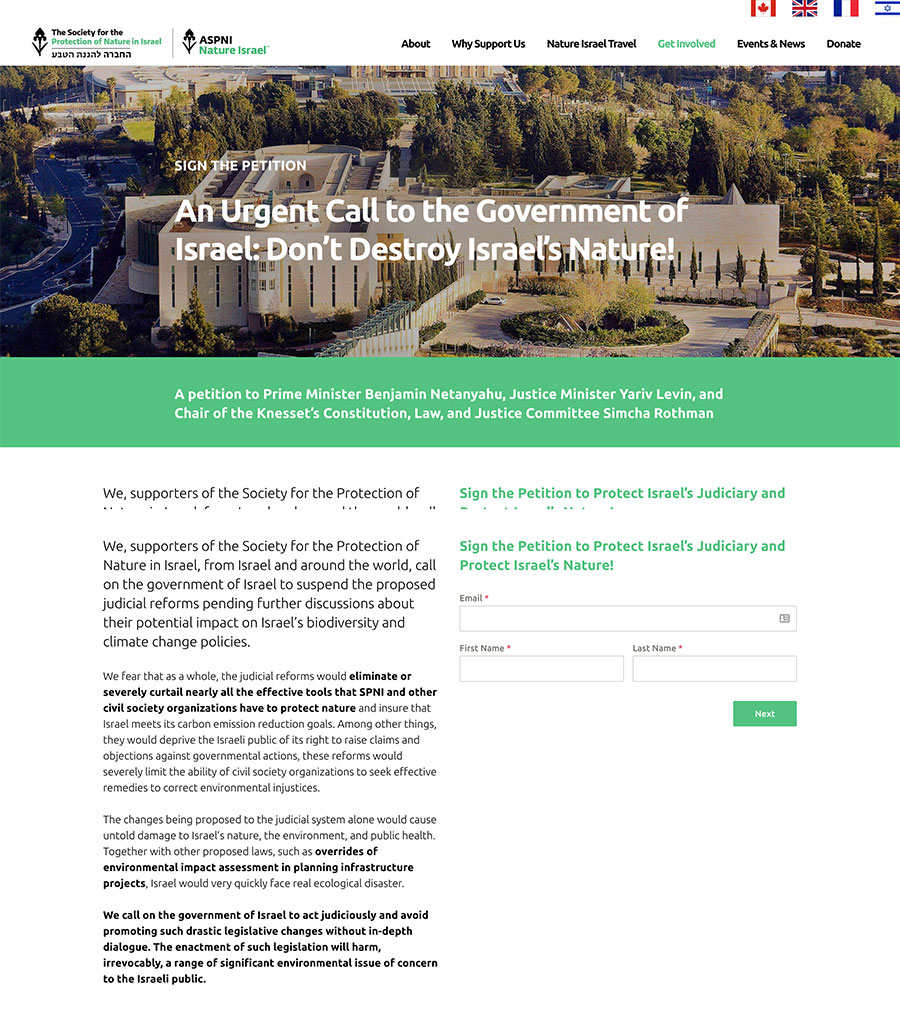
  • Advocacy Petitions
  • Webinars
  • Fundraising Emails
  • Fundraising Direct Mail
  • Promoting Travel to Israel

3.3 Million

IMPRESSIONS

1.6 Million

PEOPLE REACHED

8,500

NEW PROSPECT EMAILS COLLECTED

“Howard’s thought partnership helped Nature Israel take a great leap forward. Our new website has brought us new major donors, including several major corporate entities. I highly recommend Red Rooster Group.”

– Rachel Canar, Executive Director

The Challenge

Established at the country’s founding, the Society for the Protection of Nature in Israel is the oldest and largest environmental organization in Israel. But it is not well known in the United States, making fundraising a challenge. Red Rooster Group was brought in the elevate its American fundraising arm, known as Nature Israel, and build a base of supporters in the United States.

What We Accomplished

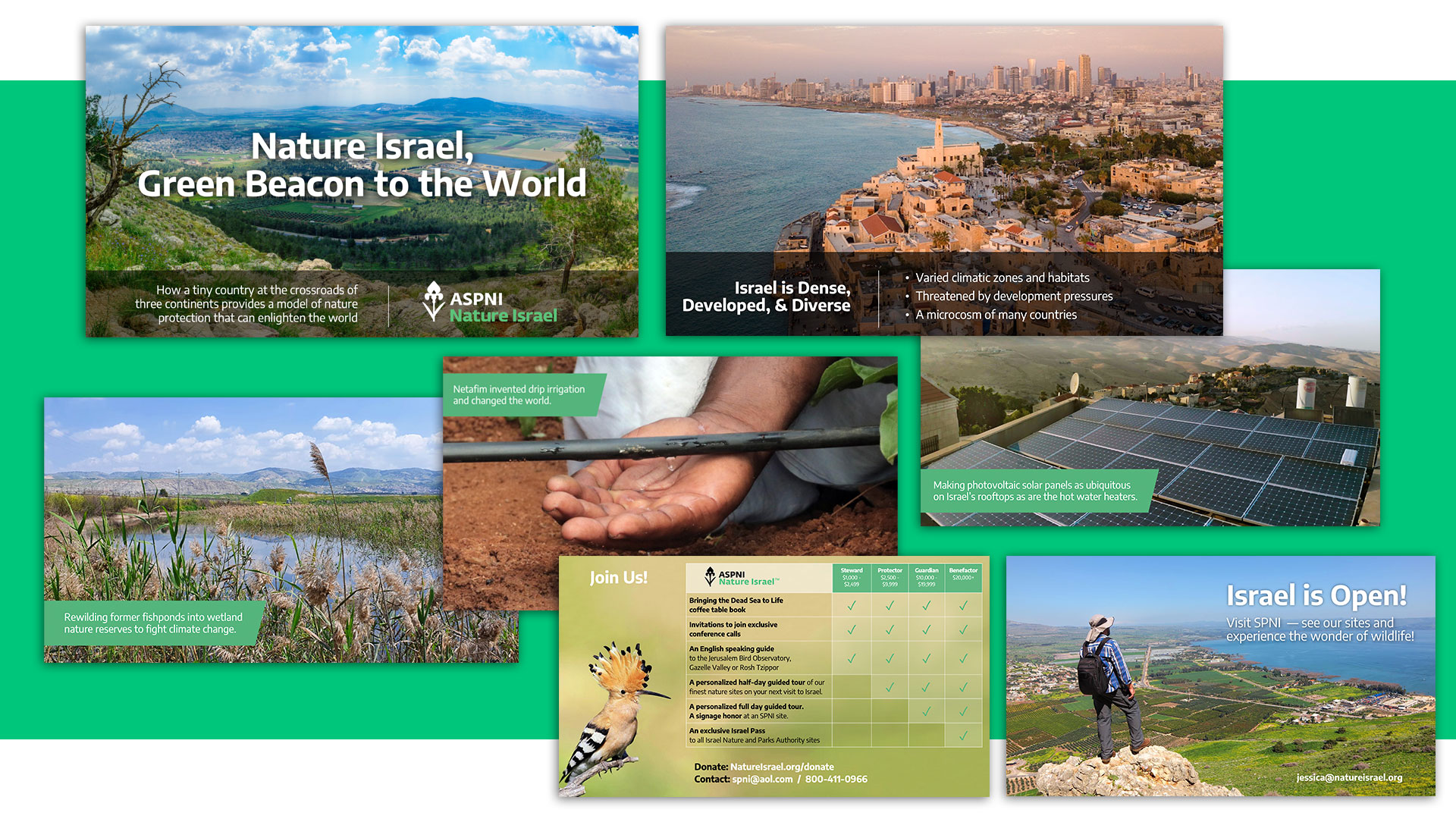
  • Developed the brand positioning and created a donor presentation.
  • Built a new donor-focused website to improve awareness in the United States.
  • Established the Nature Israel Travel Brand, webpages, and brochures, and generated leads of people interested in their trips.
  • Significantly increased the awareness of Nature Israel reaching 1.6 million people with 3.3 million impressions.
  • Built a prospect database of 8,500 emails of people who have taken an action for the organization. (such as signing a petition).

Defining the Brand

Our first step was to leverage unique insights to establish a clear brand value. The organization had presented itself as protecting wildlife, advocating for nature, educating the public, and providing recreational opportunities in nature.

But to get the brand noticed in the United States, something more was needed.

Leveraging Israel’s reputation as a start-up nation for innovation —with its technology improving lives globally — we positioned Nature Israel as the green beacon for the world. As one of the most dense, diverse, and developed countries on Earth, Israel’s environmental solutions could have far-ranging impact for other countries.

Telling the Story

In order to engage donors in the organization’s work and impact, we created a presentation that describes its success in conservation, education, activism, and eco-tourism.

Webinar to Introduce this Nonprofit’s Brand

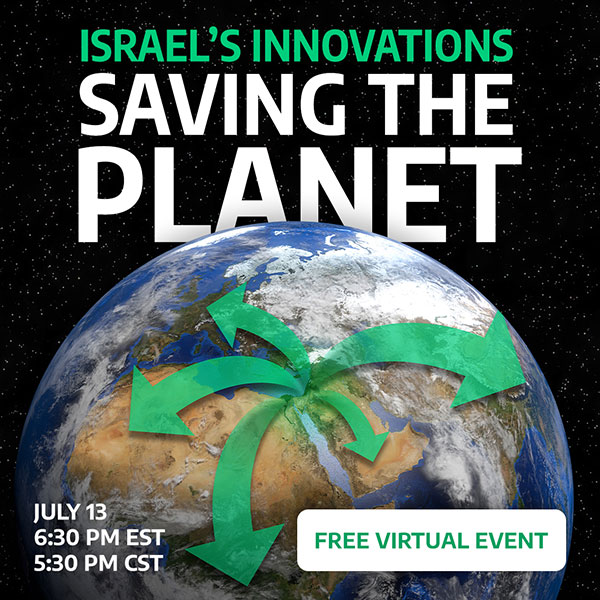
We created a webinar as a way to introduce Nature Israel to American audiences and generate leads, promoting it on Facebook with various audience targeting strategies. The webinar highlighted environmental technology that came out of Israel, featured the membership benefits chart we developed to engage people in membership, and invited webinar participants to visit the organization’s sites in Israel.

Creating a Fundraising Website 

We created a new website for this nonprofit to appeal to donors in the United States. This website serves as their prime vehicle for fundraising. We started from scratch, reimagining the user experience, writing all the copy, creating the design, and developing the interactive features.

The website features the organization’s current initiatives, a timeline showcasing 70 years of impact, multiple pages describing reasons to support Nature Israel, customized news feeds and other features.

Digital Campaign to Attract Prospective Donors

To engage audiences, the website features webinars, a travel section, petitions, and other features to generate leads and cultivate prospective donors. The lead generation features are integrated into MailChimp and Salesforce to create a robust database for the organization.

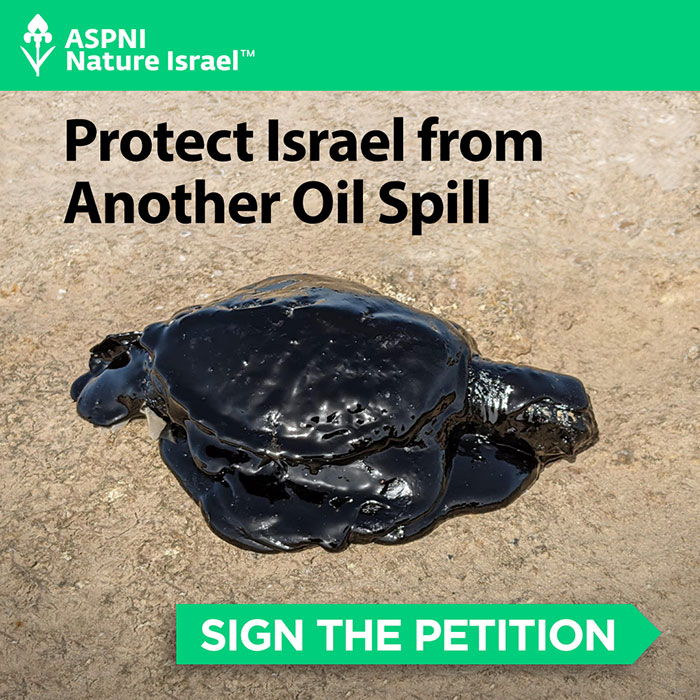
Using Petitions to Generate Leads

Our fundraising goals include generating new leads for Nature Israel and cultivating them as potential donors. To accomplish this, we implemented a 2-stage process. We attracted new leads by promoting petitions, a webinar, and blog posts on Facebook.

The campaigns led people to a Facebook form or landing page where we collected emails. We used five different audience targeting strategies, and A/B split testing on all ads. This has enabled us to collect more than 7,000 leads in a short period of time. The next phase involves cultivating these prospects into donors through a series of email campaigns.

Promoting Eco-Tourism

To cultivate larger donors, Nature Israel is running trips to experience “the wild side of Israel” — its amazing wildlife and nature sites. We created a Nature Israel Travel section on the website with extensive pages about each trip, brochures, email campaigns, and social posts.

Travel Emails

Building a Fundraising Infrastructure

As Nature Israel’s strategic fundraising partner, we are setting a foundation for their growth by:

  • Creating an Operations Manual that documents all fundraising and marketing processes and is continually updated as needed.
  • Providing critical technological support in setting up and maintaining their back-end systems, including the WordPress website, MailChimp, Classy, and integrations between systems.
  • Cleaning up lists in MailChimp by consolidating tags.
  • Creating an Editorial Style Guide to ensure consistent communications throughout the organization.
  • Developing a master Marketing Calendar including emails, fundraising, event promotion, and other activities.
  • Coordinating marketing and fundraising activities with the Israel team.
  • Creating direct mail packages, handling printing and mailing management.
  • Introducing personalization and custom gift arrays in their direct mail.
  • Producing special fundraising projects, including Tribute Books.
  • Promoting organizational events in the United States.

Achieving Results

Foundation

Nature Israel now has a clearly defined brand, an engaging website, and a solid foundation to support its fundraising.

Prospects

Our digital outreach campaigns have generated more than 8,000 emails of people who have taken action on behalf of the organization.

Travel

Our travel promotion has resulted a list of several hundred people interested in their trips as well as groups visiting Israel to see the organization’s work first-hand.

4.1 Million
Impressions

43,654
Link Clicks

8,439
Emails Collected

“Howard and his team managed a rebrand and new website launch for Nature Israel. They really helped bring our organization into the 21st century. The website that they created is just beautiful and we are constantly getting this feedback. The SEO optimization they implemented is truly awesome, bringing us many new people from organic searches. Most importantly, this has brought it new major donors, including several major corporate entities looking for water offsets and environmental organizations in the region. Howard’s thought partnership helped Nature Israel take a great leap forward and he remains a true friend of our organization. He remains responsive to this day. I highly recommend him.”

– Rachel Canar, Executive Director

Promoting Early Education

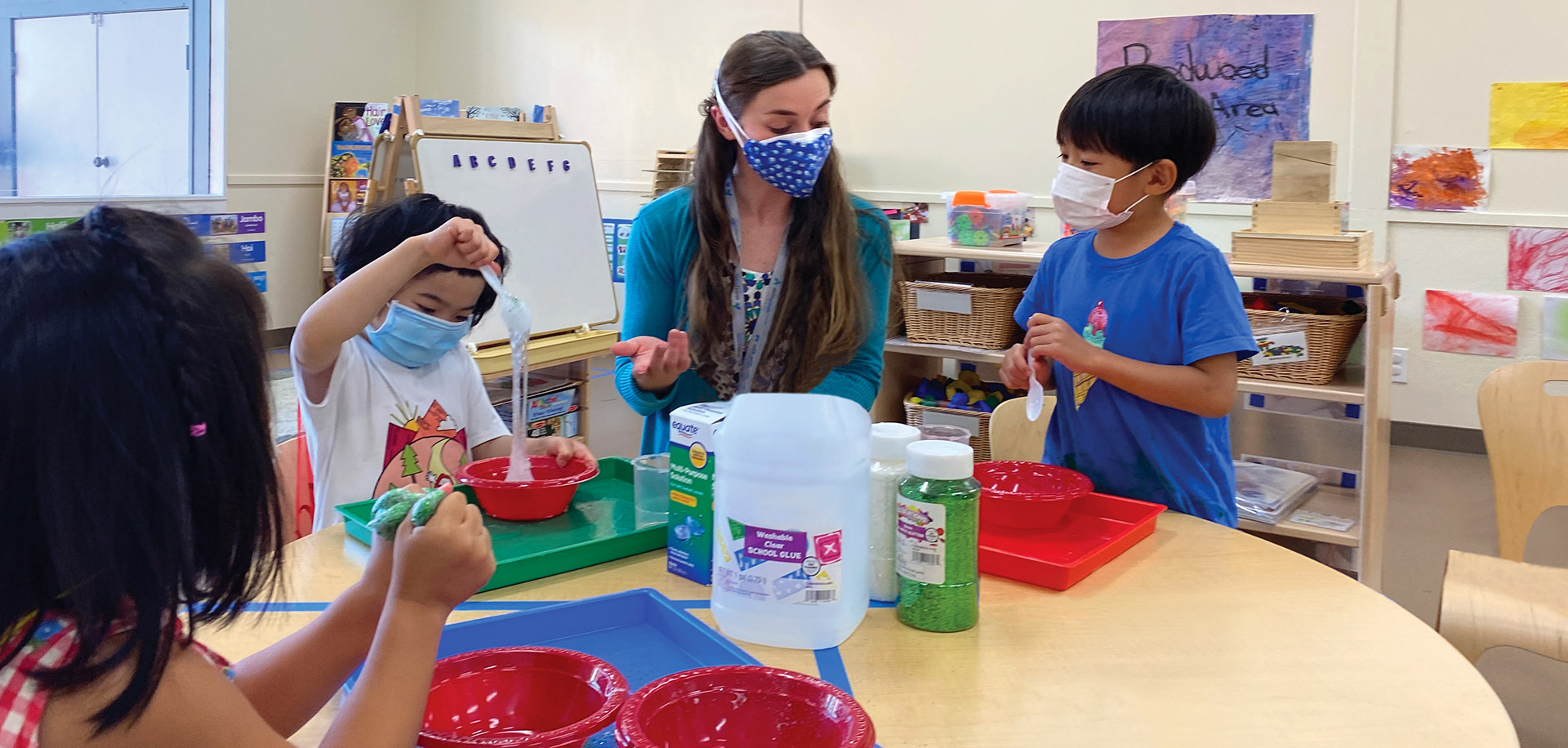
LearningLinks Preschool

Integrated Digital & Print Campaign

A comprehensive marketing plan and digital campaign, including testing various offers online and in person for driving enrollment.

Services

  • Assessment
  • Messaging Strategy
  • Facebook Targeting Strategy
  • Digital Marketing Management
  • Emails
  • Social Media
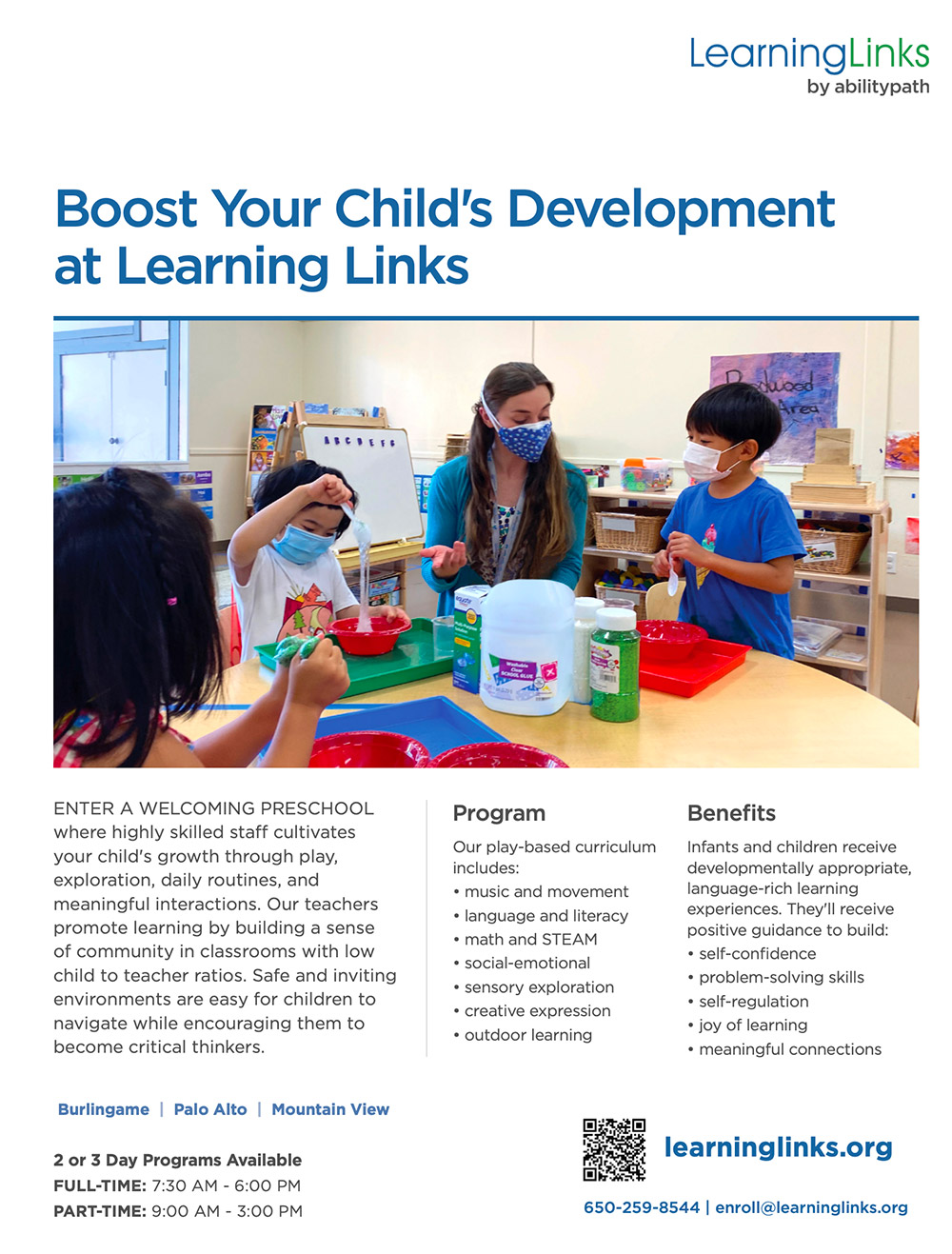
  • Print Collateral
  • Website Enhancements
  • Testimonial Videos
  • Marketing Videos

Results

139,000

Impressions

2,074

Link Clicks

The Challenge

LearningLinks Preschool needed to grow enrollment in a competitive early education market. At the same time, a parallel challenge emerged: recruiting qualified teachers in a tight labor market. Both audiences — parents considering enrollment and educators considering employment — needed to be reached simultaneously with distinct messages and through different channels.

Communications Assessment & Recommendations

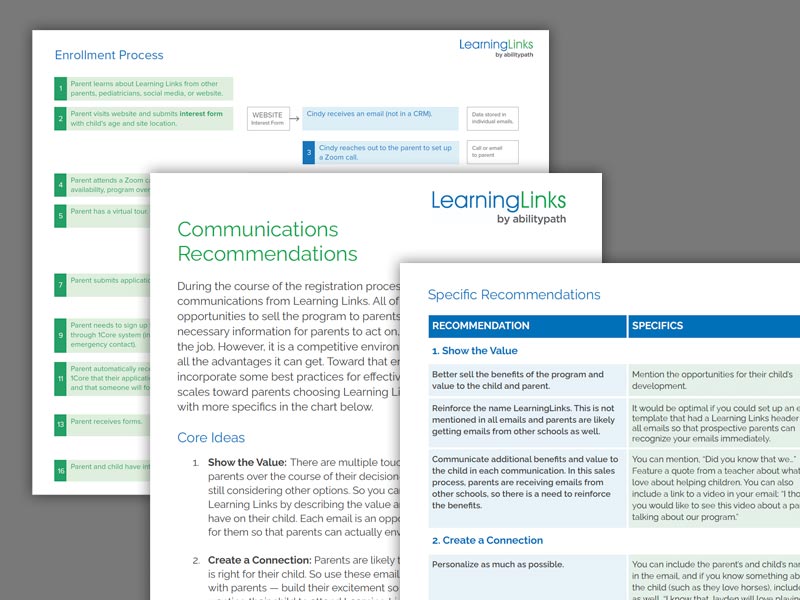
We interviewed staff and mapped every prospective parent touchpoint from awareness through enrollment. The resulting flow chart revealed gaps in follow-up, messaging, urgency, and motivation, allowing us to recommend more effective emails and communications to move families toward action.

Messaging Strategy & Overview Document


We developed an overview document defining the school’s core proposition: what made LearningLinks distinctively valuable to parents. This became the foundation for all subsequent creative work, ensuring consistency across every channel and audience.

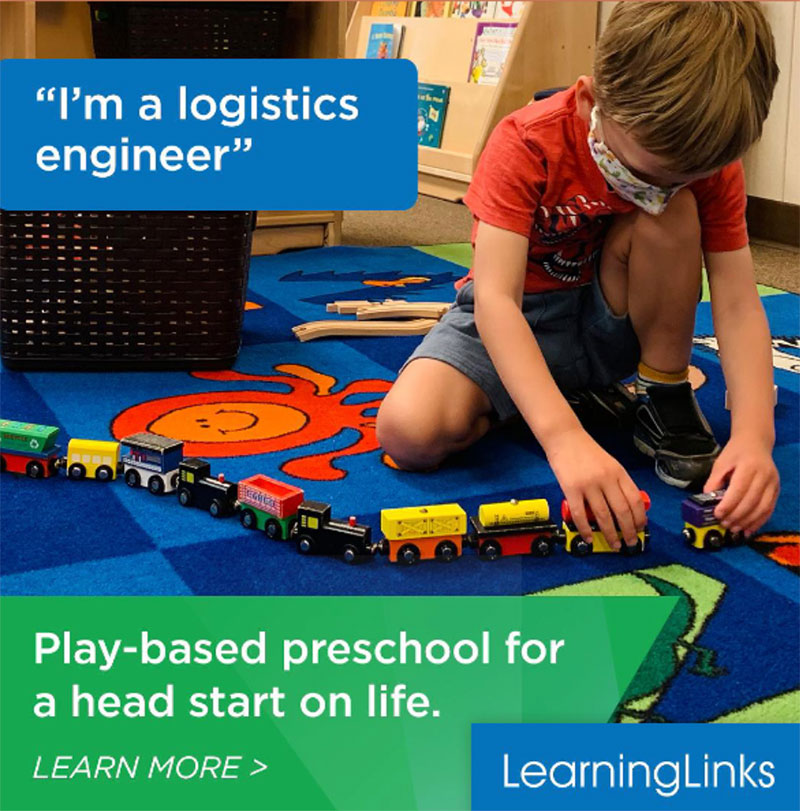
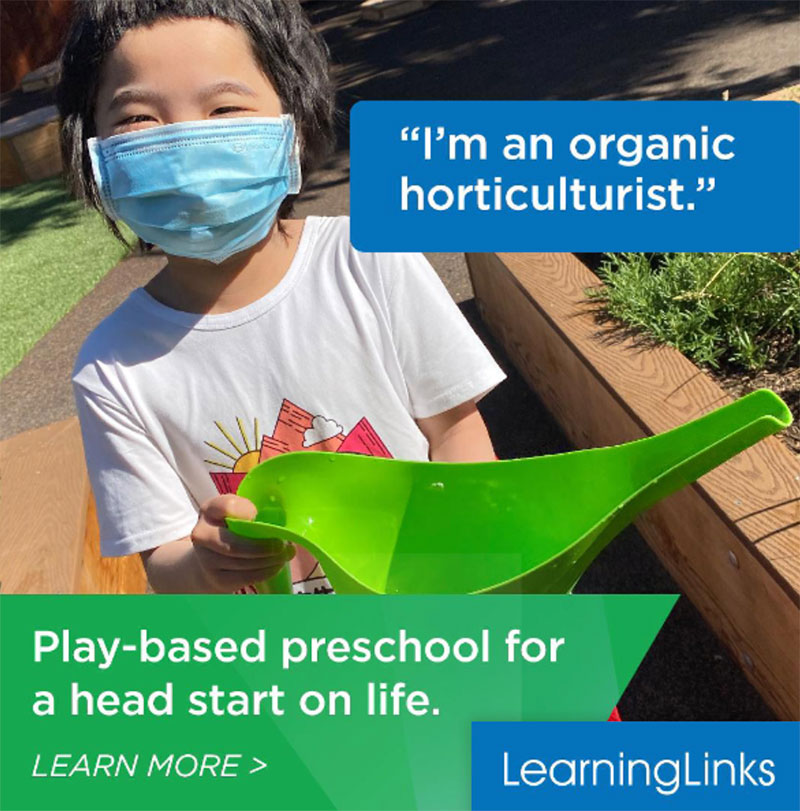
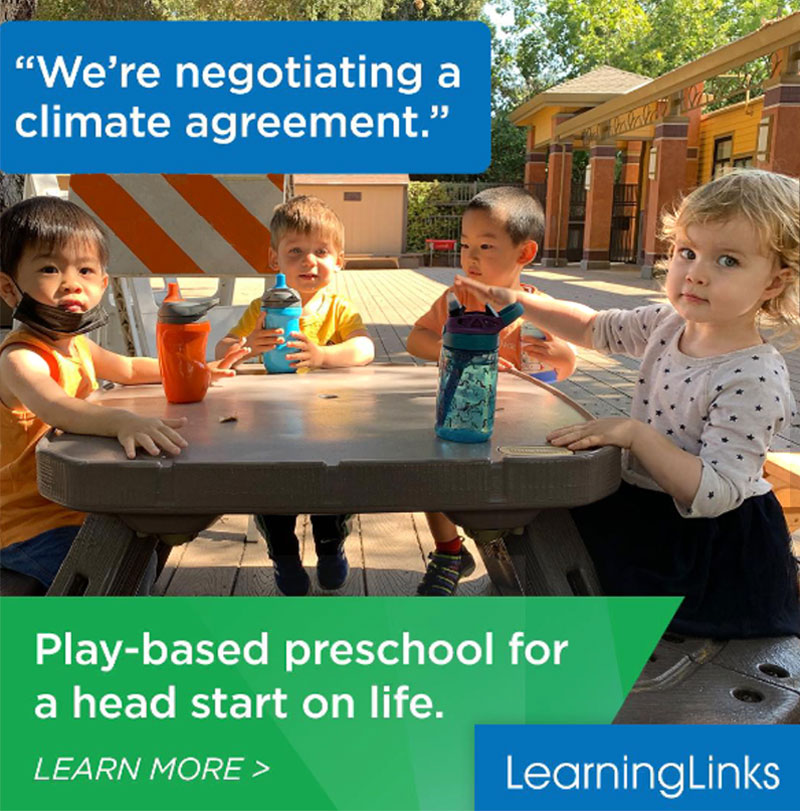
Digital Enrollment Ads

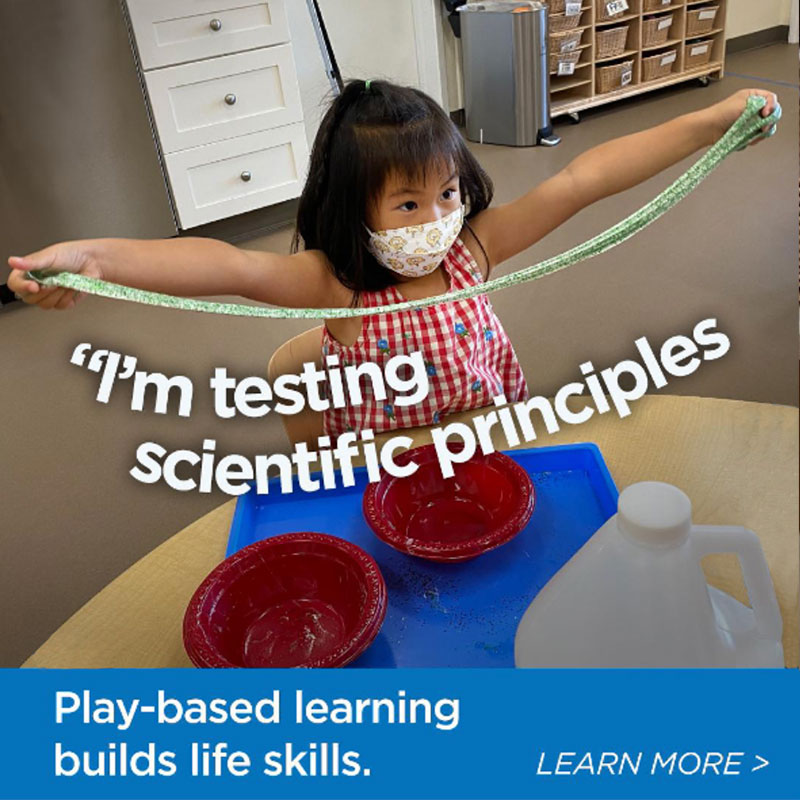
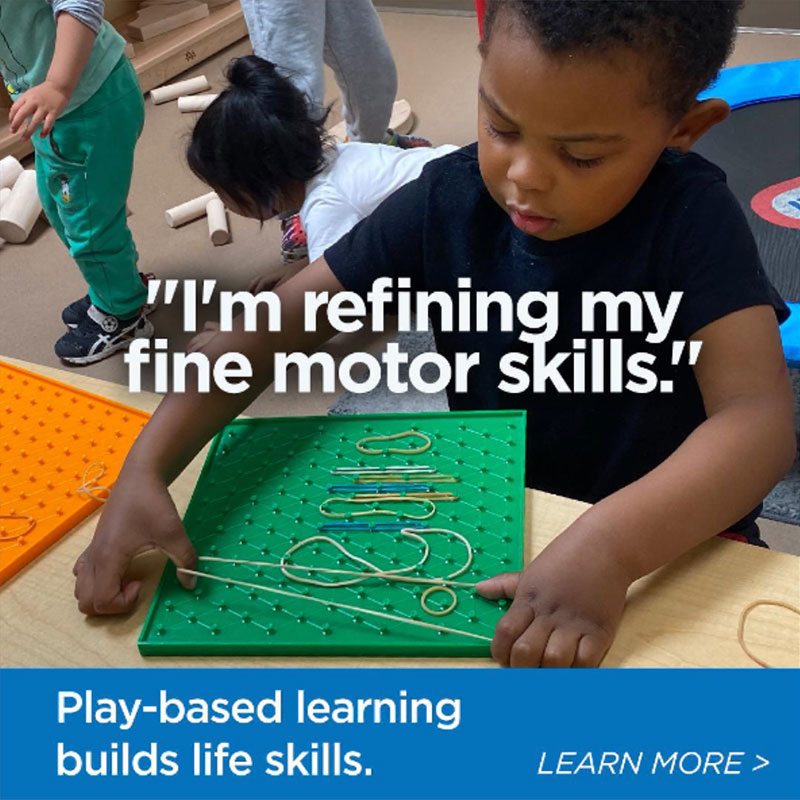
To establish the awareness of the school’s value proposition, we created a series of brand positioning ads around the theme of “play-based learning.”

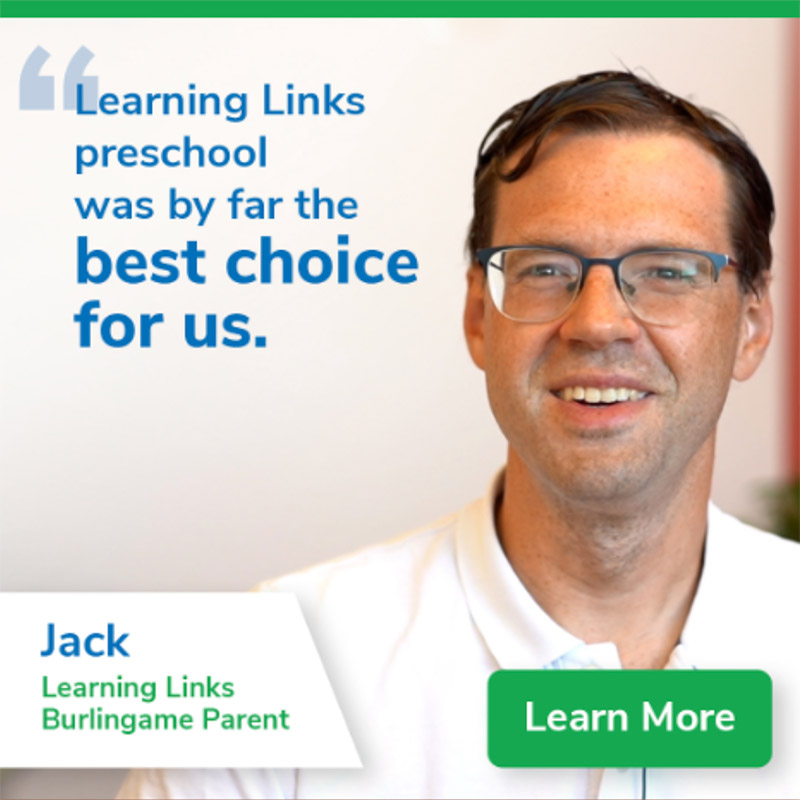
Testimonial Ads

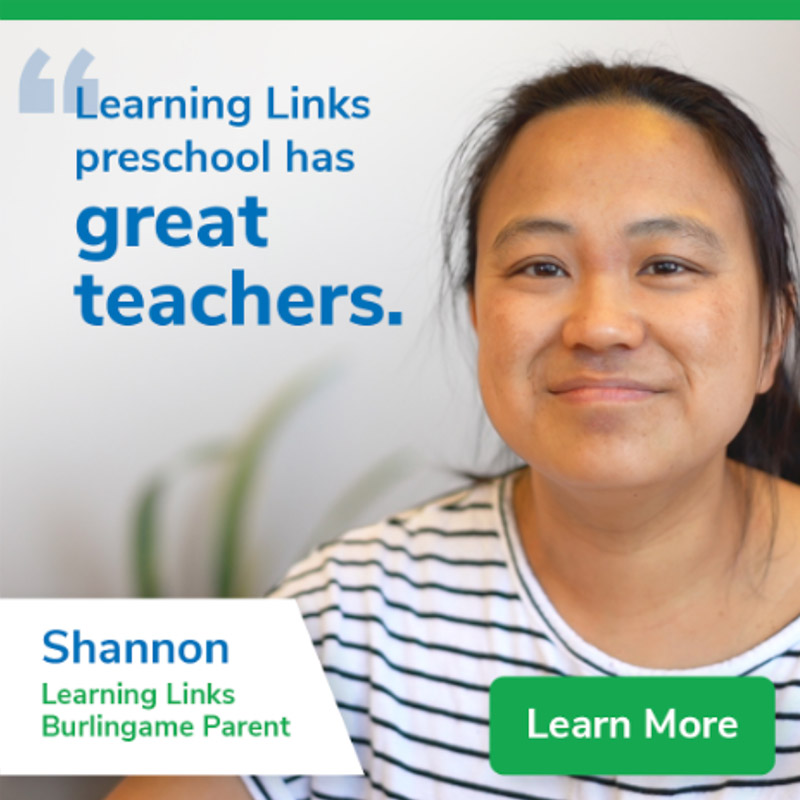
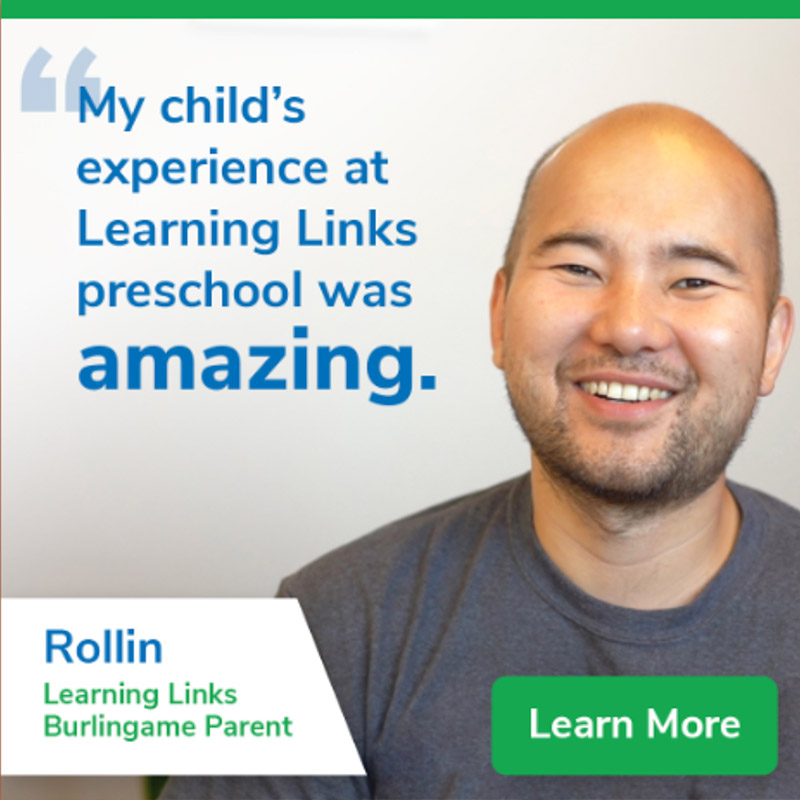
We created a series of ads featuring parents describing what they like most about LearningLinks.

Video 

We also created a series of videos featuring parent testimonials that were used as ads and on the website.

Offer Testing

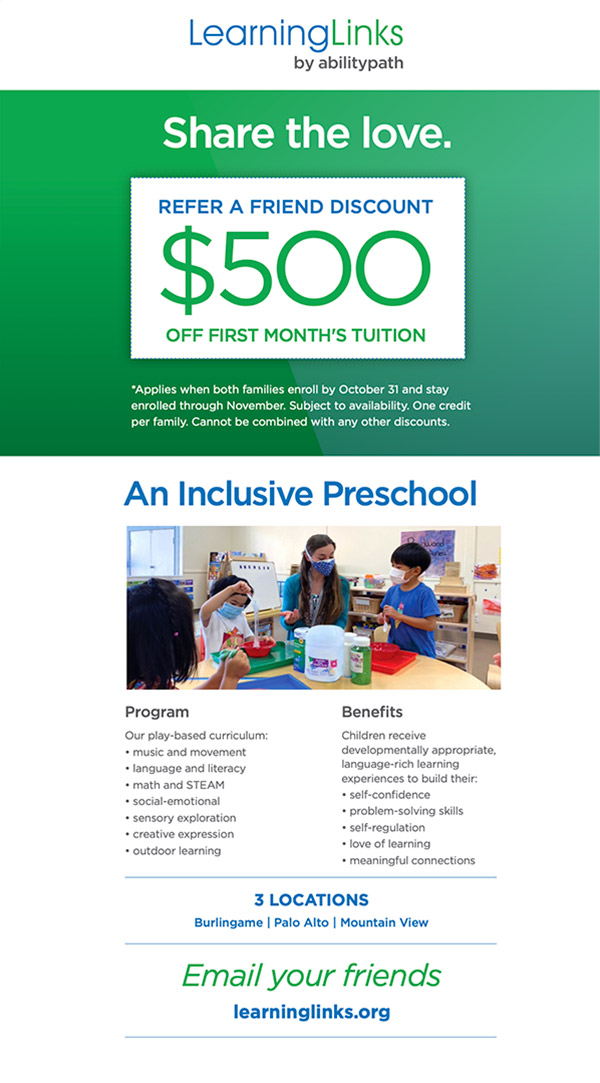
To determine what would motivate enrollment, we designed a systematic offer testing program. We tested multiple incentives, including tuition discounts and fee waivers, across different channels and formats:

  • Facebook advertising with distinct offer variants
  • Open house events promoted with channel-specific messaging
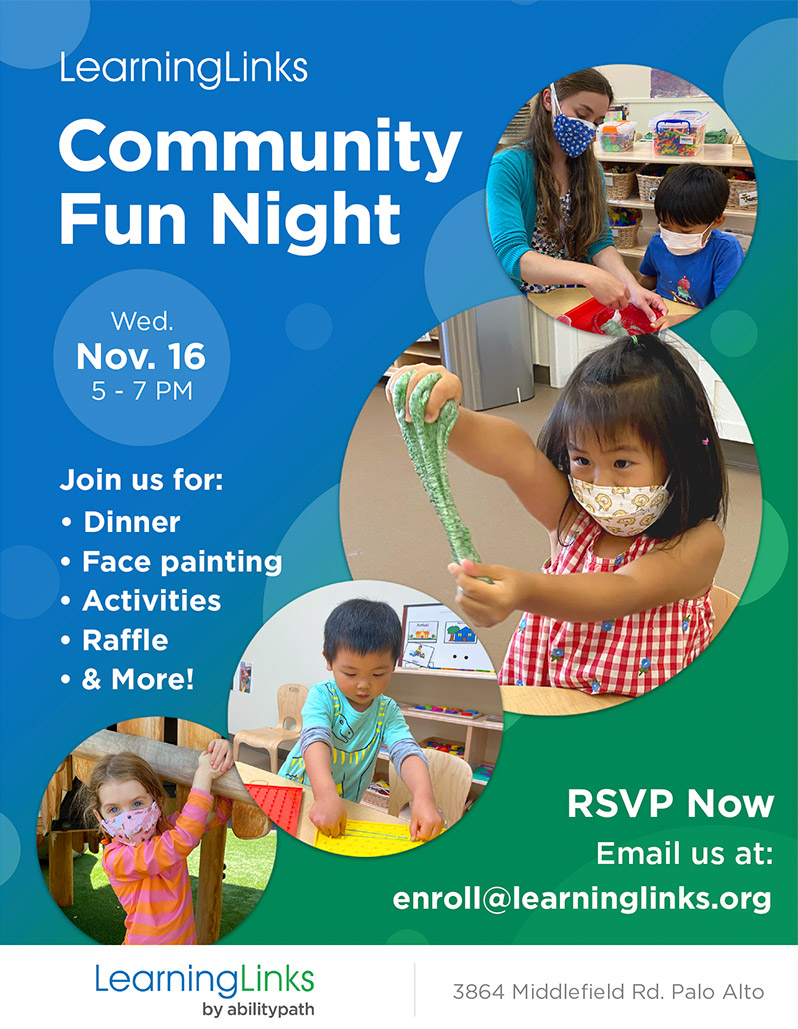
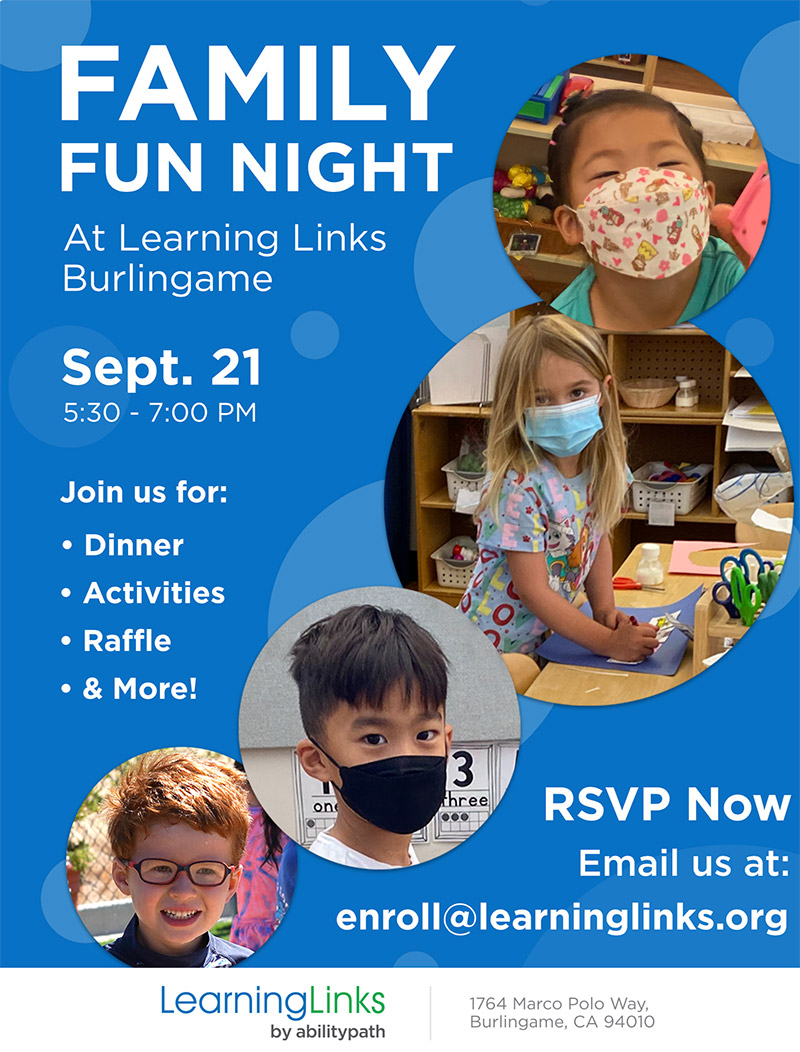
  • Community fairs with in-person offer presentation
  • Printed flyers distributed to parents
  • Direct email to the school’s existing list and through partner channels

Testing was conducted with real audiences in real conditions. We measured response rates by offer type, channel, and audience segment — generating learnings about what actually moved prospective parents toward enrollment decisions.

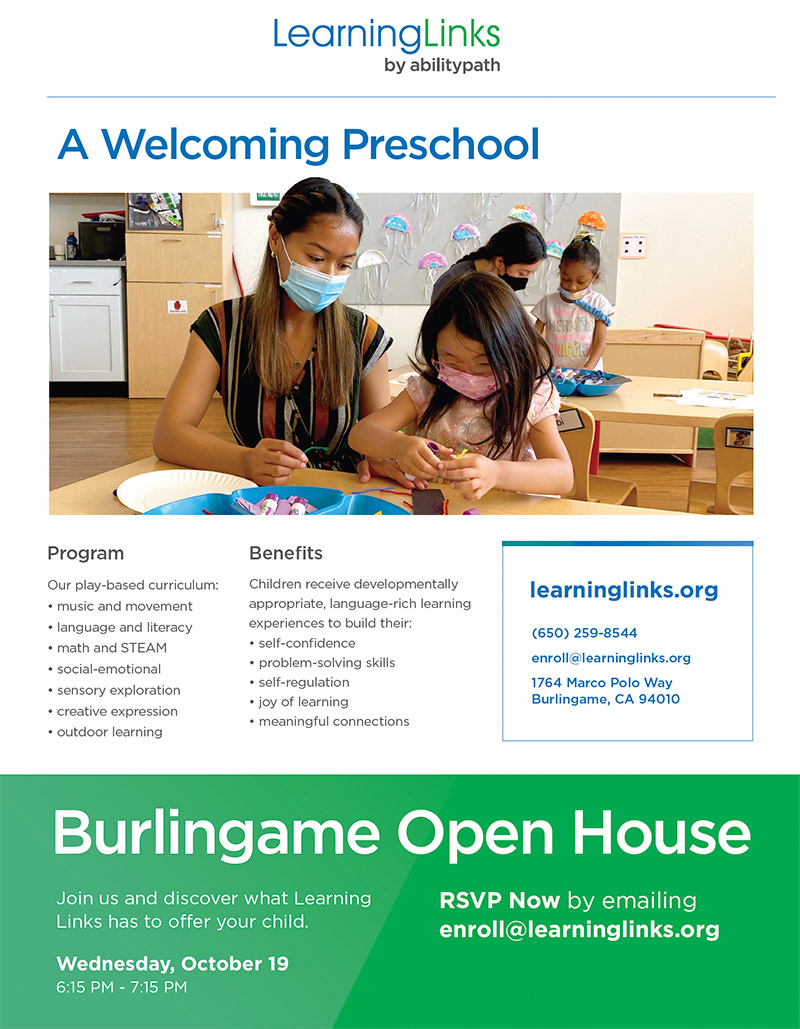
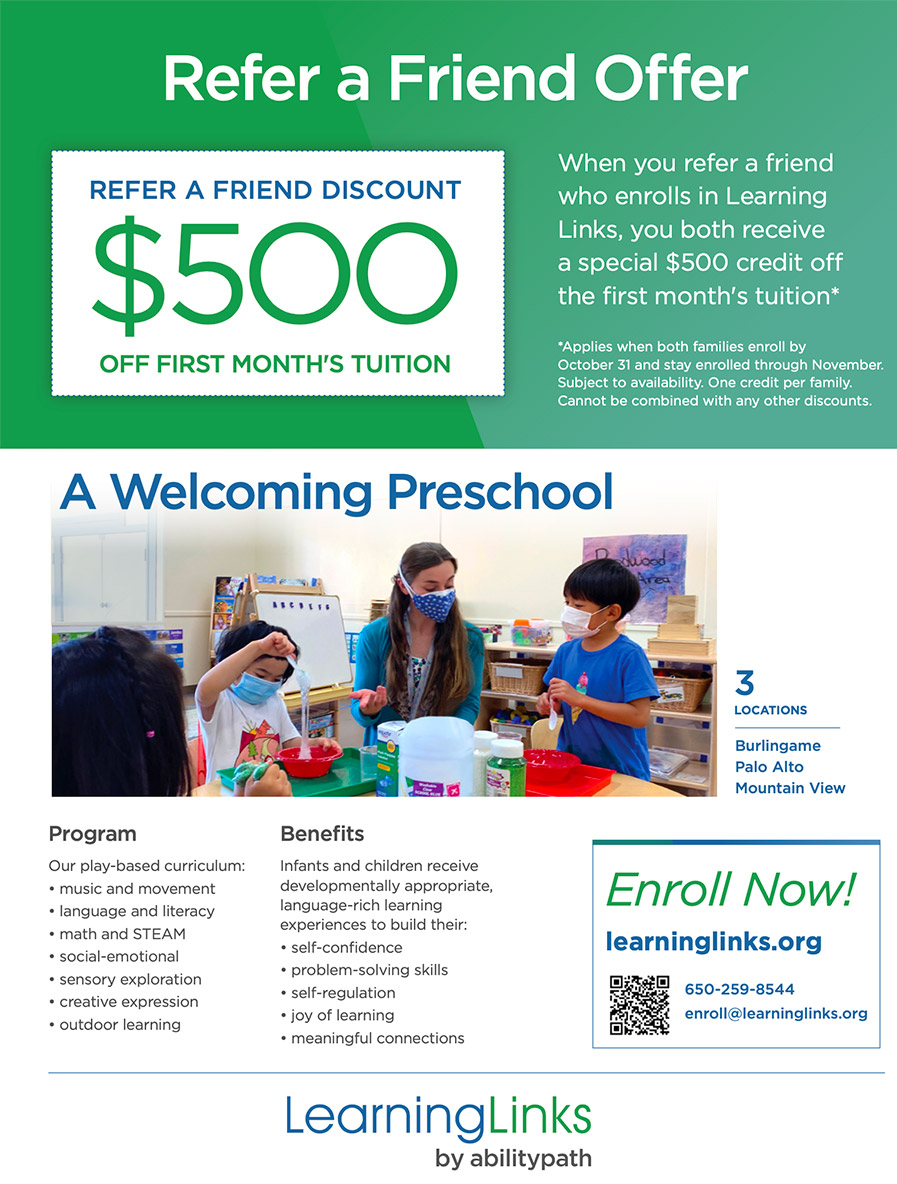
Flyer

Email

We used email to the school’s list as well as partnership emails with local media for reaching a wider audience.

Website

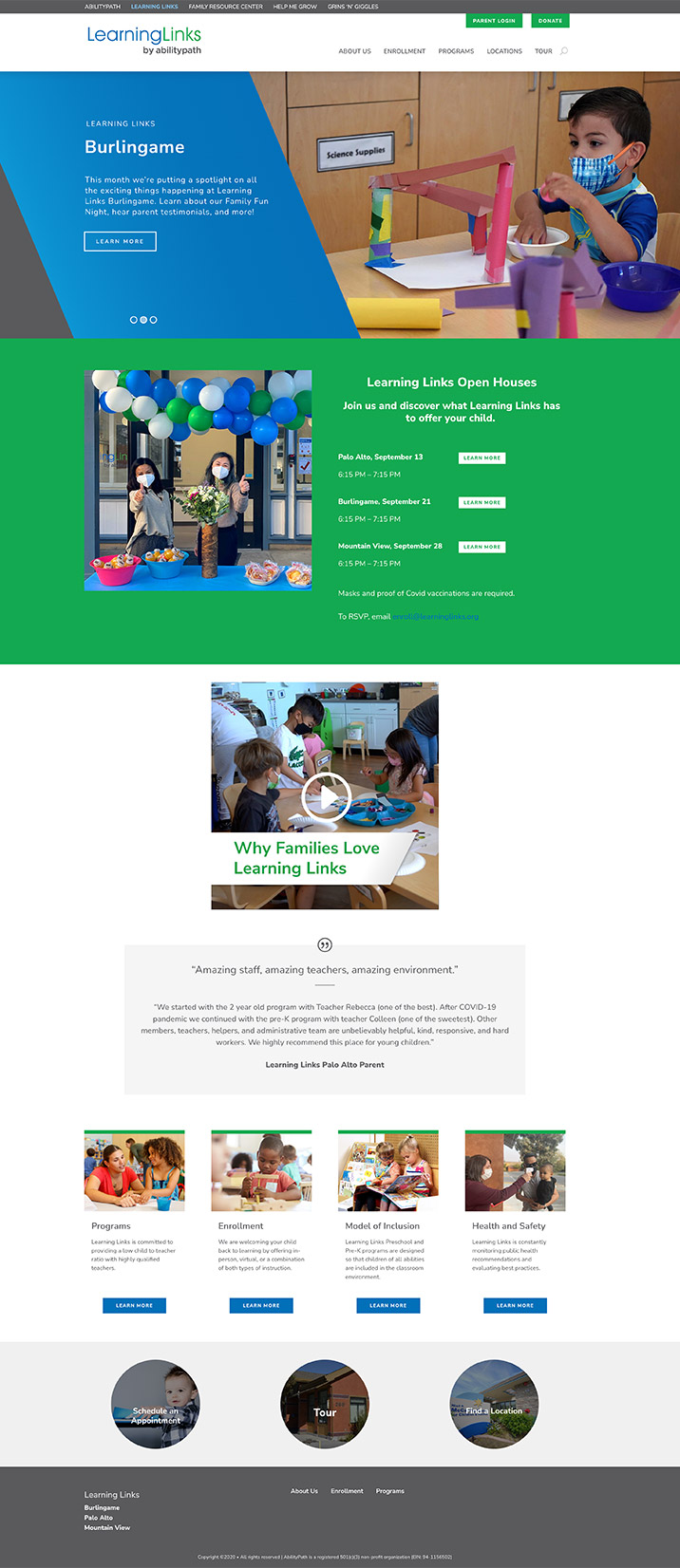
To improve the school’s online appeal and increase conversions, we redesigned key pages, added videos and testimonials, and updated the website regularly with the new offers and open house events.

Signage

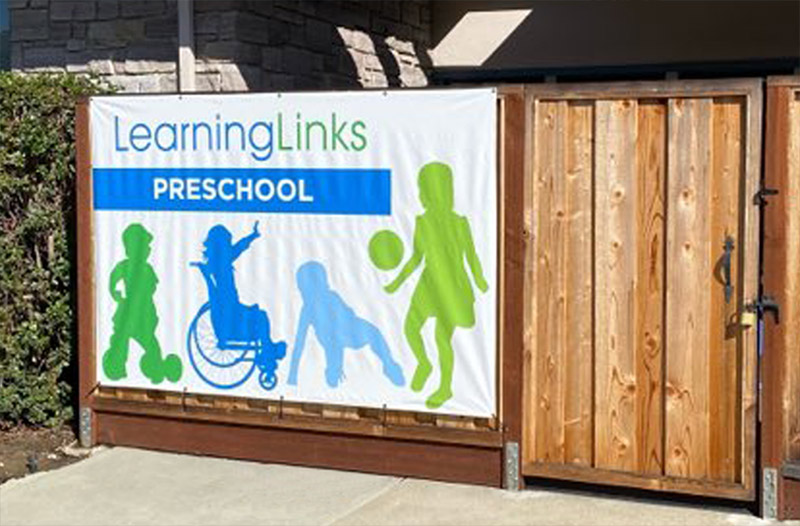
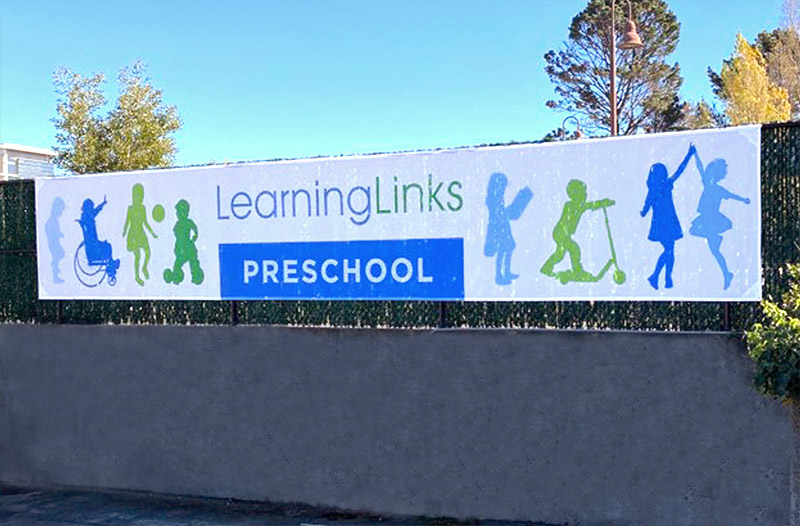
To improve visibility for the pre-school, we recommended and produced low-cost banners facing the various sides of the building.

Teacher Recruitment Ads

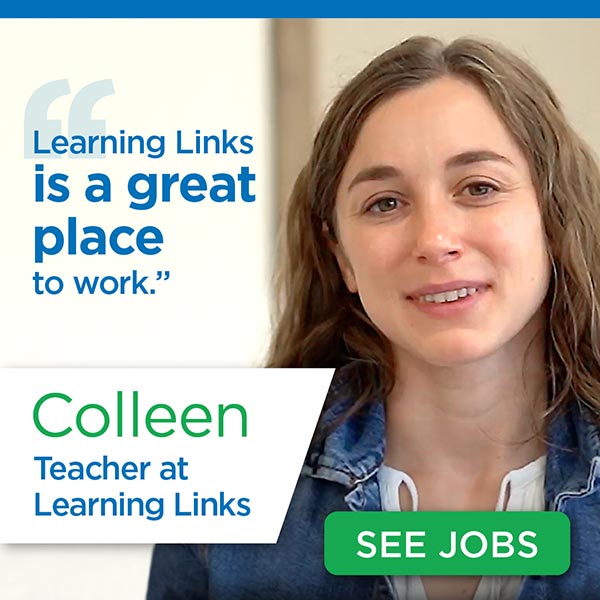
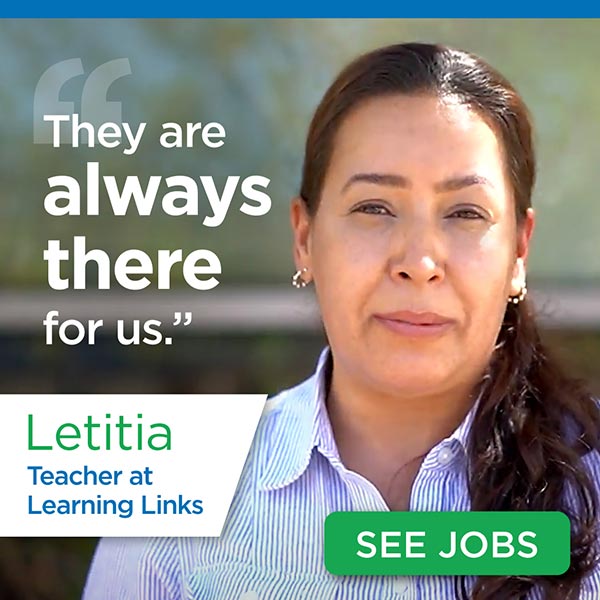
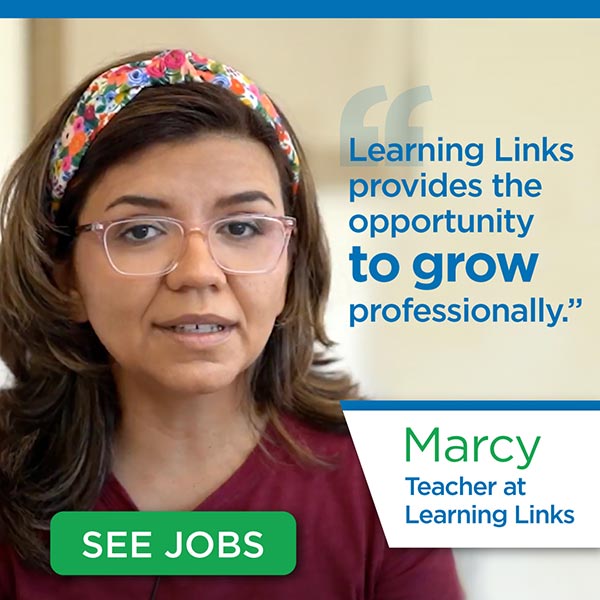
As part of the effort, we created a marketing plan to recruit teachers, including recommendations for job postings and online marketing efforts, creating print and video ads, and a new Careers page on the website.

Results

139,000

Impressions

2,074

Link Clicks

Launching a New Financial Certification

National Association of Registered Social Security Analysts

Launching a New Financial Certification Company

A new financial service needed to assess its market, establish itself as a trusted brand, and attract both financial analysts and consumers. We analyzed their business challenges and developed their strategy, brand, marketing materials, and website for a national launch.

Services

  • Market Viability
  • Marketing Strategy
  • Brand Strategy
  • Messaging
  • Visual Identity & Brand Guidelines
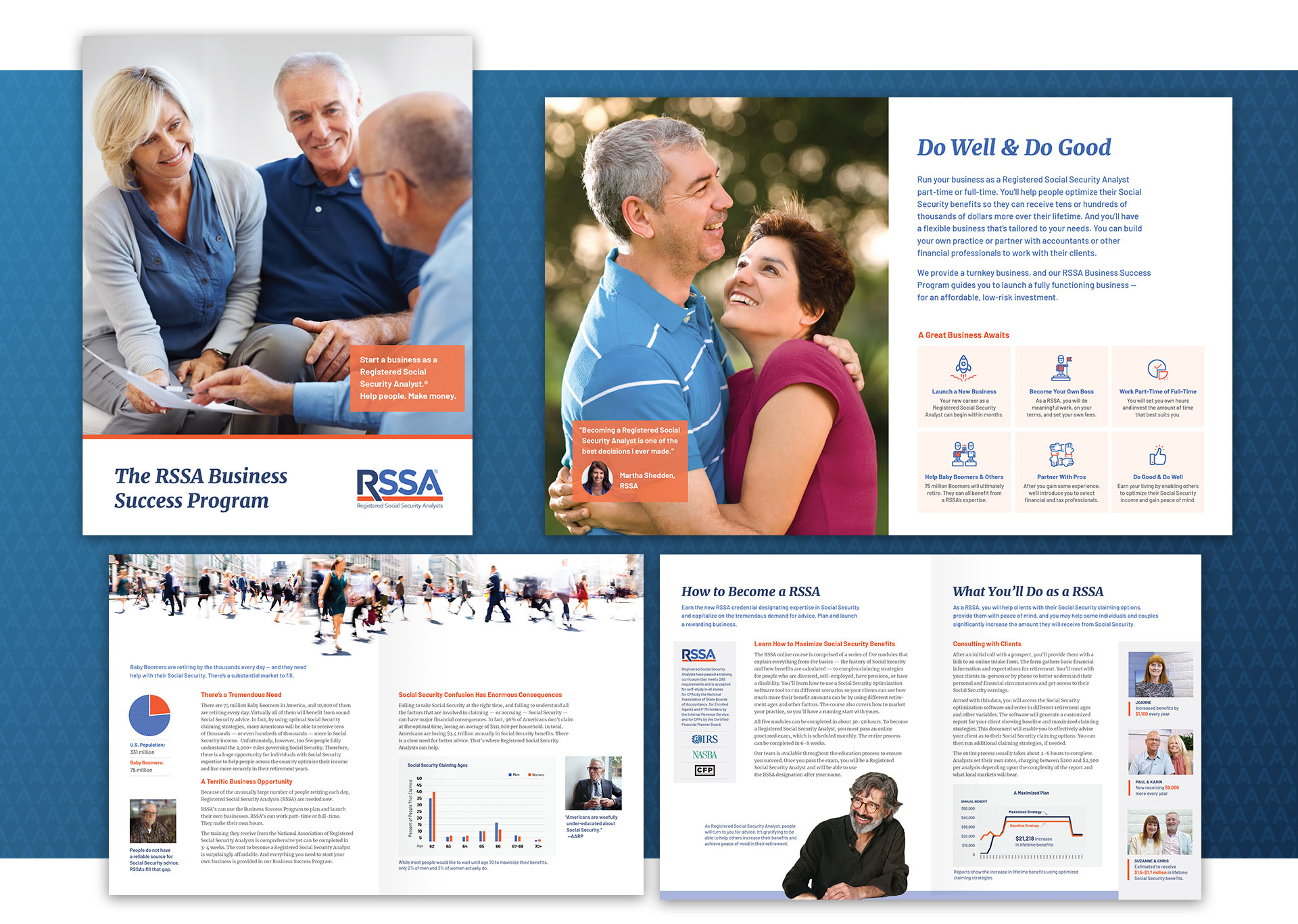
  • Printed Materials for Analysts
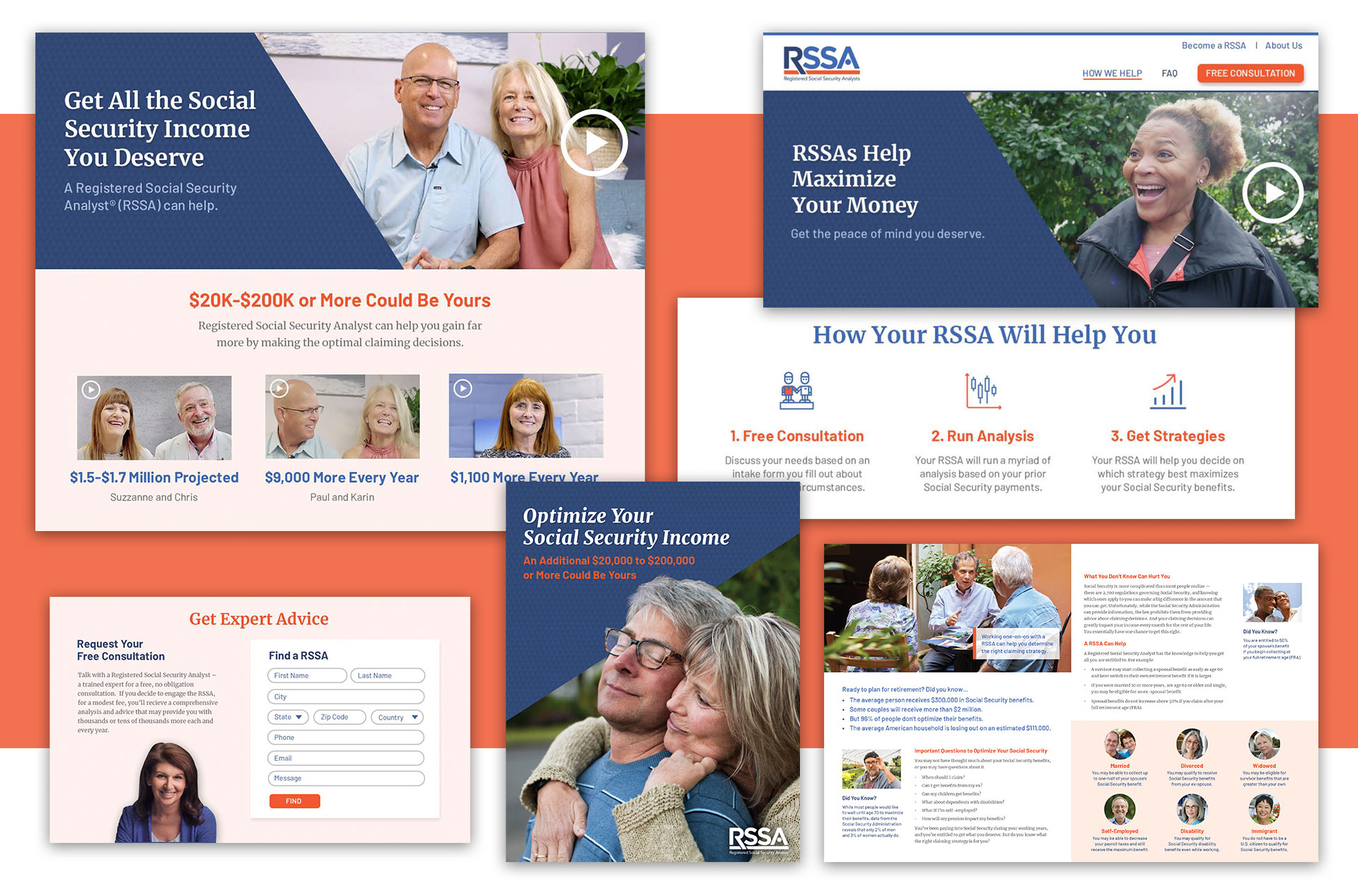
  • Consumer Brochures
  • Customizable Print-On-Demand Materials
  • Sales Presentations
  • Consumer Video Series
  • “Did You Know“ Video Series
  • Integrated Website Strategy
  • Website Copy, Design & Development for Consumer & Analyst Sites

A New Service for Seniors

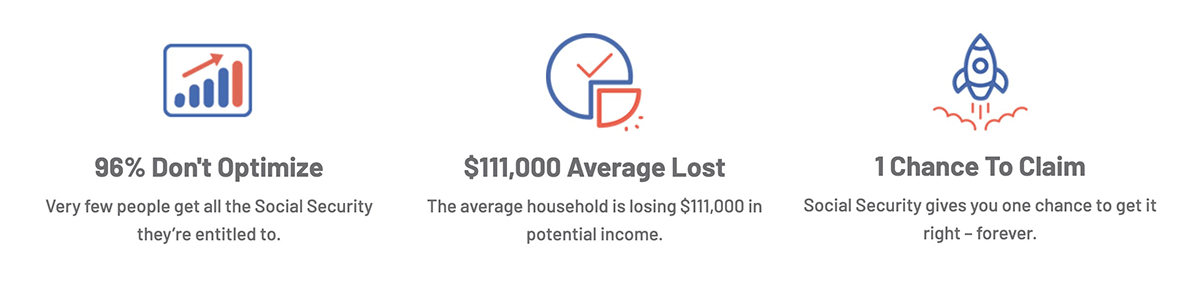
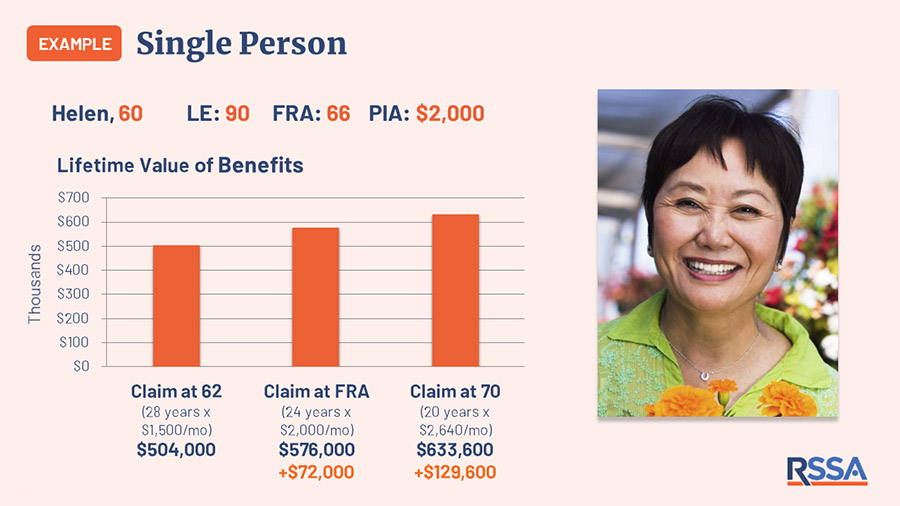
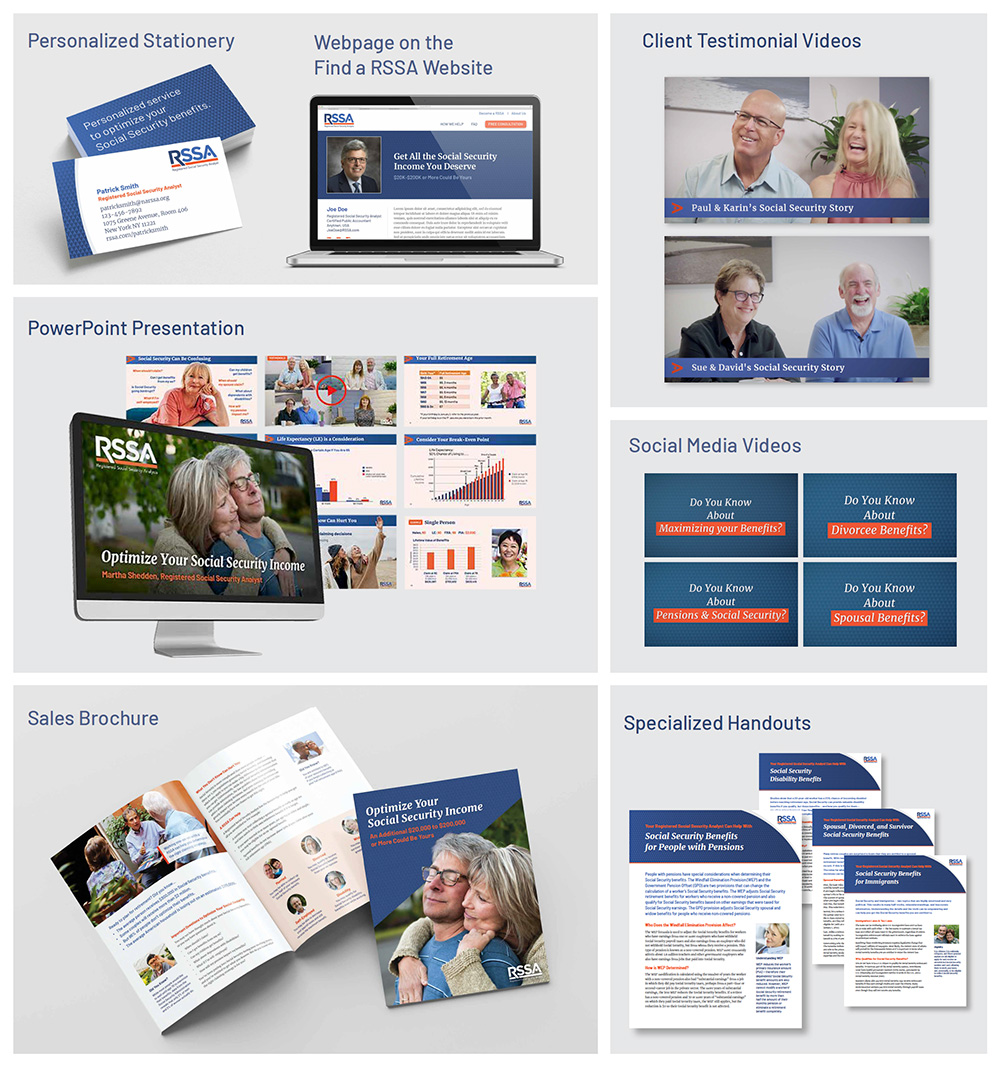
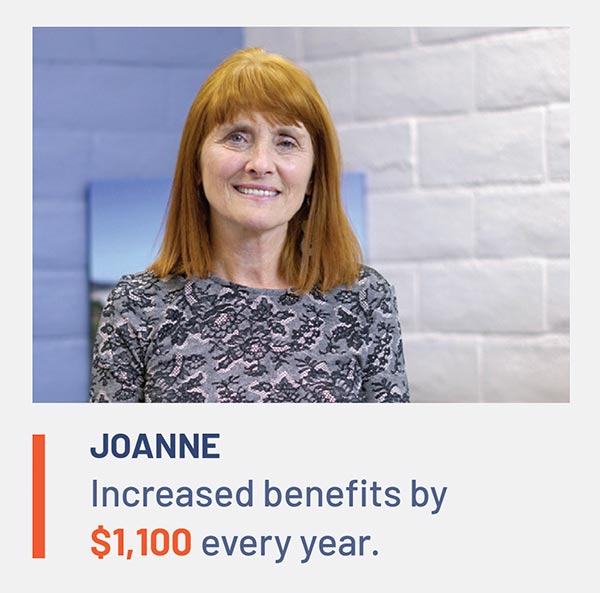
Many people do not realize that they have options when collecting social security. Factors such as age, marital status, disability, and self-employment, among others, can affect the amount of money received. Registered Social Security Analyst (RSSA) created a certification program to train professionals to guide people in optimizing their benefits.

An Untapped Market for Financial Professionals

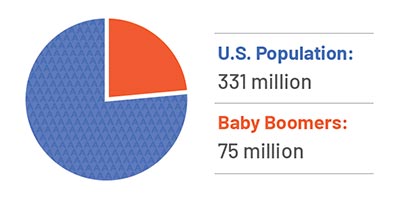
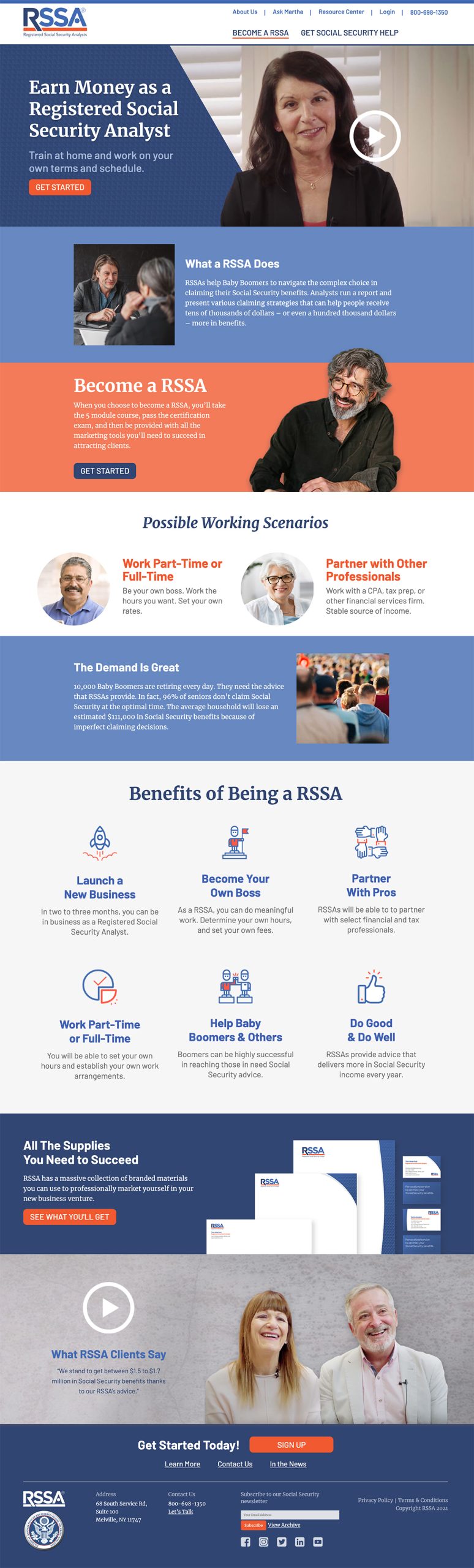
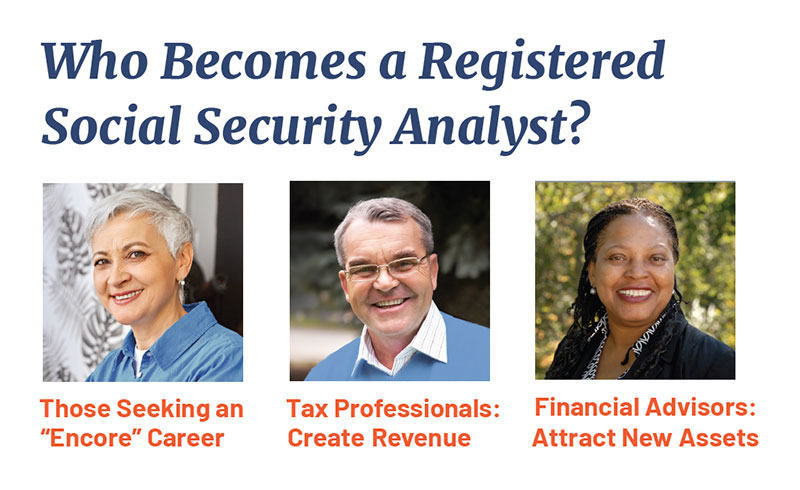
With 10,000 Baby Boomers retiring every day, the market for advice about social security benefits is huge. RSSA provides a new professional certification to tap into that market. Financial professionals can enhance their practice, and someone seeking an encore career could start a business. 

From Concept to a Thriving Business

Who would become an RSSA? How much would people pay for this service? Would people welcome entering this new profession? We conducted focus groups and research to ascertain the viability of this new financial service and how to attract professionals and clients. We helped RSSA define and launch the business model.

Developing the Value Propositions

Potential analysts need to know about the training and the value of adding this certification to their services. We developed the value proposition that guided the marketing to recruit analysts and attract soon-to-be-retirees to the service.
Crafting the Brand

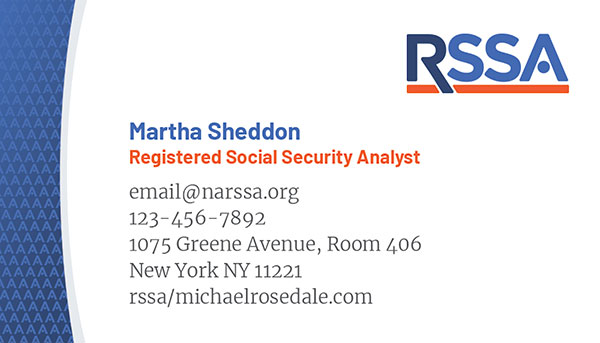
RSSA needed a recognizable logo that would have the same respect as “CPA” or other financial certifications. Branded as a personalized service to optimize your Social Security benefits, we designed a logomark that could be used on everything, from business cards to marketing materials to stationery by professionals across the country.

Developing a Unified Web Strategy for Analysts & Consumers

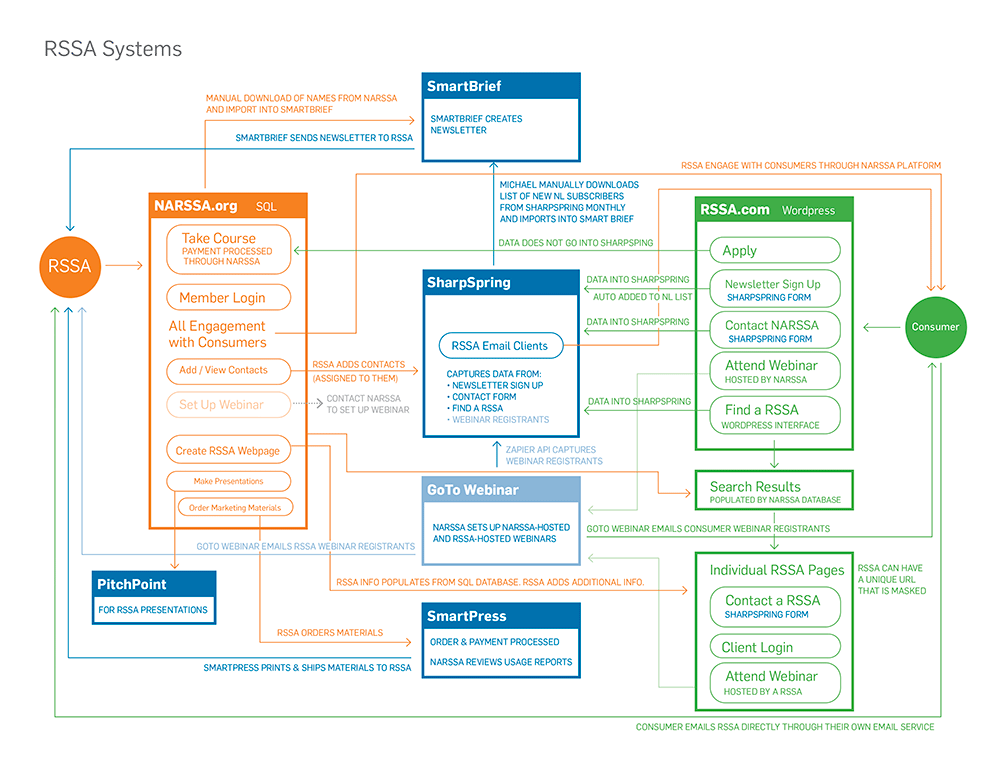
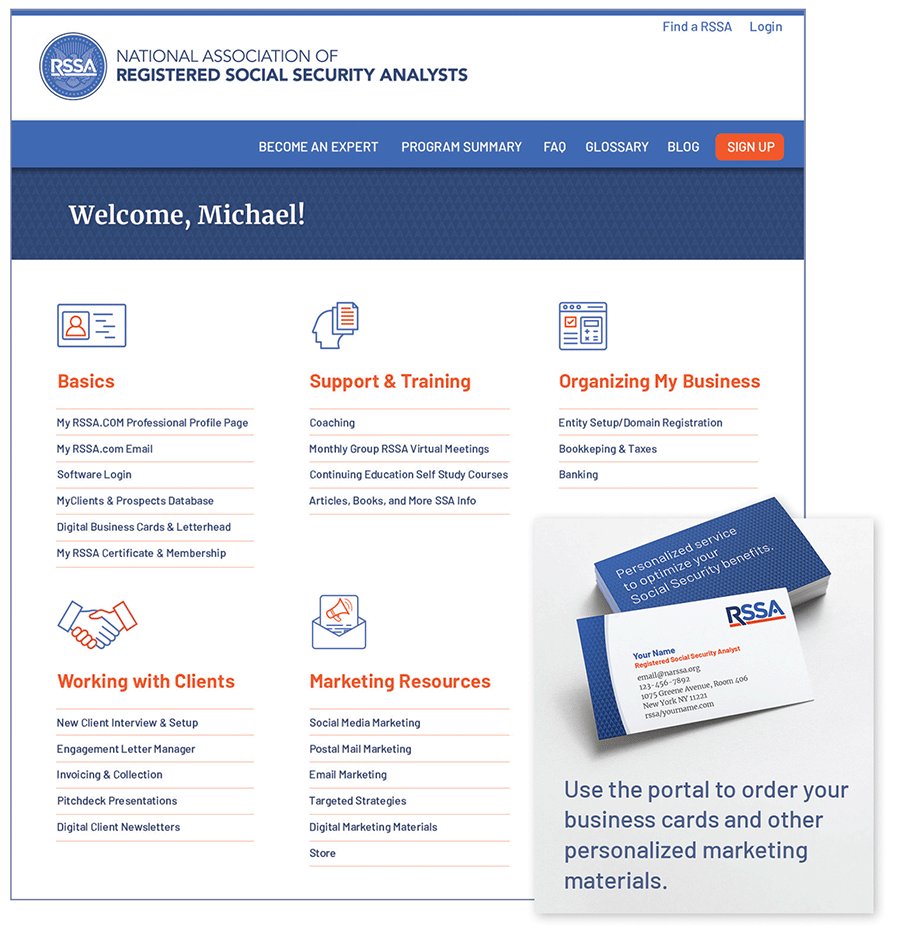
Professionals need a website for training, customizing and printing their marketing materials, finding leads, and keeping up to date on changes. Their website is a one-stop shop, with links to training modules and the certification exam. 

When they become analysts, they have access to marketing materials, from business cards to social media posts as well as continuing education. They can add their name to the list of qualified analysts so potential customers will find them easily.

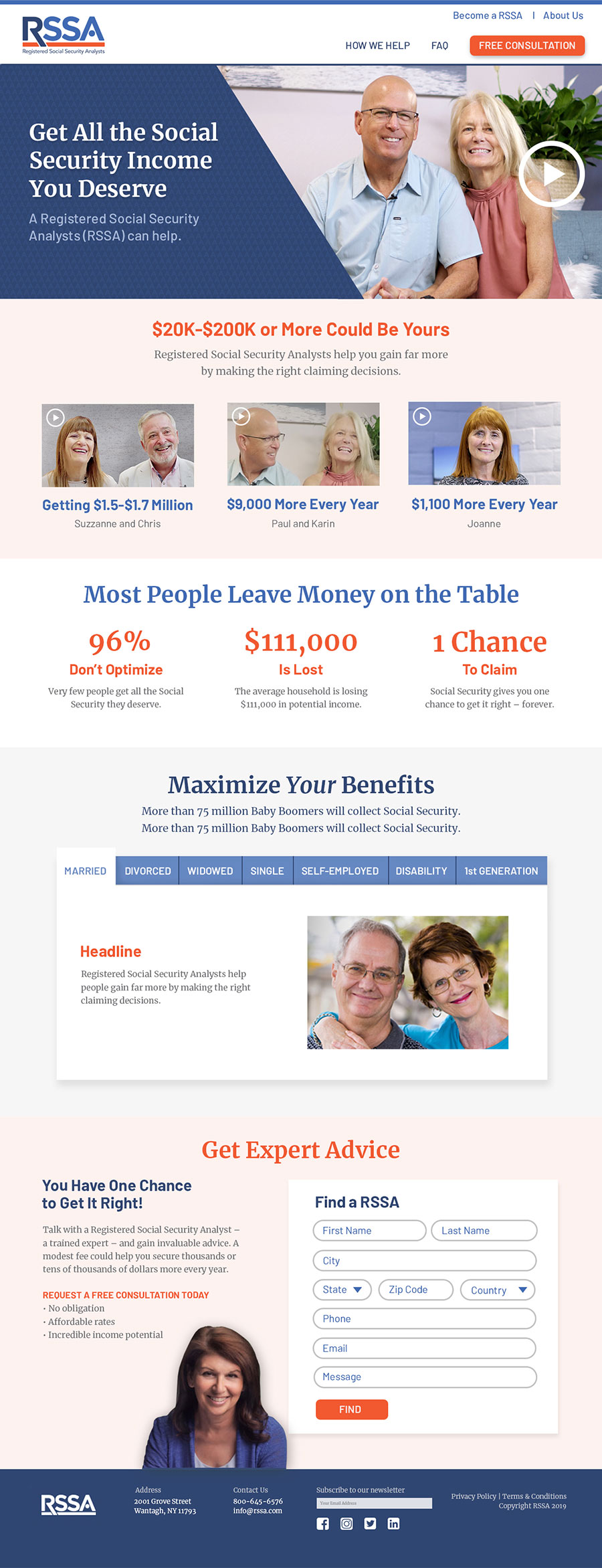
Consumers need a website that explains the value of RSSA and helps them find an analyst near them.  Although the material presented here is different from that on the analysts’ site, the two are seamlessly integrated at the back end so clients and analysts can find each other and communicate seamlessly.

Recruiting RSSAs

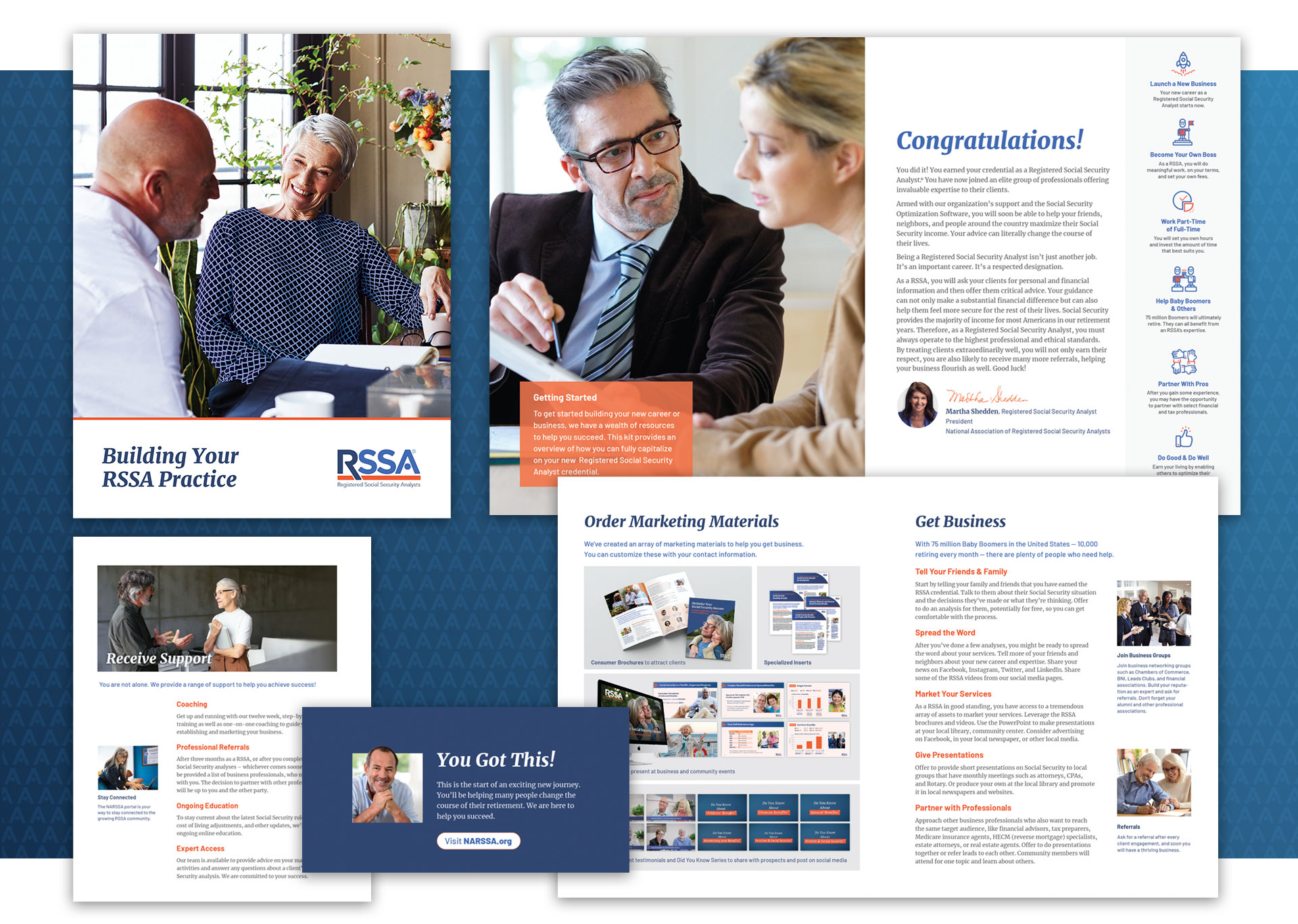
We identified the types of people who make good RSSAs and developed marketing outreach materials, including a sales kit, to attract them.

Creating a Turnkey Business Operation

Reaching the market of soon-to-be-retired people required both print and online materials as well as a marketing strategy that includes emails, postcards, social media, and a consumer-facing website. With just one login, an analyst can set up a profile, create marketing materials, invoice clients, do bookkeeping, and get support.

Attracting Consumers

To attract consumers, we crafted the value proposition, marketing materials, including print, digital, and videos, and the lead-generation system to drive leads to RSSAs.
Creating Customizable Marketing Materials

The new analyst can open a business immediately because the NRSSA website has everything that they need to promote their practice:

  • A customizable web page that helps consumers find them
  • Marketing brochures
  • Pring-on-demand, customizable stationery, and business cards
  • PowerPoint presentations
  • Videos that can be posted on social media
  • Monthly newsletter
  • Coaching and continuing education

Success

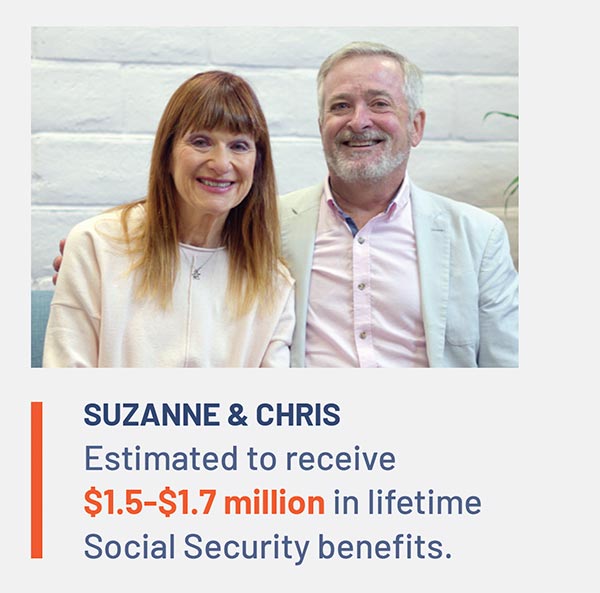
The National Association of Registered Social Security Analysts is now a respected source of financial information, frequently quoted in publications such as Financial Advisor Magazine, MarketWatch, Accounting Today, and TheStreet. It has a partnership with the National Association of Enrolled Agents so tax planning can include social security benefits. The organization has attracted RSSAs who are providing valuable expertise to help people maximize their Social Security benefits.

Promoting Patient-Centered Healthcare

Synovation Medical Group

Promoting Patient-Centered Healthcare

We built a brand for this pain-management practice with a unique business model.

Services

  • Discovery Interviews
  • Materials Review
  • Brand Strategy & Positioning
  • Messaging
  • Welcome Kit
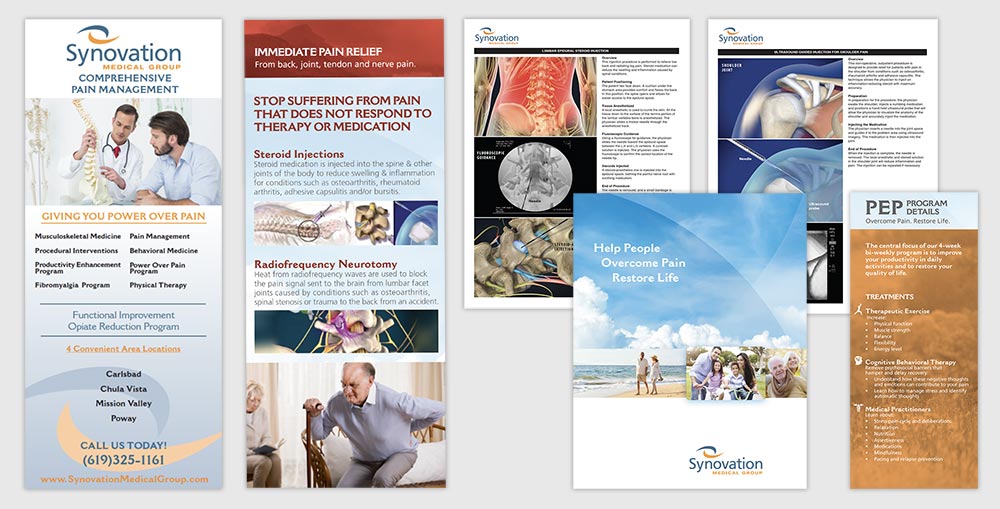
  • Patient Information Sheets
  • Provider Sheets
  • Consumer Advertising
  • Banner Displays

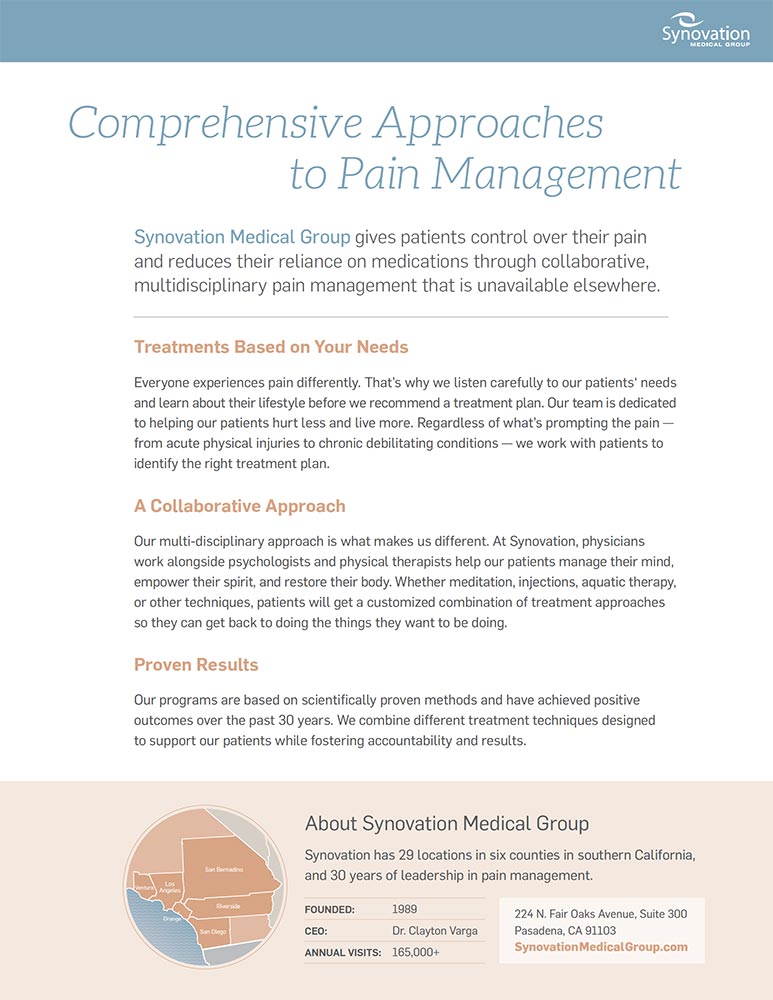
Synovation Medical Group focuses on patient-centered care that helps people get back to doing the things that pain has prevented them from doing. They needed their brand to tell their story. Strategist Nicole Minore led the process for revitalizing Synovation’s brand.

Pain Management

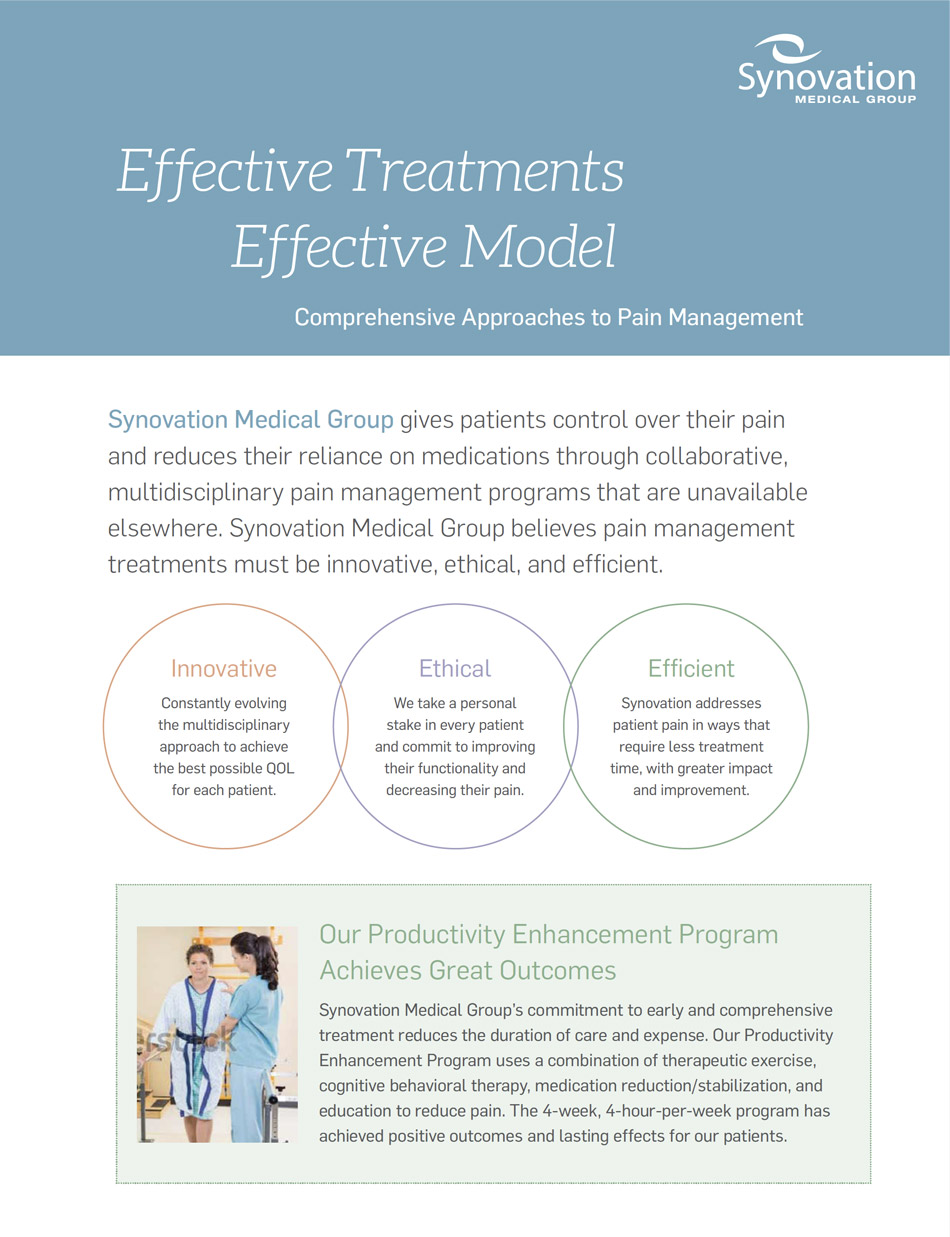
Synovation goes beyond pharmaceuticals to treat pain. It offers a range of options, from PT to acupuncture, from meditation to laser therapy. Patients partner with their doctors to achieve control over their pain and their health.

Business Model

Its business model has revolutionized medical practices. Doctors get paid for treating a patient for a whole year. The sooner the patient is pain-free, the better it is for all. And their pain reduction outcomes bear this out.

Defining Their Brand Essence

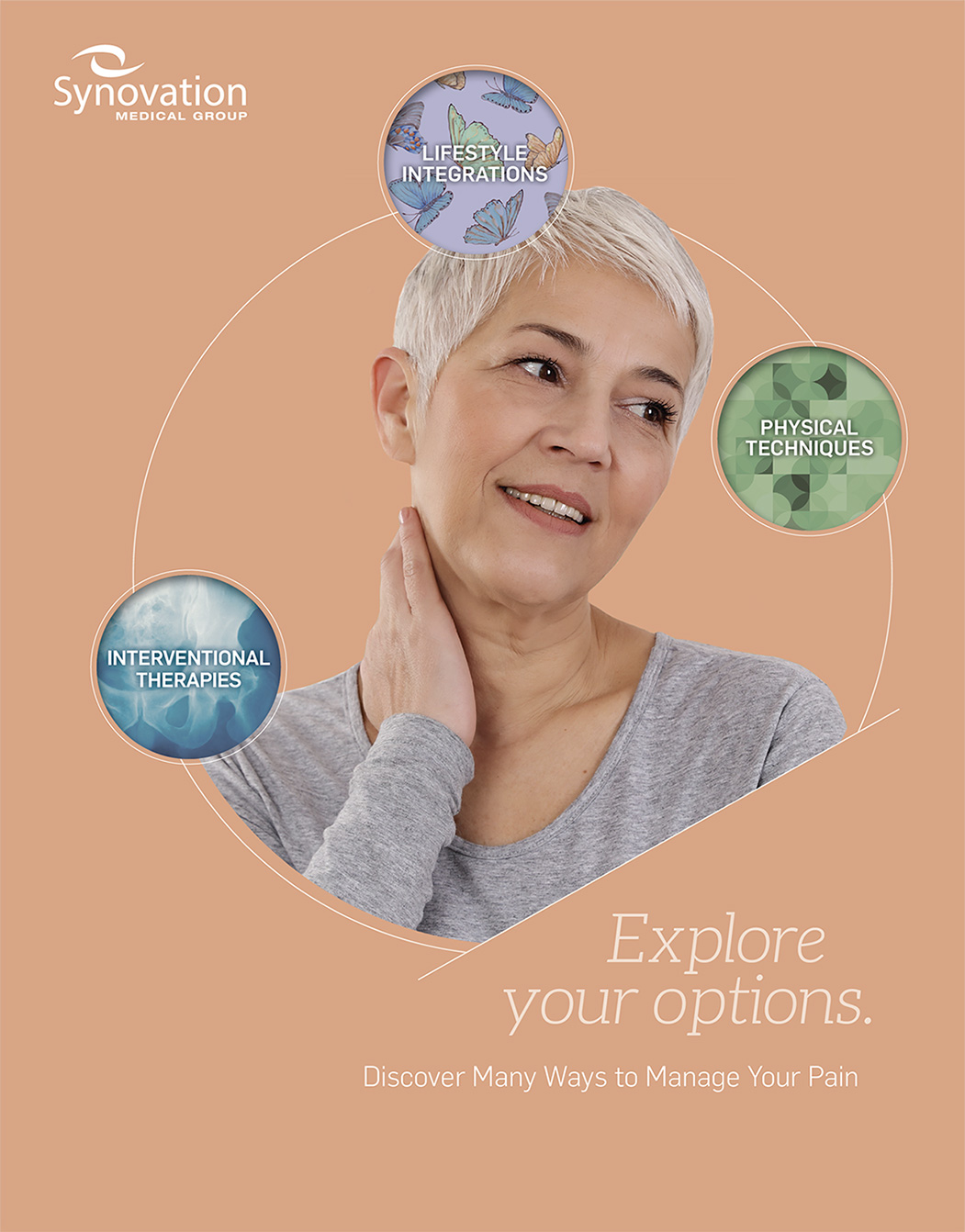
OLD BRAND

Synovation’s old brand featured medical-oriented imagery that was very clinical, and perhaps even scary. Images were generic, and there was no consistent visual look.

NEW BRAND

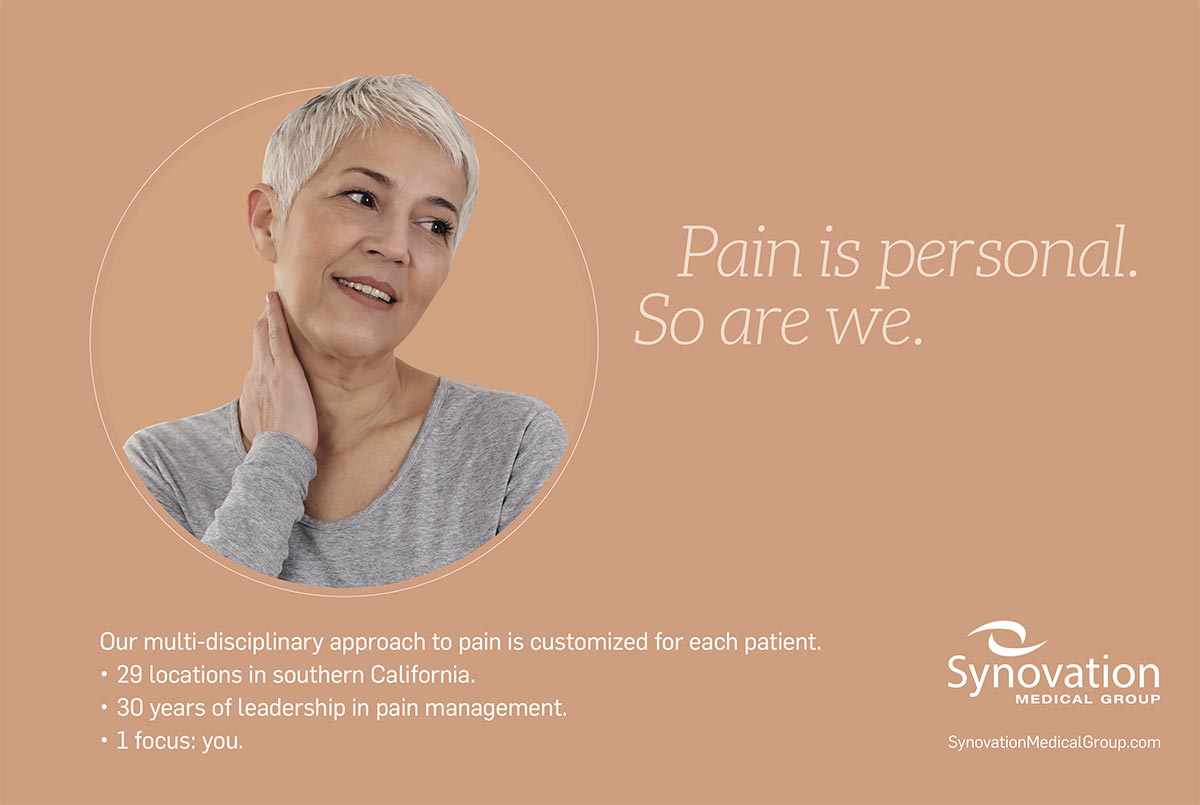
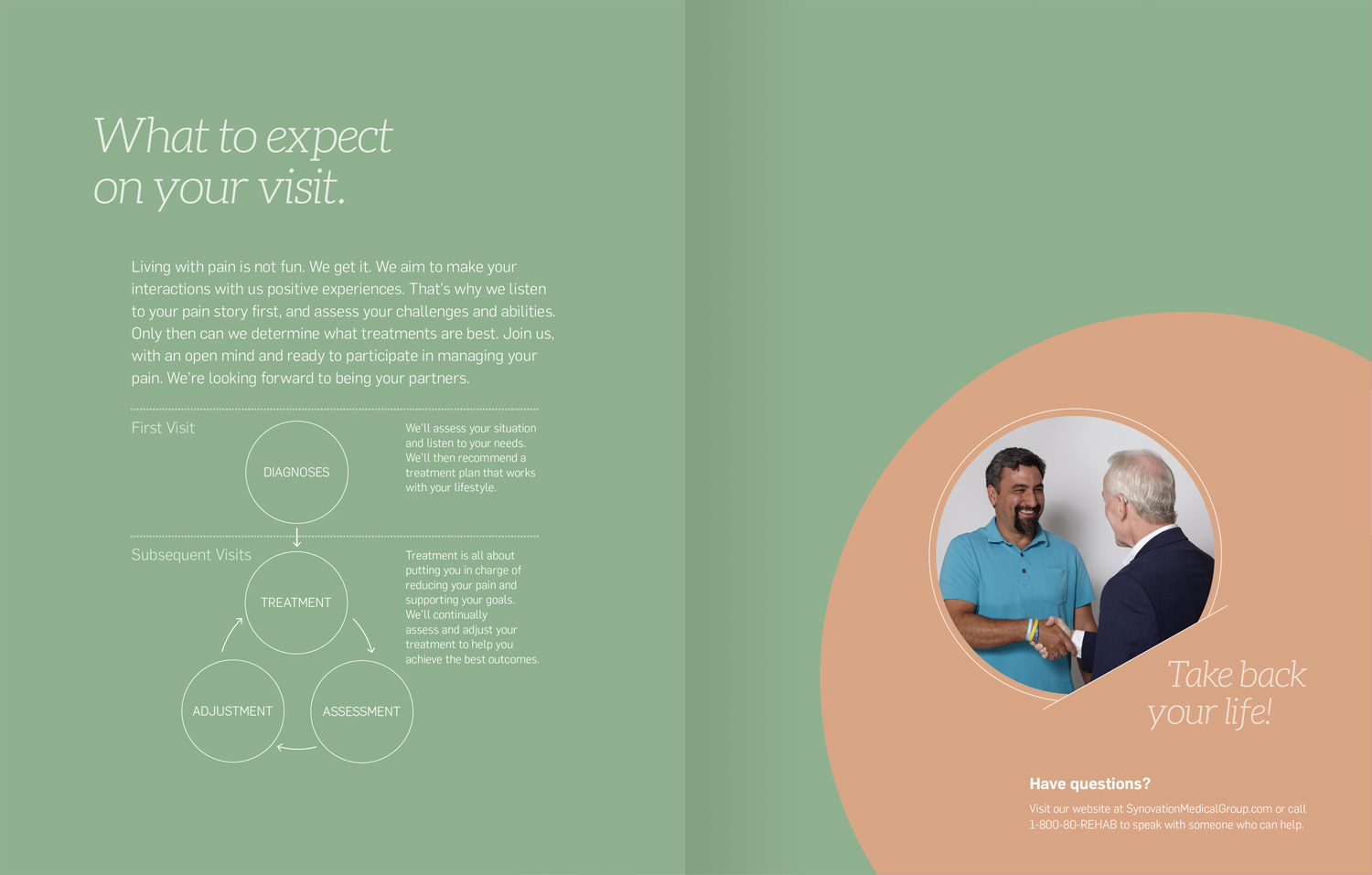
We refocused the brand on the patients’ personal experiences — addressing them as people with concerns, not just bodies to be fixed. We created an authentic human voice, a pleasant personality, and a distinctive, recoginizable look.

Synovation Ad - Pain is Personal. So are we.

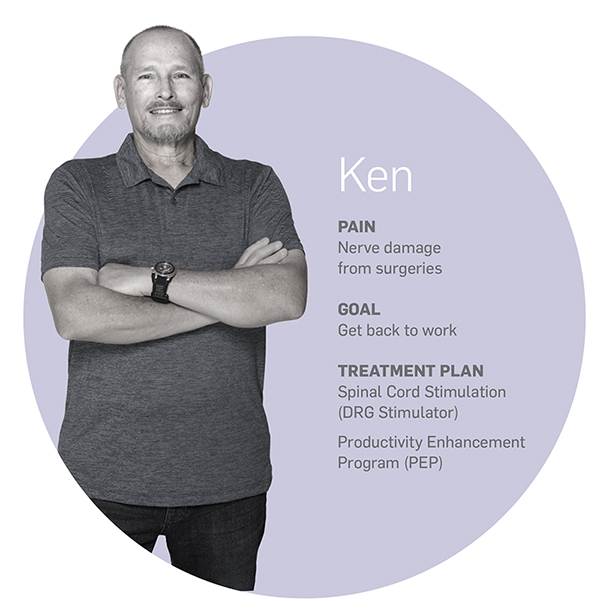
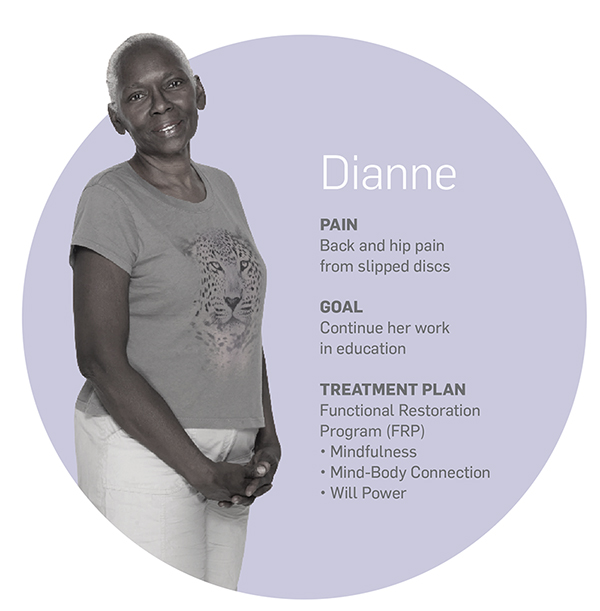
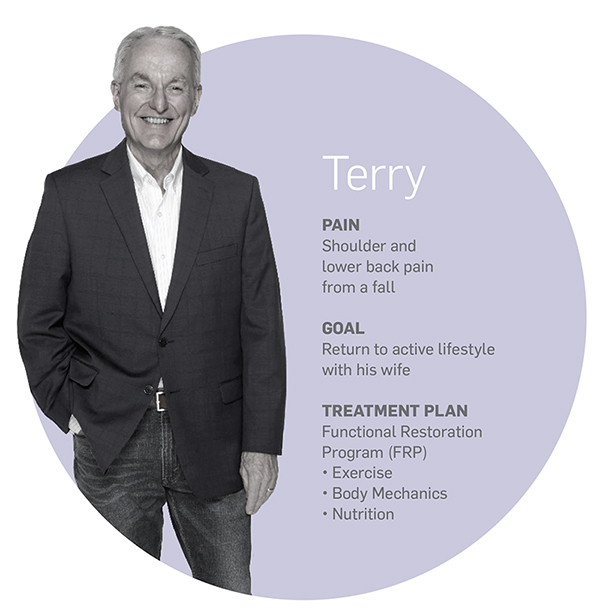
Featuring Real Patients

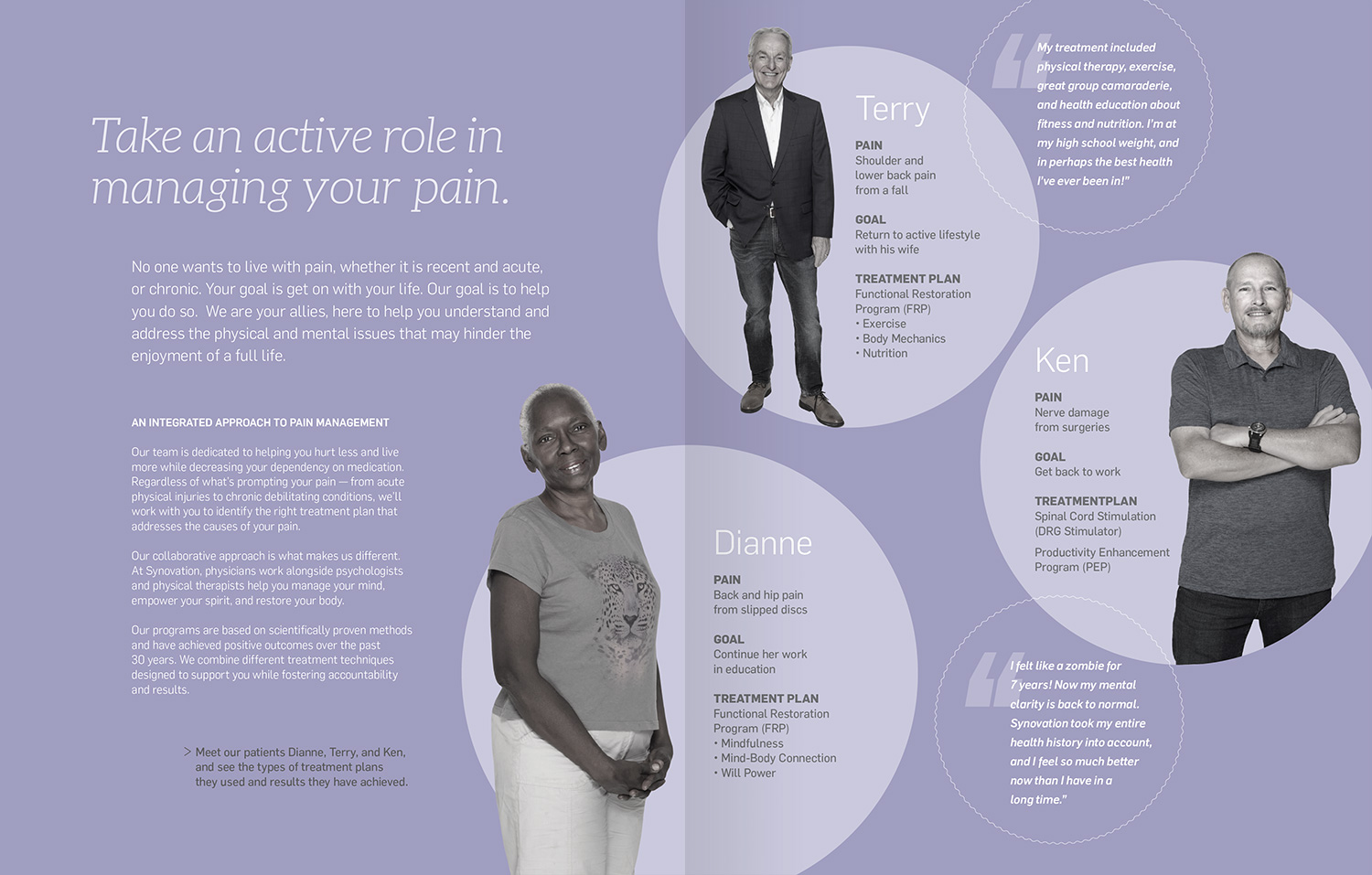
We feature real patients with different pain issues and different treatment plans to help prospective patients understand their options, see the outcomes, and feel a connection with the practice.

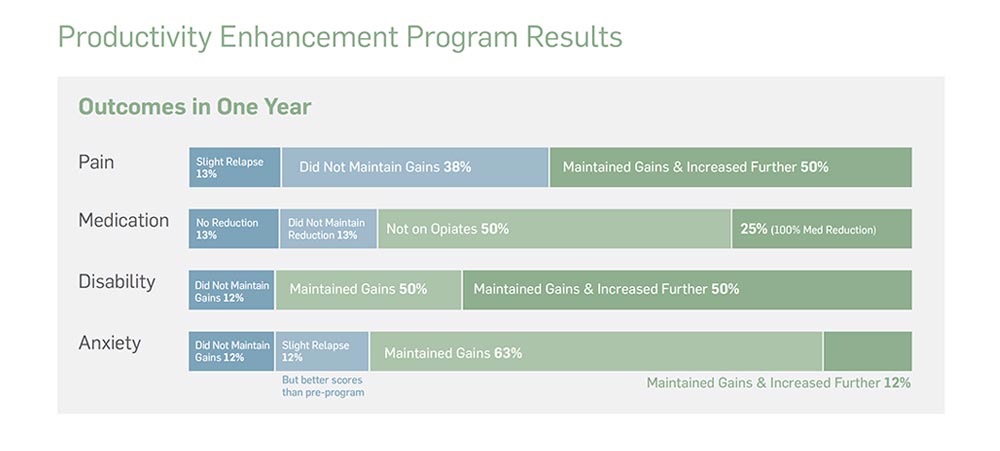
Visualizing Outcomes

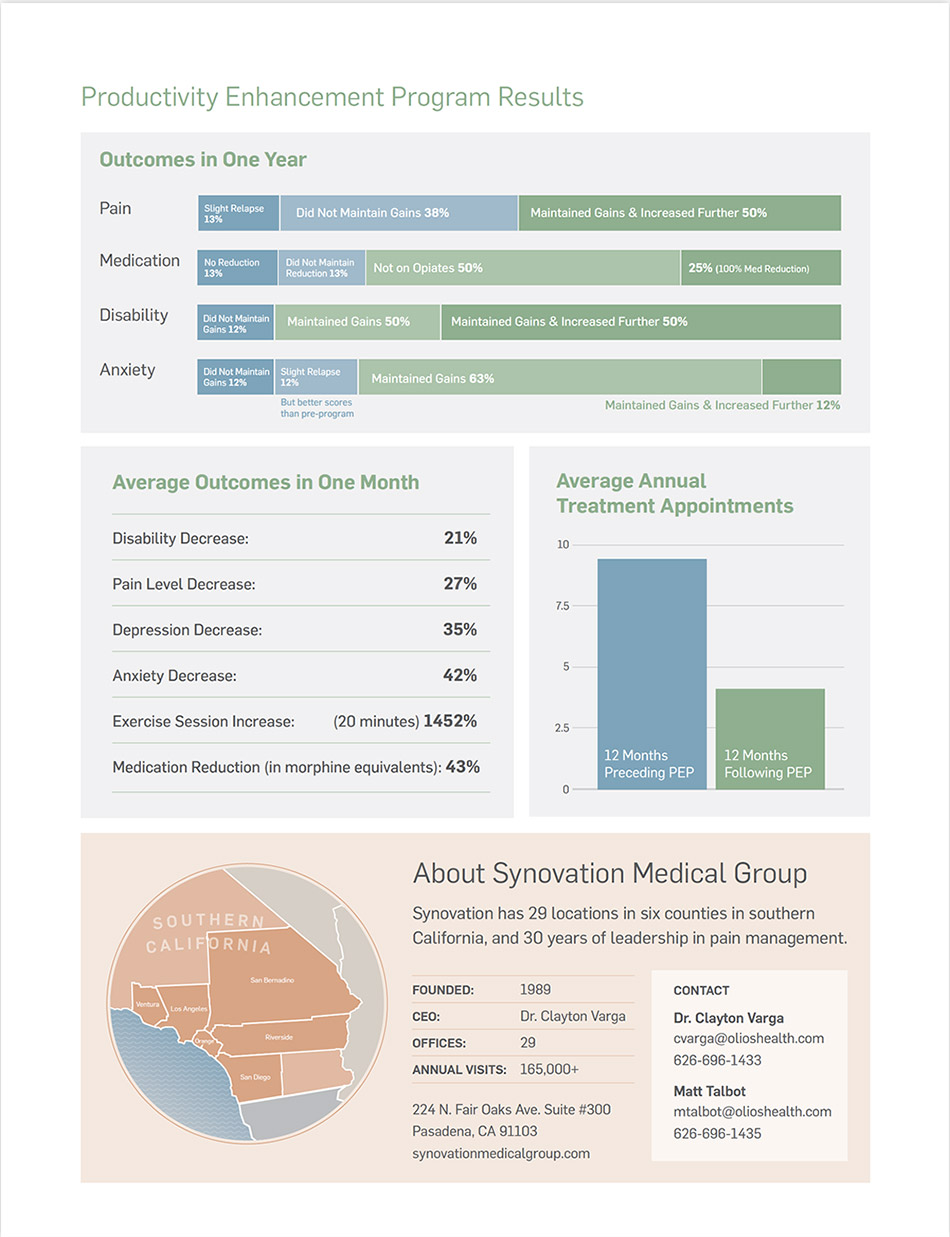
We reimagined the way that data was represented, changing multi-color pie charts into blue and green bar charts for an easier comparison of treatment effectiveness.

Welcoming Patients to a New Medical Model

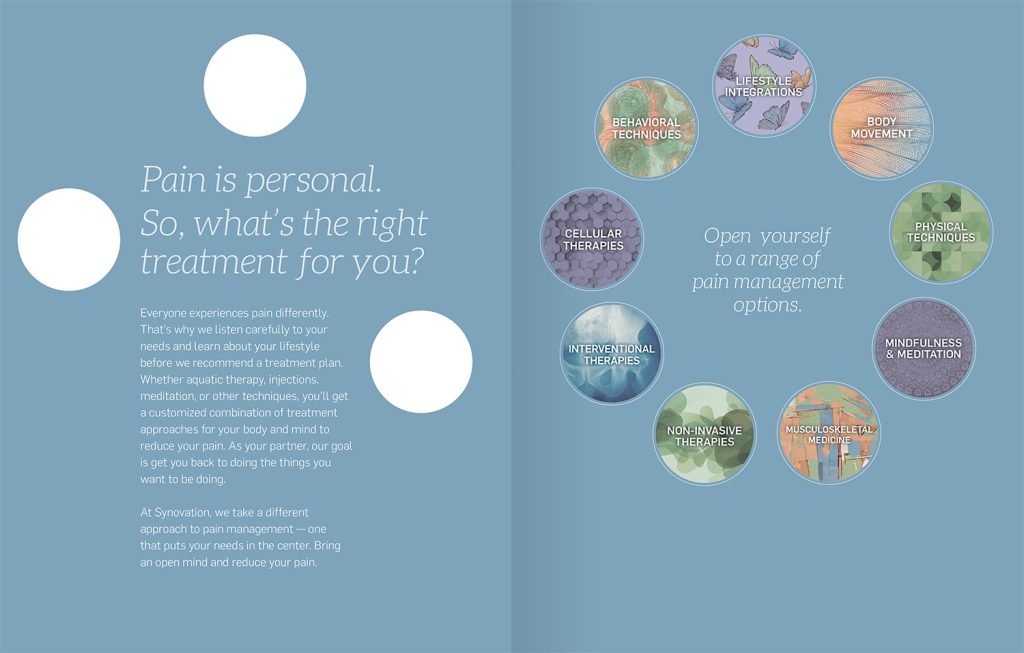
The Welcome Kit we created dispels misperceptions about treating pain solely with drugs. The kit presents a personal approach to pain management, putting the patient in control, and features an array of treatment options. Die-cut holes allow three of the treatment options to show through to entice people to open the brochure to discover Synovation’s multi-disciplinary approach to pain management.

Educating Patients

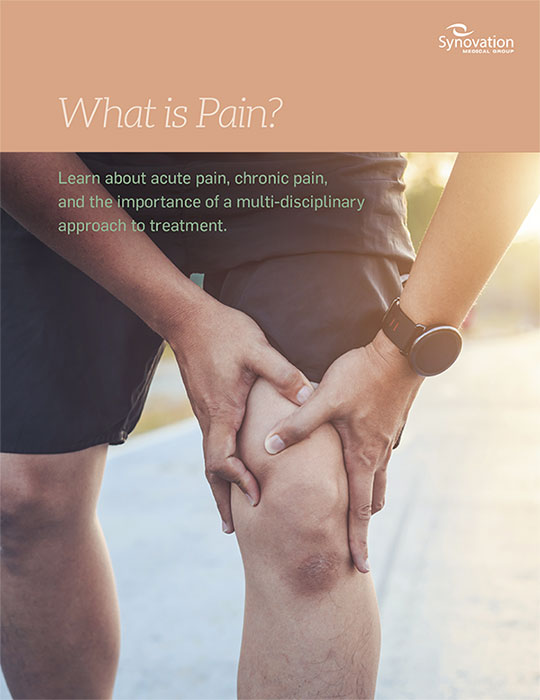
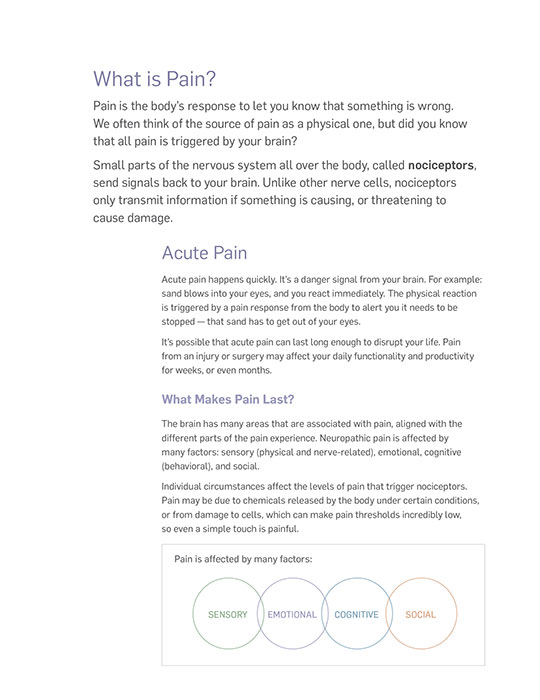
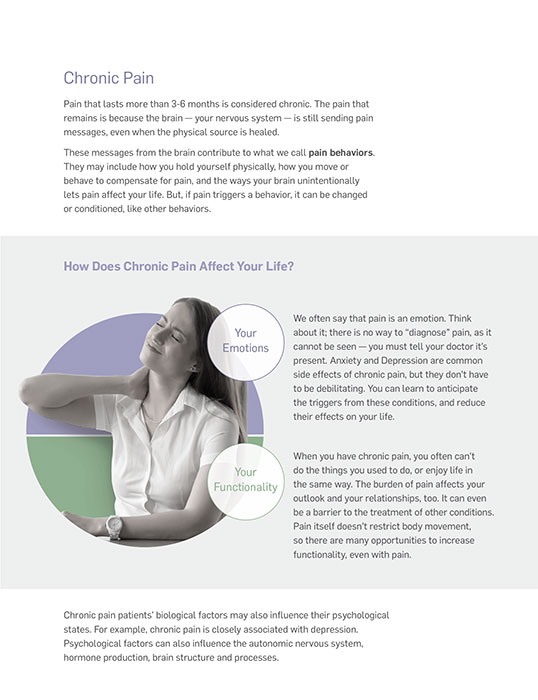
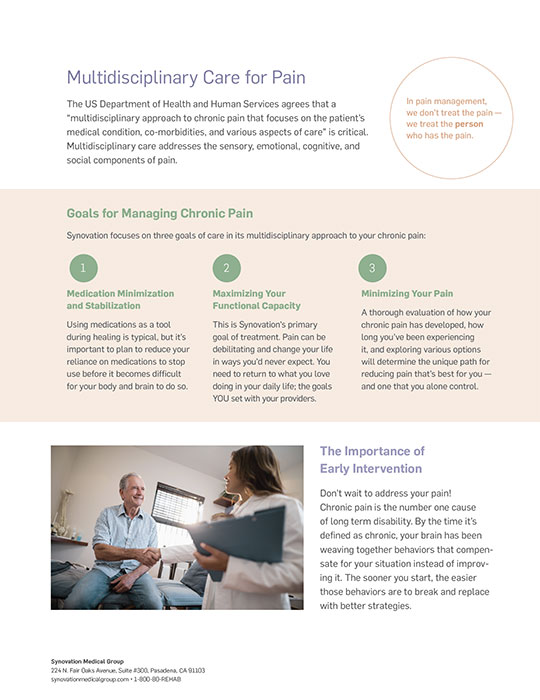
Because Synovation believes pain is experienced by each patient differently and can be managed by the patient, educating patients is a high priority. We developed this brochure to help people understand the difference between chronic and acute pain, how pain affects people, and their multi-disciplinary approach to pain management.

What is Pain?
Acute Pain
Multidisciplinary Approach

Physician Sheets

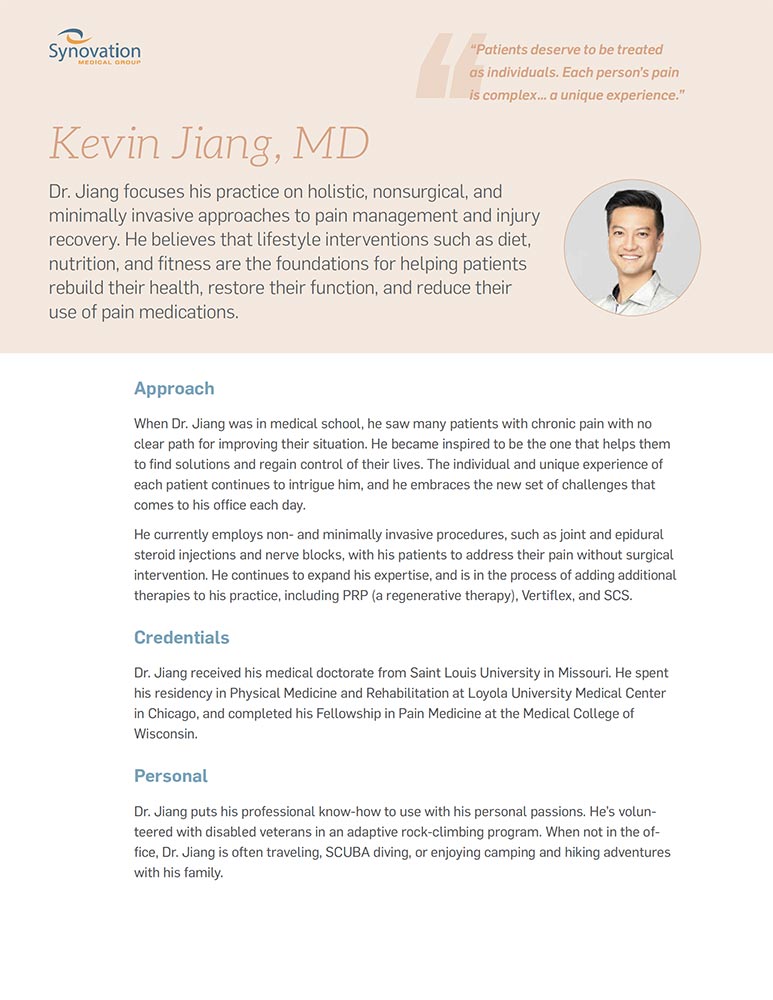
To create a personal connection between doctor and patient, we developed Physician Sheets to inform the patient about each of the professionals who are caring for them. Information about Synovation is on the back. These can be used as part of the Welcome Kit or handed out by the doctor when meeting a new patient.

Promoting the Business Model

We helped Synovation promote the effectiveness of its business model by creating a sheet for insurance companies and managed care groups. The sheet showed how effective Synovation is at reducing both pain and long-term expenses. We revisualized pie charts as colored bars for a quick visual comparison of the positive treatment outcomes.

Promoting at Conferences 

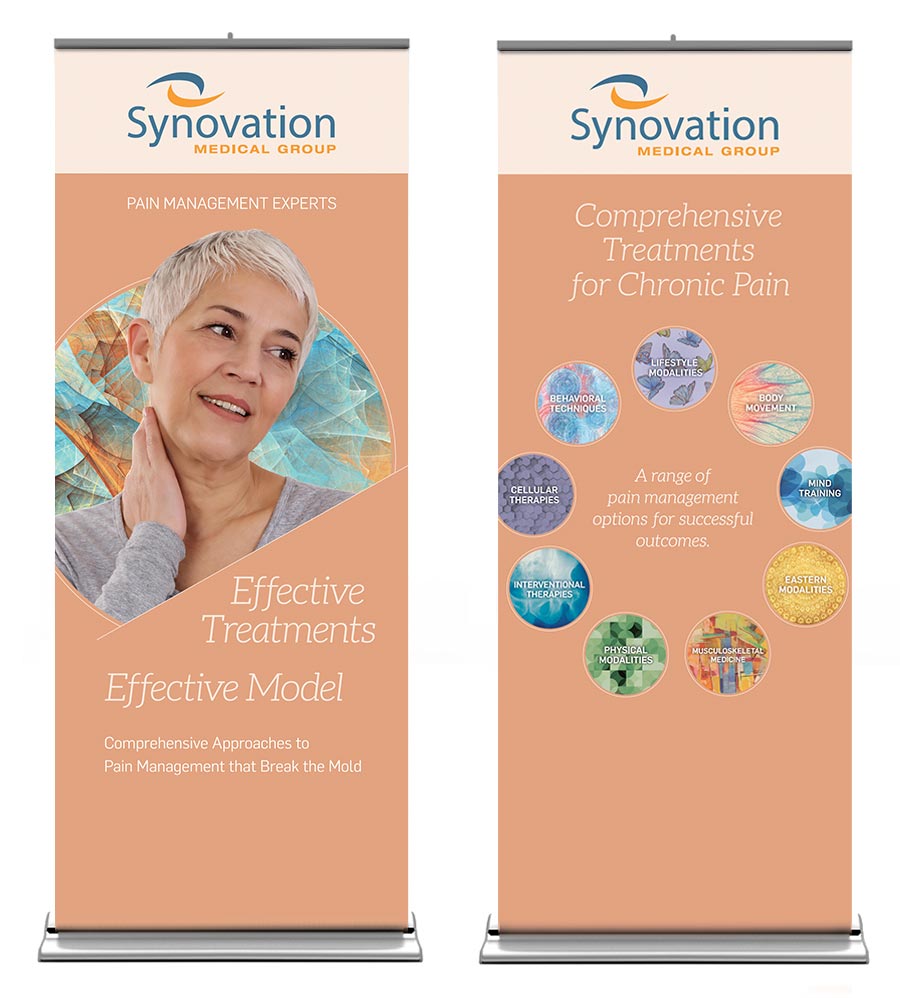
To help Synovation get the word out through conferences, we created banners designed to be used for both consumer and trade use.

Facilitating Growth

Synovation has grown from 20 locations to one of the largest private medical groups in the Southwestern region of the U.S. with more than 40 offices. In addition to the main locations that service daily patient needs, Synovation has five surgical centers, two labs, and multiple locations within other medical practices, helping more and more people live without pain.

GROWTH

40 Offices

From 20 Offices

Telling the Story of Poverty’s Impact

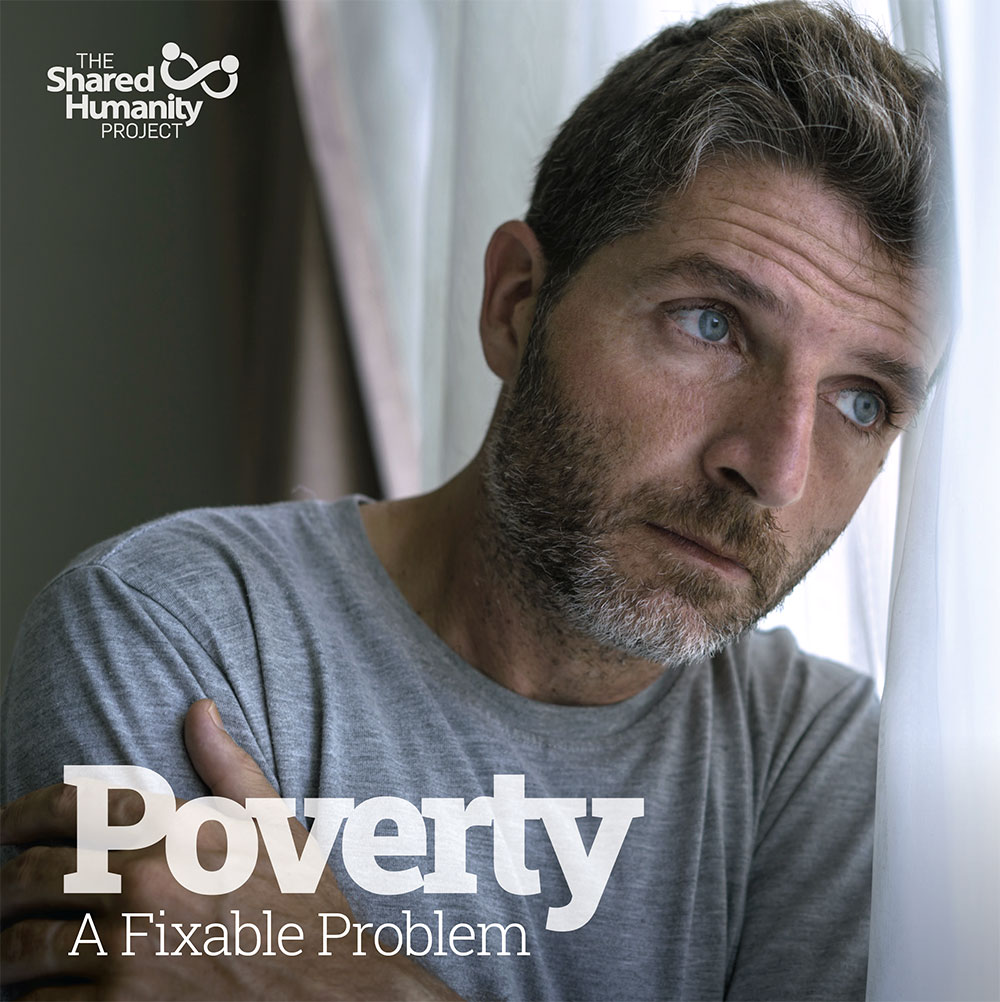
The Shared Humanity Project

Telling the Story of Poverty’s Impact

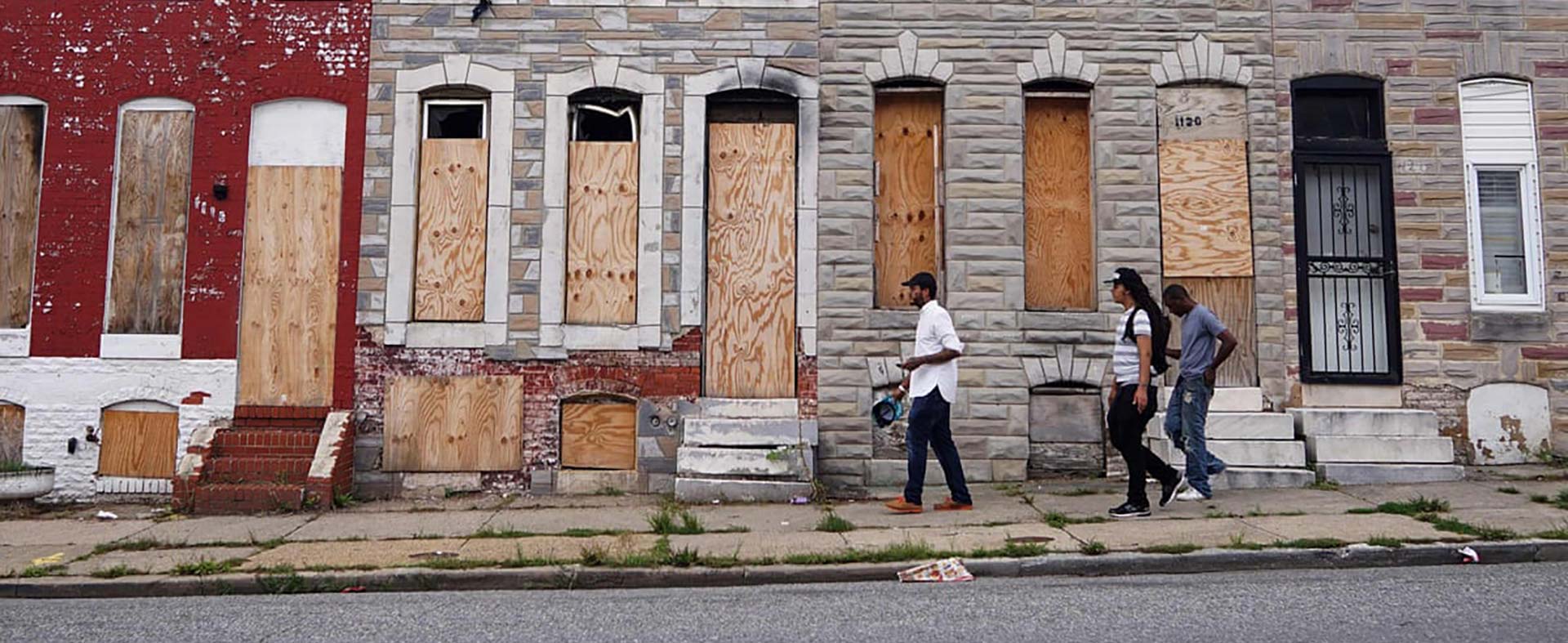
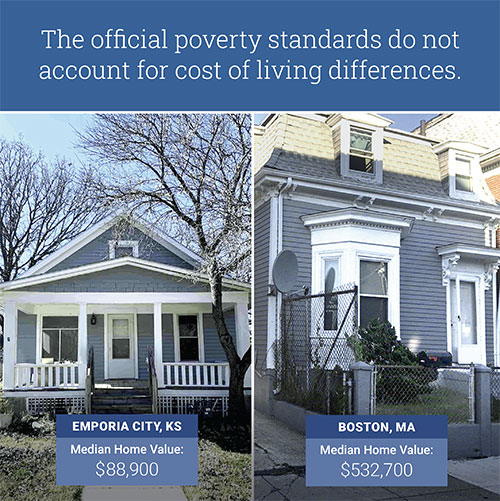
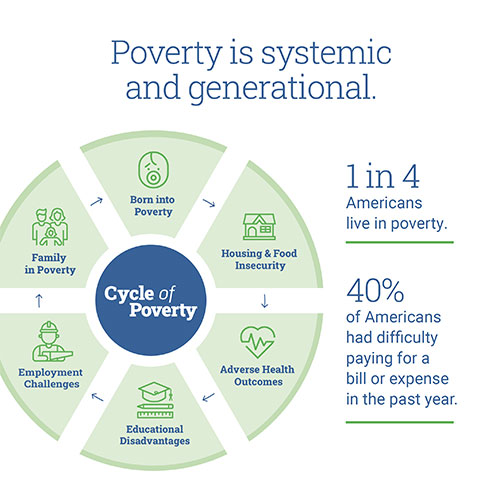
Real poverty is almost twice what most people think it is. We helped this organization define its brand and communicate its solution to donors.

Services

  • Discovery
  • Brand Positioning & Messaging
  • Visual Identity
  • Donor Presentation

Exploring Poverty

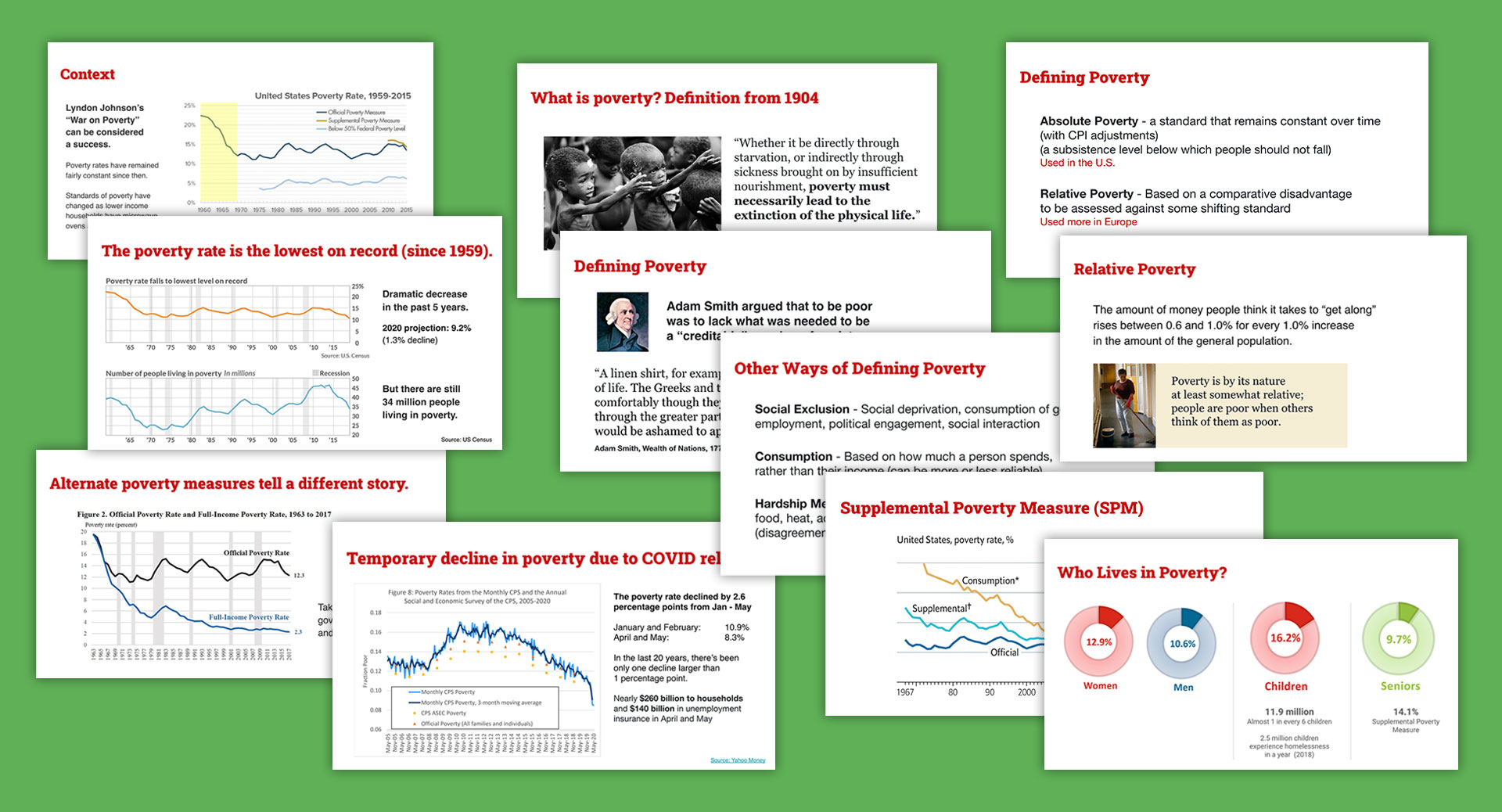
We took a deep dive into the various definitions of poverty, measurement indices, history of poverty, and other aspects of economic need.

Developing Their Message

Donors need to understand why this organization’s perspective on poverty matters. We guided their team in crafting a clear description of their work and its impact.

We are passionate experts bringing decades of experience in programs that address poverty. This includes on-the-ground experience delivering programs in the most underserved and at-risk communities as well as decades of research on safety net and family support programs in public and private think tanks.

We are building a national movement to end poverty in the United States by redefining what “poverty” means, measuring it locally and accurately, and educating and engaging individuals and entities from all sectors to work together to eradicate it.

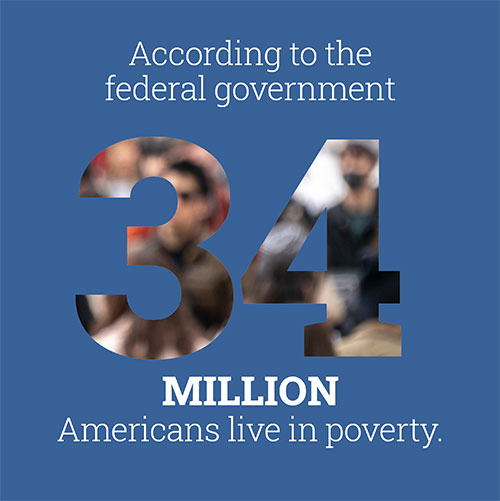
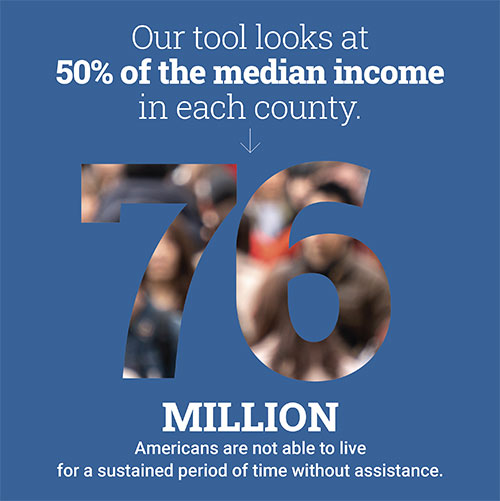
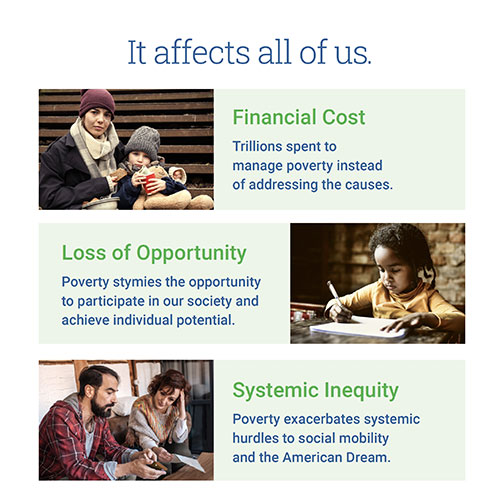
If it were your child or your parent who lived each day in poverty, with the constant stress that comes with never ending scarcity or the constant danger that comes with living in economically distressed communities, you would feel the urgency to solve it. We started The Shared Humanity Project because poverty is solvable when we bring the commitment, creativity, and appropriate priority. Our plan has specific actions that every person and every organization can take to help solve a crisis that affects every one of us, not just the more than 75 million Americans who do not have the financial stability to get by on their own.

To allow for millions of Americans to live in the scarcity of poverty when we have the knowledge and the resources to solve it is inhumane. To allow this to be the case, decade after decade is worse. Alternatively, when we ensure that every American has sufficient economic stability, we can transform humanity from what is to what can be, unlocking the potential of all Americans.

We aim to transform the way that society views and measures poverty and engage everyone in creating positive change. This effort changes all of us in qualitative and quantitative ways, uniting us and arriving at solutions, together. The long-term impact is a shared experience of life where our potential is realized rather than imagined.

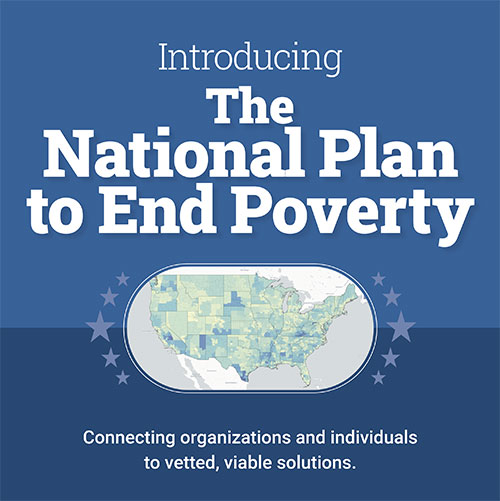
For decades, poverty has been seen as an intractable problem, a “normal” part of American life. Yet it is solvable. We have done the research and built an organization to engage all sectors of society equally to tackle this issue. Our National Plan highlights the extent and depth of poverty in this country. It reveals the number of people living at 50% of median income in each county as a springboard to actions that people can take through our website. It provides an effective answer to the question “What can I do?”

Articulating Their Distinction

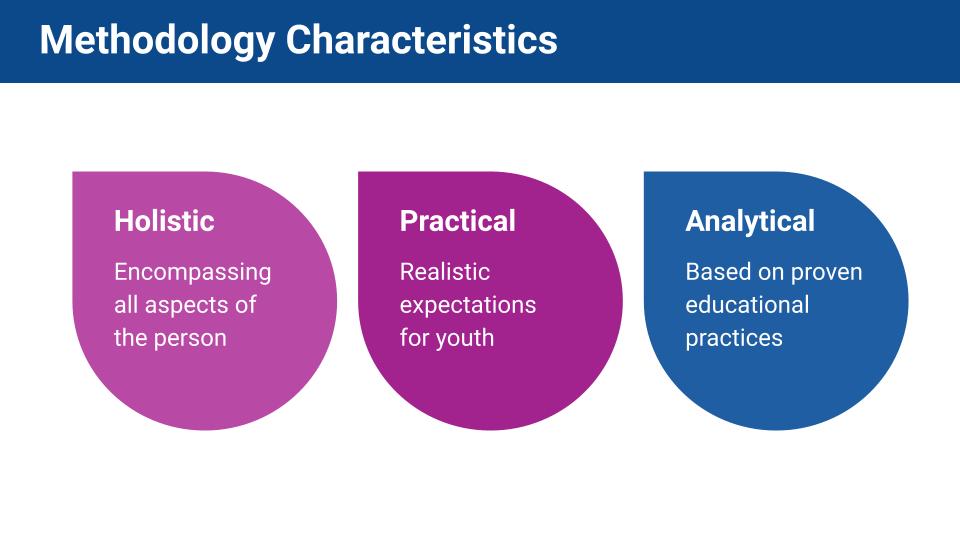
And we helped them articulate the core values that make this organization’s approach unique.

Comprehensive
We take a comprehensive approach that cuts across various silos (such as food, wages, housing, etc.).
Interconnected
We bring all sectors together to address this issue.
Practical
We provide a broad array of ways to make a difference and make it easy to take action.
Non-ideological
We offer a range of solutions independent of government support that do not take sides or favor particular ideologies.
Grounded in Research
Our solutions are based on decades of on-the-ground work and research.
Individual Action
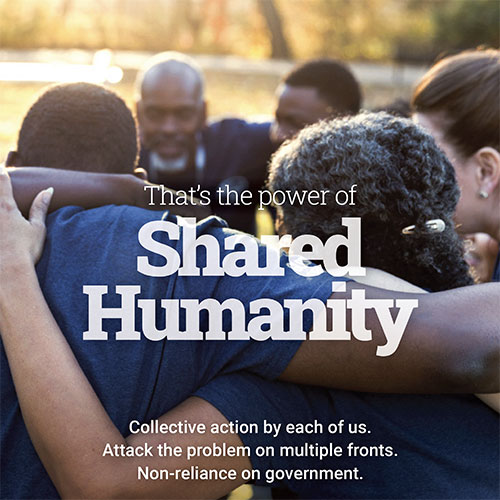
We emphasize the shared responsibility of each of us to take action to address this collective societal problem.

Developing the Visual Identity

Visualizing the National Plan

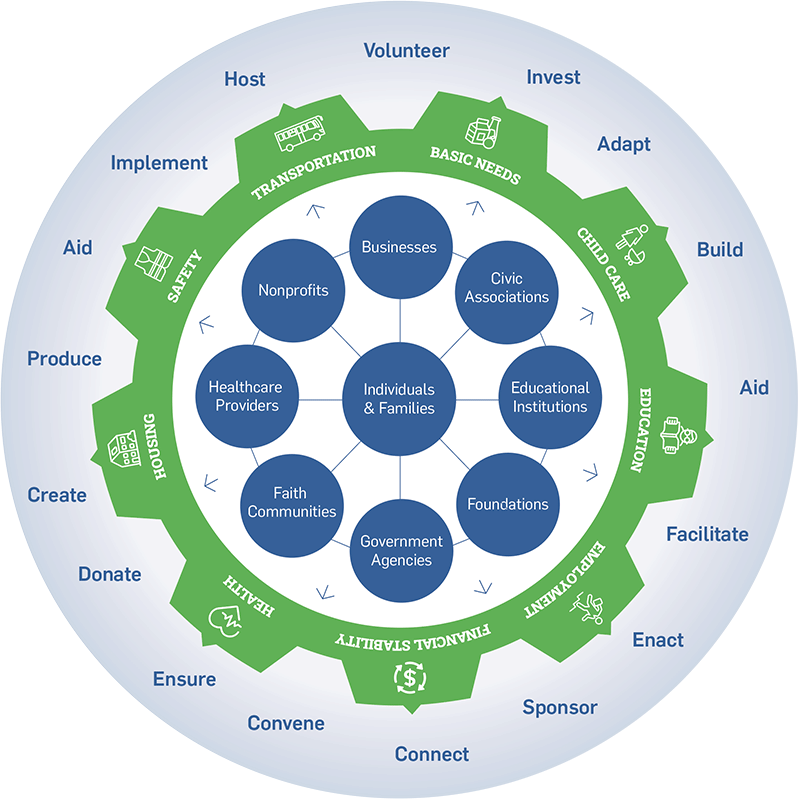
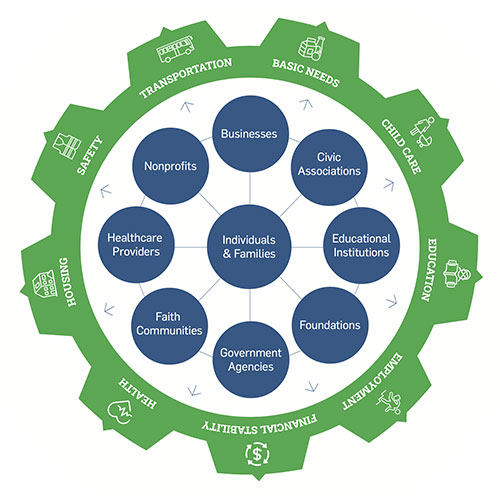
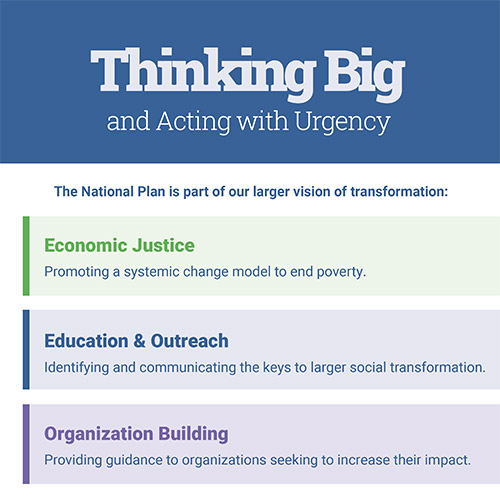
Core to communicating the essence of The National Plan to End Poverty was creating a graphic that shows the audiences, issues, and actions to be taken.

Crafting the Story for Donors

The Case for Support takes donors on a journey. It describes the problem and challenges the norms of measuring poverty, yet it is hopeful. There is a solution.

SELECTED SLIDES SHOWN

We open with an emotional hook and introduce the problem.

Compelling comparisons and graphics help tell the story.

The solution is introduced.

We build the case for supporting a larger vision of societal change.

“Awesome work. Your thoughts and insights are fantastic – and I feel that way every time we speak.”

Mark Bergel, Ph.D, Co-Founder, The Shared Humanity Project

New Name That Appeals to Donors

ImpactIsrael

Reinventing a Brand to Appeal to Donors

Red Rooster Group transformed an unrecognizable organization into a powerful brand for fundraising.

Services

  • Brand Analysis
  • Competitive Analysis
  • Stakeholder Interviews
  • Brand Positioning & Messaging
  • Organizational Name
  • Visual Identity
  • Brand Style Guide

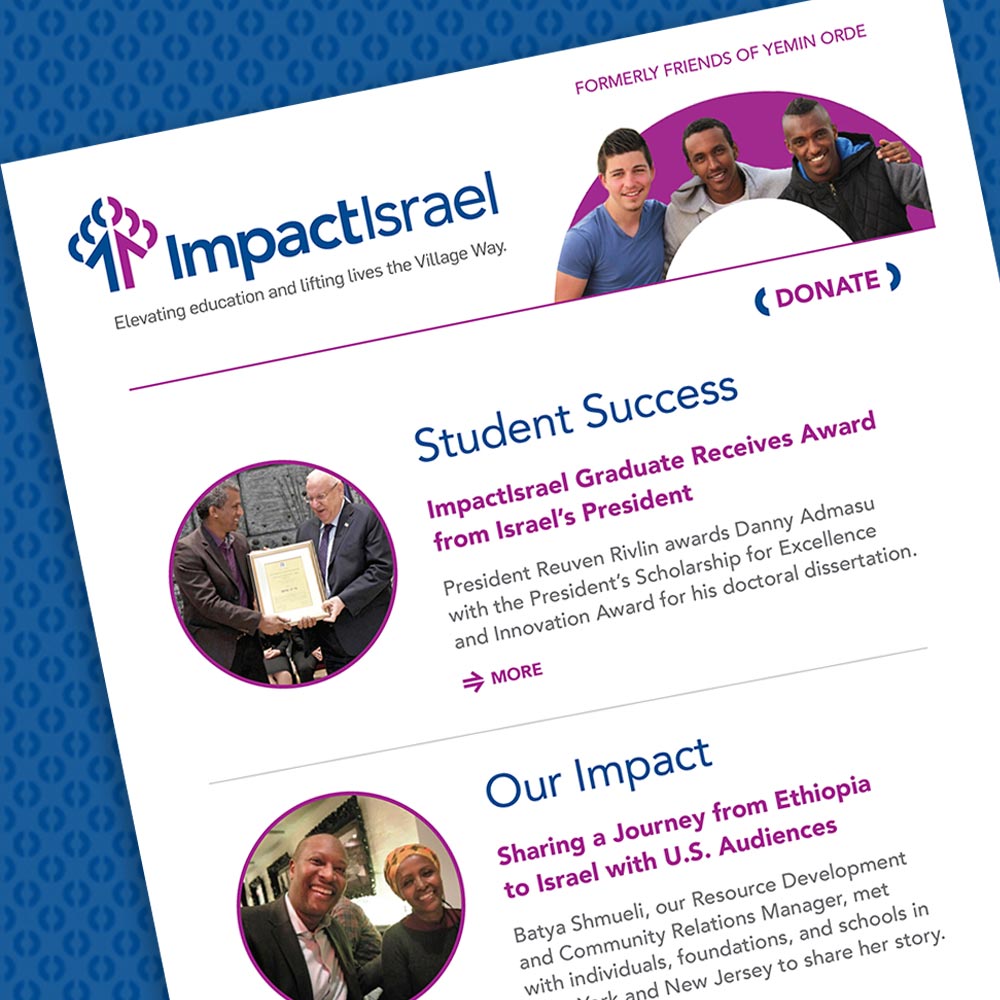
BEFORE

The Challenge

Friends of Yemin Orde had a problem: How do you raise money to scale an educational model in a foreign country when your name means nothing to the U.S. donors you are looking to attract?

Defining Their Essence

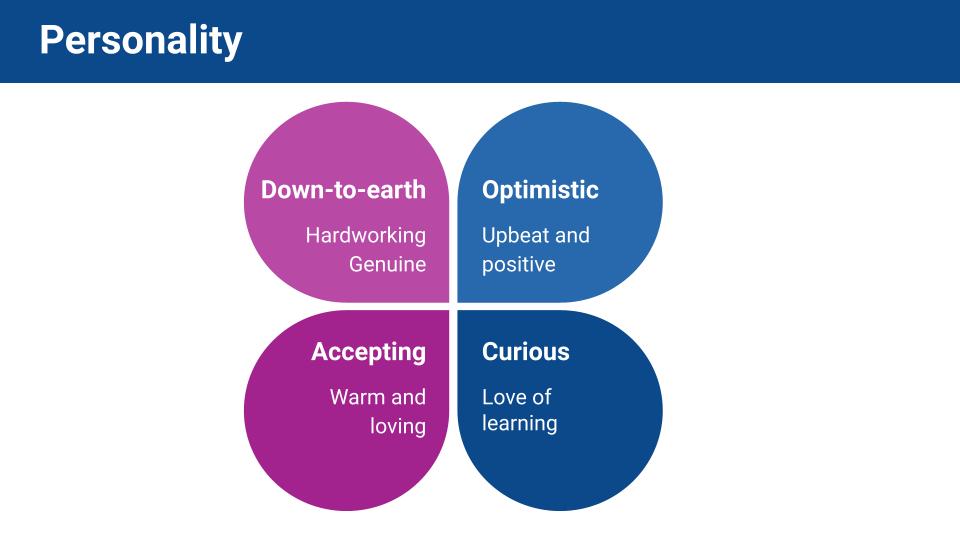
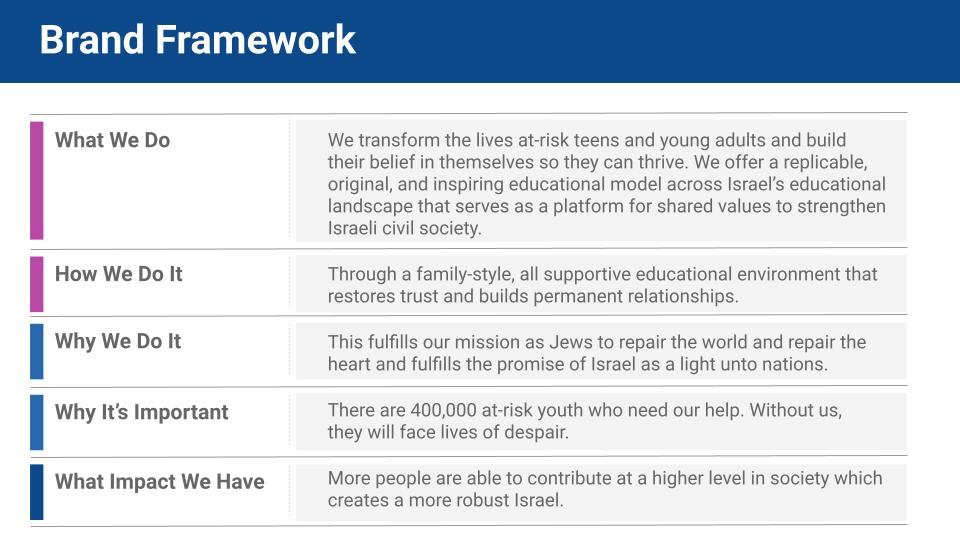
We conducted research to establish what made this organization unique. We then defined their essence to help them connect with donors.

Telling Their Story of Impact

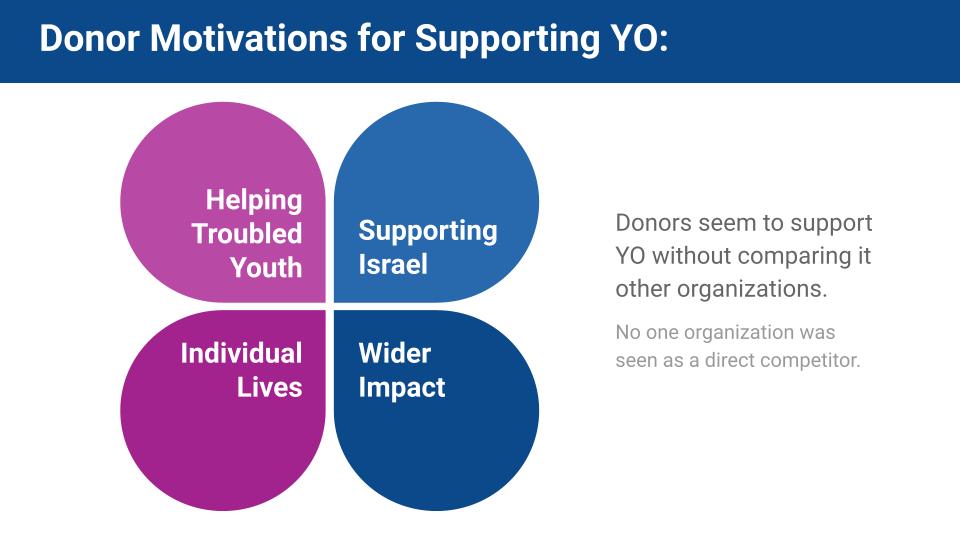
Donors had differing reasons for supporting the organization, but all agreed that an important part of its appeal was that its services were “transformative” and that the Village residents became a family.

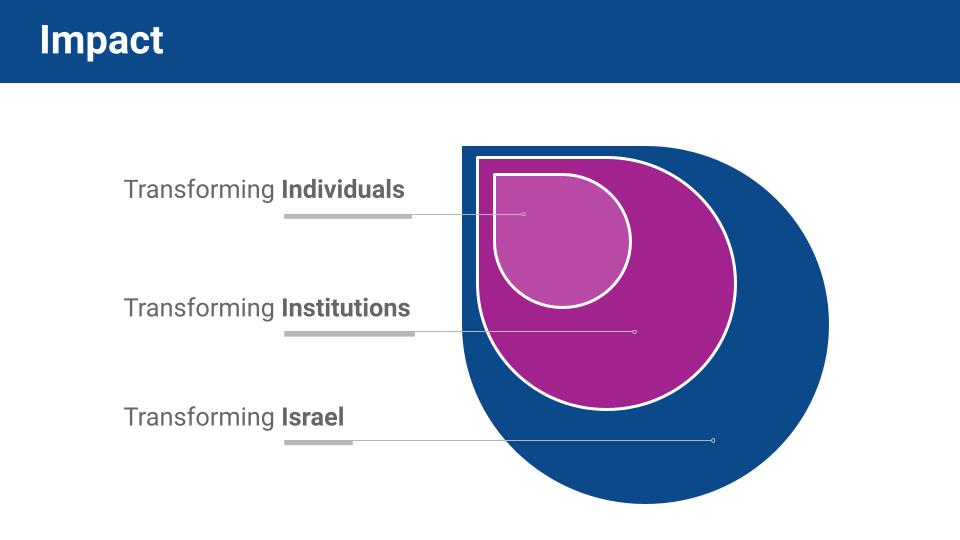
We seized the opportunity to communicate a larger vision of the organization’s impact. The organization’s model, which was used by schools and the military, could transform individuals, institutions, and Israeli society. This transformative effect gave us a path to appeal to donors who wanted their donations to have a major social impact.

Creating a Name That Inspires

We created a name and tagline that conveyed the organization’s bold vision to donors. After defining the essence of the organization, we generated hundreds of names that conveyed different aspects of the program and its personality. We refined the names based on client feedback, and working with the organization’s executive team and board, we whittled the list down to a few that most vibrantly conveyed their vision. We helped them navigate the difficulties of choosing a name that would reflect their values and resonate with donors.

The Naming Process

  1. We wrote a Creative Brief with direction and criteria for the name.
  2. We compiled and sorted 200 names of Jewish organizations for context.
  3. We generated about 580 names, exploring a range of options
  4. We presented 120 names in 8 categories.
  5. We received feedback on these names.
  6. We generated a second round of names.
  7. We received feedback on these names.
  8. We generated a third round of names with URLs
  9. We vetted all names for potential trademark and other conflicts.
  10. We presented to the Board.
  11. The name ImpactIsrael was unanimously approved by the Board.

The New Identity

The new name and tagline reinforce the idea that if donors want their money to create a wider impact throughout the country, this is the organization to support.

Name

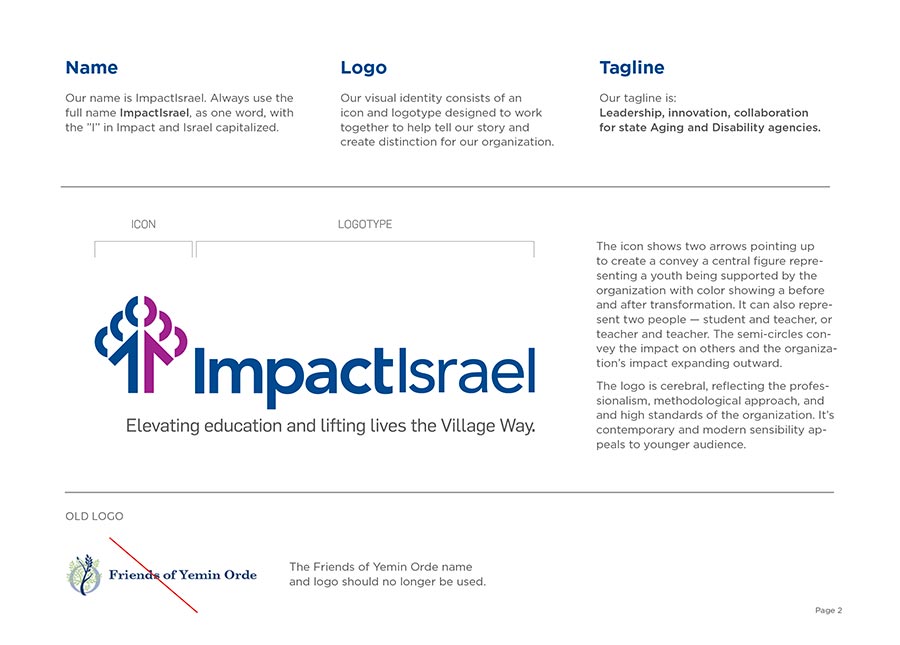
The name ImpactIsrael says it all: We will impact Israeli society, not just a part of it. It’s short, powerful, memorable, easy to pronounce, and relates to their philosophical vision.

Tagline

The tagline — Elevating education and lifting lives the Village Way — opens the door to tell their story and leverages the brand equity of their Village Way model.

Logo

The unique and memorable logo combines an upward arrow with people to show the ripples of impact on children from scaling the model across the country.

Ensuring Brand Recognition

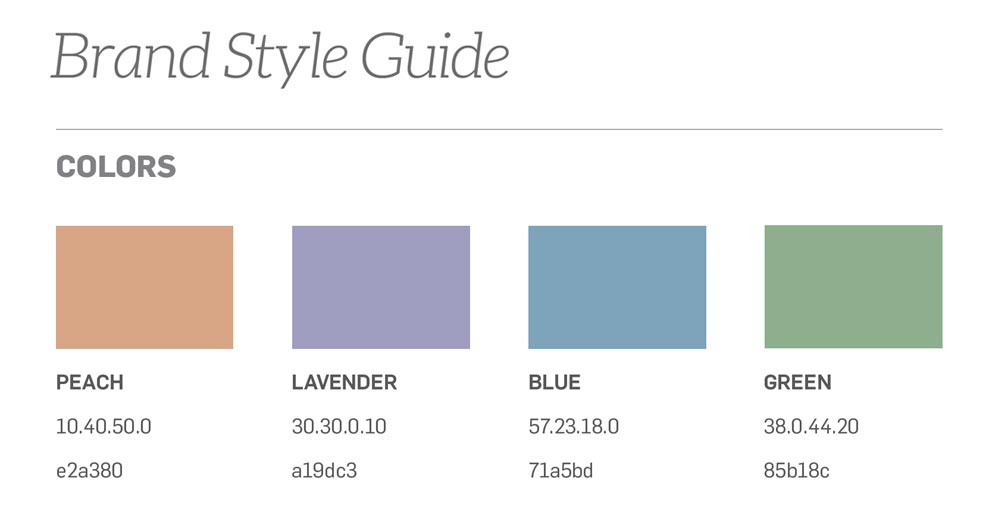
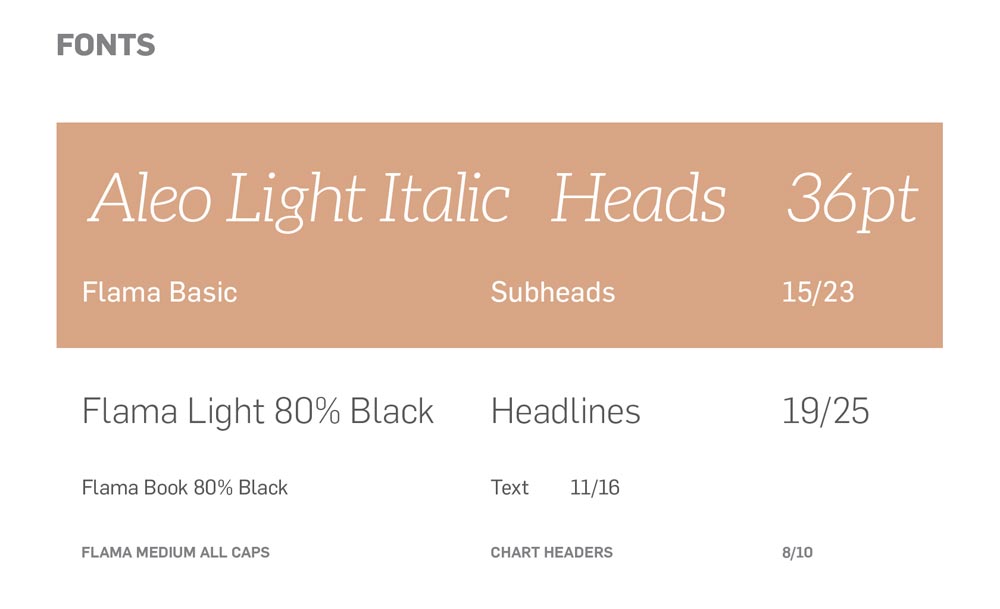
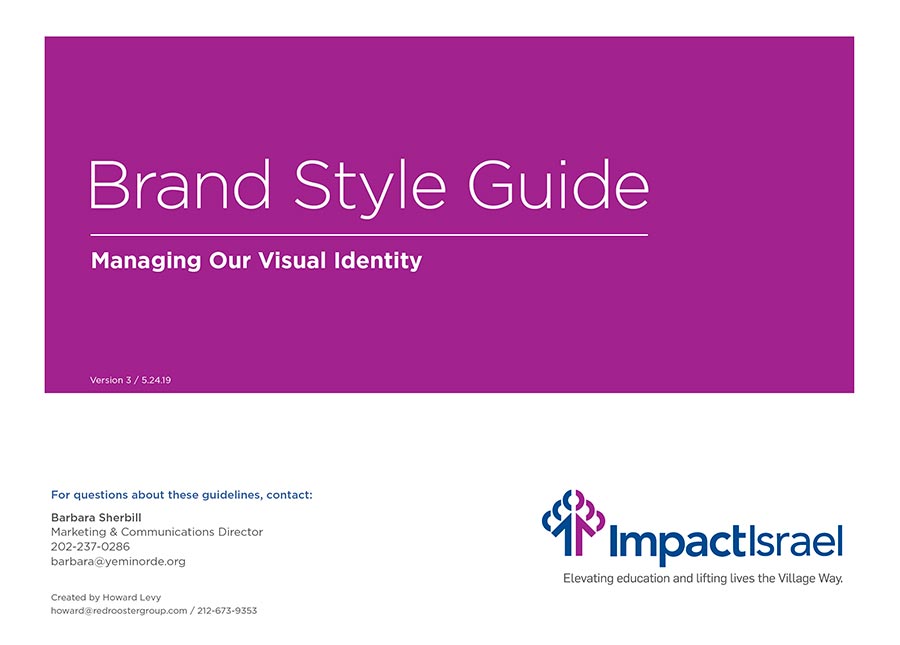
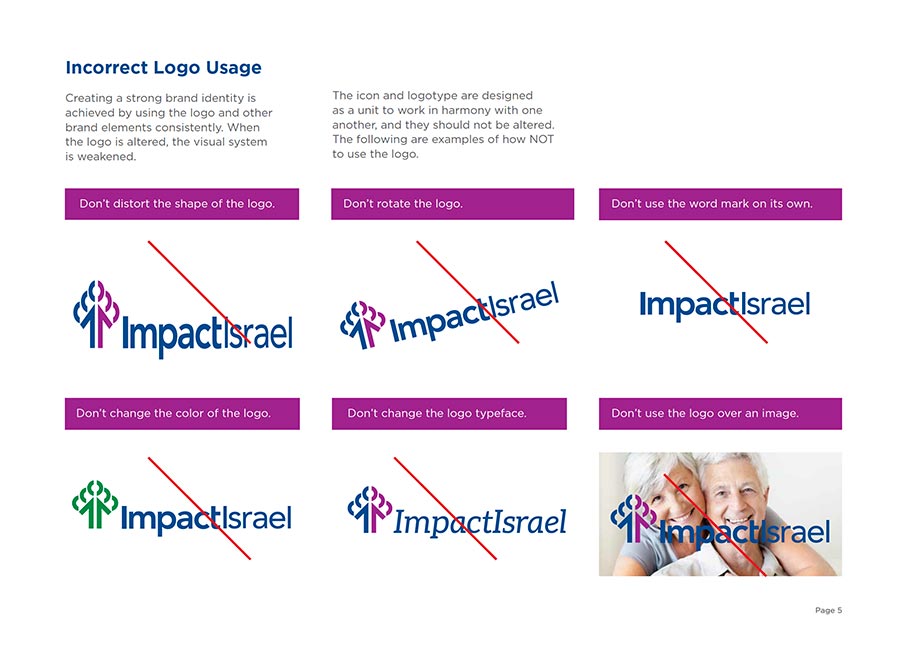
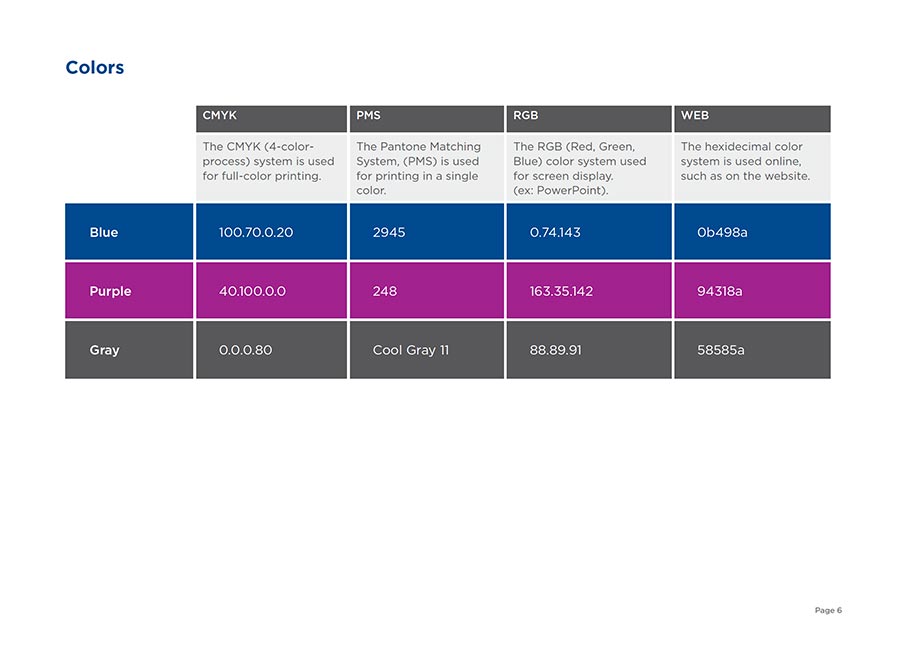
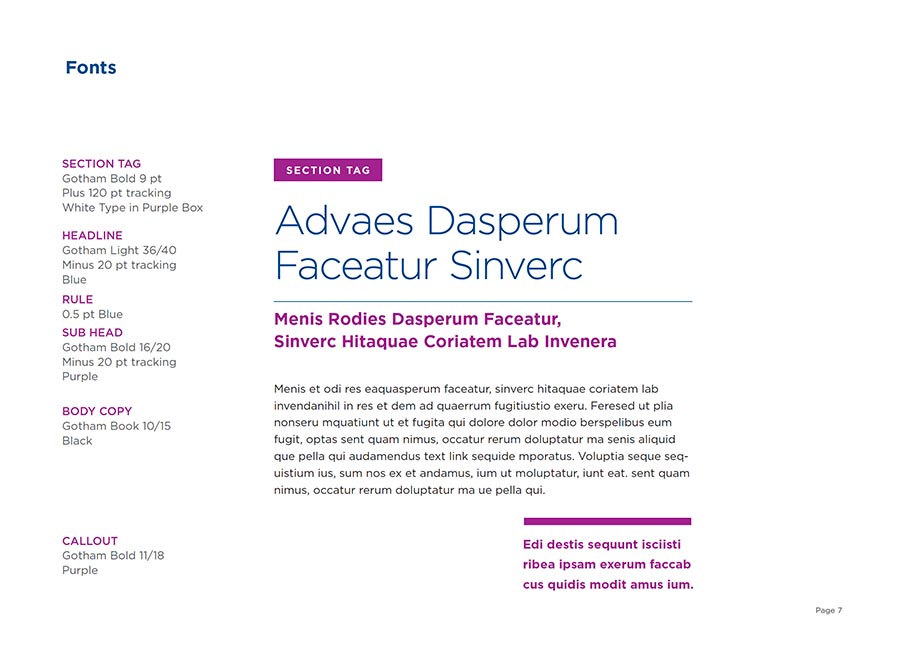
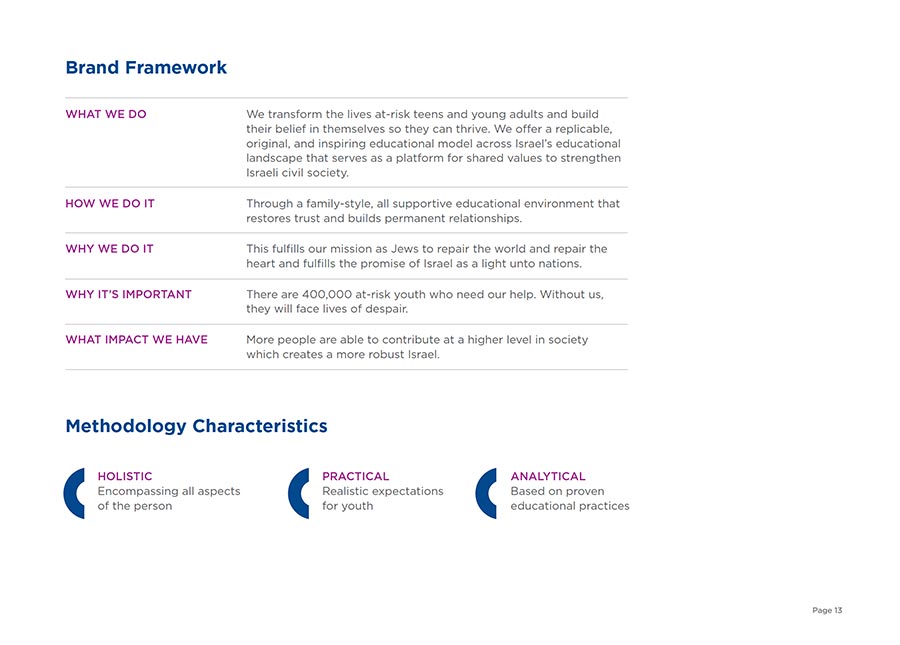
We created a Brand Style Guide to ensure that all staff use the brand elements correctly and consistently.

Launching the Brand

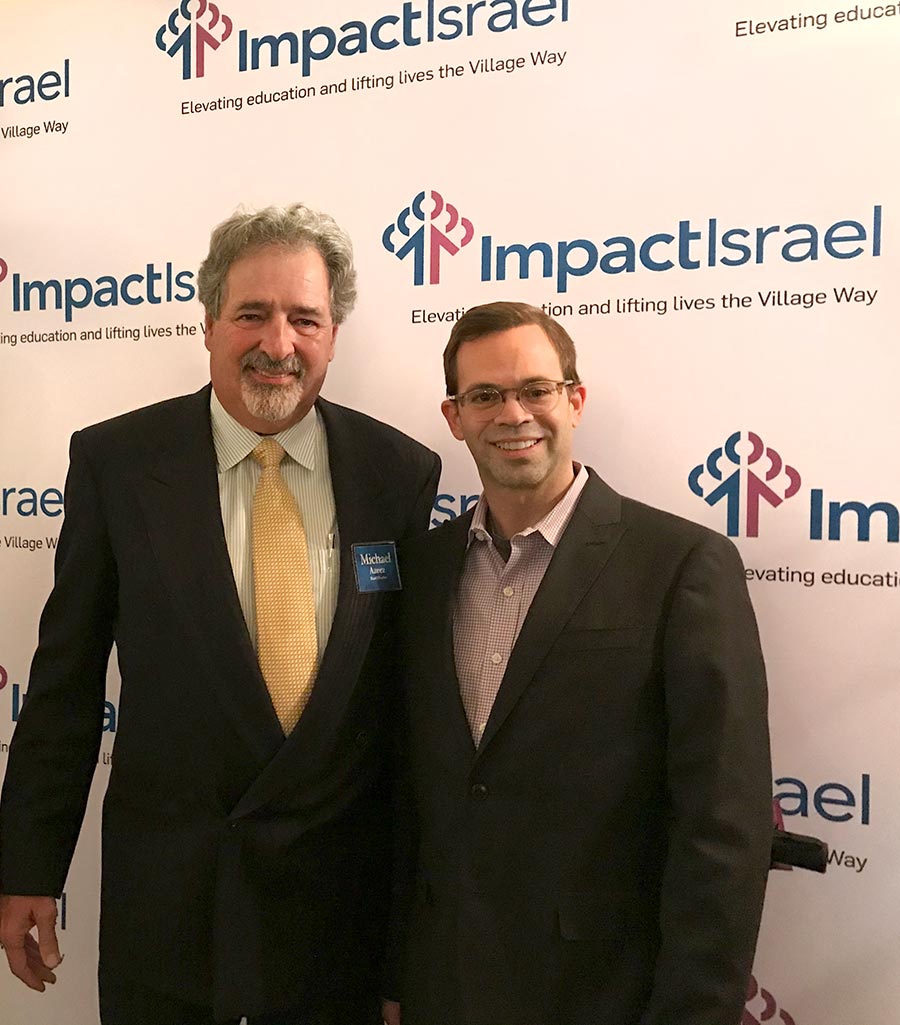
With our guidance, the new brand was unanimously adopted by the board. They launched the name at their gala, where it was well received. ImpactIsrael now has the confidence to move forward to attract donors to support Village communities throughout Israel.

Results

The year the brand was introduced, the organization increased the amount it received in contributions from $7.2 million to $8.2 million.

REVENUE INCREASE

$8.2 million

From $7.2 million