Updated Brand Unifies Social Service Organization with 3 Locations


Grafton Featured Image

CLIENT: Grafton

Providing services for people with a range of mental disabilities including autism, Grafton School was perceived as the last resource for help. With three locations in Virginia, the organization was calling out to be rebranded as a regional powerhouse in behavioral healthcare. Red Rooster Group repositioned Grafton as a centralized source for hope in the Mid-Atlantic region. We updated an old tagline and introduced a new visual look.

Brand Architecture

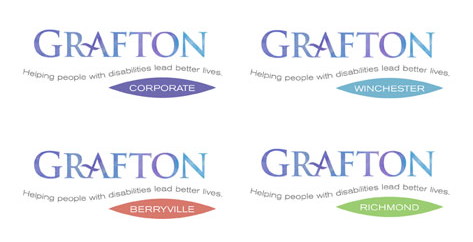
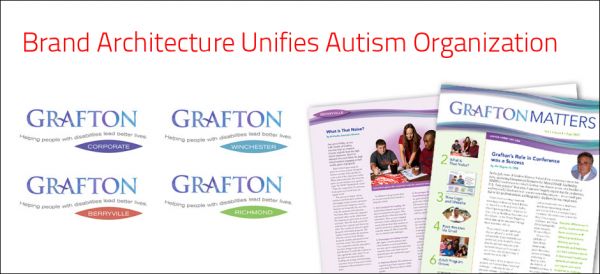
Our research uncovered that one of Grafton’s strengths, the specialized expertise and dedication of its staff, was not being conveyed. We shortened the official name of Grafton School to Grafton and established a brand hierarchy to unify the organization’s four locations under one brand name.

Grafton Logo

Grafton Logos


Brand Manual

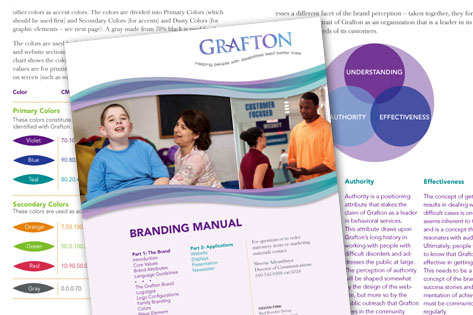
We created a brand manual to explain the brand – what the organization stands for — and specifies colors, typefaces, graphics  and guidelines for the brand. This has allowed the client manage their own brand effectively.

Grafton Brand Manual


Website

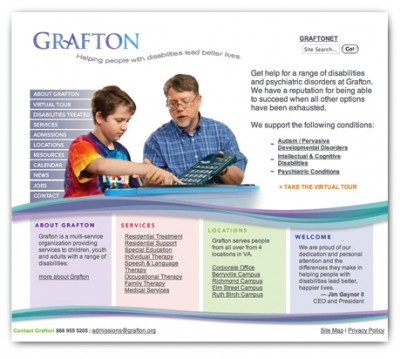
After a strategic assessment of competitors and the users, we redesigned the website around the needs of the users. The redesign has been receiving rave reviews. grafton.org

Grafton Website


Newsletter

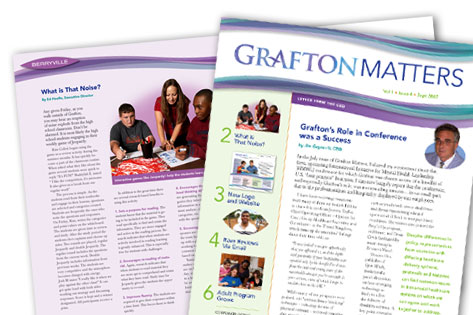
Grafton’s internal newsletter to its 700 employees at their three locations keeps employees informed and generates enthusiasm for the organization.

Grafton Newsletter


Display

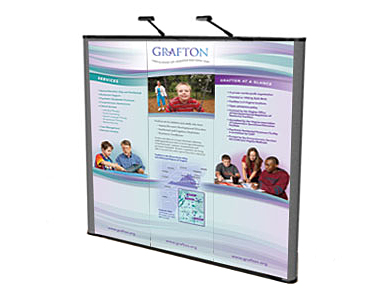
A flexible system of interchangeable panels helps make their display adaptable for fairs, attracting potential students and employees.


Governance Matters Website

When the Alliance for Nonprofit Governance changed its name to Governance Matters, we helped to transition the brand. We cleaned up the homepage of the website to provide direct access to the main features of the site for this nonprofit organization that promotes good governance.


Board Leadership Section

We also added a new section to the site that helps board members find solutions to their governance issues. The section channels the user from symptoms of their problem, to root causes, to actions they can take, to specific resources for their particular issue, providing a comprehensive resource to board governance issues.

Governance Matters Board Leadership Website


Branding

We developed a range of marketing materials to promote their membership and programs.

> See the full case study showing the brochure, postcards, email newsletter and annual meeting promotion.

Governance Matters Brochure


Links


Red Rooster Group is a New York based graphic design firm that creates effective brands, websites and marketing campaigns for nonprofits and businesses to increase visibility and awareness and improve fundraising and advocacy effectiveness. Contact us at info@redroostergroup.com.


Attributes of a Successful Nonprofit

Financial information does relate in any way to an organization’s effectiveness. This type of guide based solely on financials is a disservice to donors as well as to the entire nonprofit sector by perpetuating the notion that nonprofits are better if they spend less on overhead.
Financials have no relation whatsoever on the type of problem the organization is attempting to solve and their effectiveness in doing so. Many organizations spend little on fundraising (they rely on diminishing government grants – not a great strategy) and have no clue how to eliminate the cause of the social problem that they are addressing, and indeed will never actually do so. They have simply institutionalized a method of serving a specific population.
Furthermore, studies have shown that with no standard method for reporting various administrative and fundraising expenses, nonprofits consistently mis-report them. In fact, guides like this actively encourage under-reporting of expenses so that nonprofits look good comparatively to other groups. This vicious cycle must end.
In a time when we need more transparency and education about what it actually costs to operate a nonprofit to successfully address social problems, and at a time when nonprofits face more competition and threats to their funding than ever, we need to support novel ideas for addressing the root cause of problems.
If you want to create a guide that actually helps donors to find organizations that are effective, consider measuring the following:
IMPACT: Is the organization just applying band-aids to a situation or is it actually addressing the root cause of the problem? Is it affecting the attitudes and behaviors of its constituents in the communities it is addressing to positively affect change?
RELEVANCE: Is the organization stuck in yesterday’s mode addressing past issues that are no loner needed (like refugee settlement for specific populations) or is it addressing the needs of people today? Is the organization culturally-competent and using relevant tools and technology to address current challenges?
INNOVATION: Are new ideas and risk-taking discouraged or does the organization have the capacity to be creative, inventive and pioneering in responding to the changing needs of our society and the world around it?
LEVERGAGE: Is the organization merely helping one person at a time or does it have a model that allows it to leverage funds or resources to help exponential people with the same money?
REPLICATION: Is the organization just serving a single population or can the organization’s model be replicated by others to eliminate similar problems in other communities?
ORGANIZATIONAL EFFECTIVENESS: Is the organization just getting by or does it have sound policies and practices in place? Is it investing in marketing and infrastructure that will allow it to grow?
LIFECYCLE ADAPATION: Is the organization addressing its life cycle stage effectively? For example, are early stage organizations building their boards and donors base? Do mature organizations have infrastructure, leadership training and succession planning in place?
COLLABORATION: Does the organization try to protect its turf and “go it alone” or does it work with other organizations to solve problems and serve their populations?
ADVOCACY: Does the organization shy away from trying to change policies that affect their populations or does it combine advocacy with direct service, as studies have shown is the most successful way to create change.
STRONG LEADERSHIP: Has the same person been applying an outdated philosophy for the past decade or is there someone at the helm who brings character, vision and guidance?
ORGANIZATIONAL AUTHORITY: Does it just get by on a formula for providing nondescript services or has it pioneered breakthroughs that are adopted by other organizations? Has the organization established a reputation for being a leader in it field?
It would be wonderful to have a guide that recognizes the nonprofits that are creating real change based on these factors. Our society looks to nonprofits for leadership in addressing our pressing issues. Set the bar and expect great results – our society depends upon it.

In this post, I pick up from How Much is This Dollar Worth which argues that low spending on overhead is not the way to measure the worthiness of a nonprofit. Instead, I suggest the following criteria for donors to use in evaluating a nonprofit organization.Continue reading

What Makes a Top Nonprofit Brand?

It is interesting to note that these organizations are nearly a hundred years old (some even older), with the exception of Habitat which is 33 years old and ARC, which is 60 years old. During that time, there was less competition and these organizations’ missions were unique.
Today, there are approximately 950,000 nonprofit organizations registered in the United States, many with competing missions. It is more important than ever for nonprofits to establish strong brands in order to break through the clutter and attract donors and be successful as organizations.
Large organizations have the resources to maintain a strong brand presence, but smaller organizations can be successful by making managing their brand a strategic objective.
Ways to build a strong nonprofit brand include having:
– A clarity of mission. – A focus on impact achieved, not just services. – Consistency in delivering results. – Marketing that is donor- and member-centric, rather than organization-centric. – Contemporary, relevant design that engages donors. – Communications that respects members and donors and allows for two-way communications. – Brand guidelines and brand infrastructure to maintain your brand. – Staff and board act as brand ambassadors and can articulate the organization’s mission and impact. To learn more about building a successful nonrprofit brand, visit blog.redroostergroup.com and redroostergroup.co

The top nonprofit brands in the United States are recognizable names and were selected because of their size, strength of brand image, geographic reach, revenue, and propensity for growth, according to branding agency Cone. The Top Ten Nonprofits in the United States are:

  1. YMCA of the USA
  2. The Salvation Army
  3. United Way of America
  4. American Red Cross
  5. Goodwill Industries International
  6. Catholic Charities USA
  7. Habitat for Humanity International
  8. American Cancer Society
  9. The Arc of the United States
  10. Boys & Girls Club of America

Continue reading

Hazon Team Brooklyn Logo

Logo for a cycling team to support a fundraising ride. The logo was part of a marketing effort to build support for Hazon’s New York Jewish Environmental Bike Ride.


Red Rooster Group Principal, Howard Adam Levy, served on the Executive Committee of Hazon’s New York Bike Ride, the signature program for the largest Jewish environmental organization in the United States. As the Marketing Co-Chair, he was charged with attracting participants to their bike-a-thon and to help them fundraise.


Strategy

In order to have an effective, campaign, we knew that we would have to coordinate all marketing activities around people who were not accustomed to fundraising. The overall strategy included:

  1. Developing effective recruitment materials including postcards and posters that would appeal to a broad range of people.
  2. Creating a 28-page Ride Guide that described the 4-day event / 2-day ride and gave detailed tips and checklists on how to fundraise and train for the ride.
  3. Producing a fundraising clinic that helped riders overcome the fear of asking sponsors for money and train them on the Kintera / Blackbaud fundraising system.
  4. Developing a team to encourage recruitment for the ride and foster friendships.
  5. Using social media to fundraise and encourage interaction among the team.

Recruitment Materials

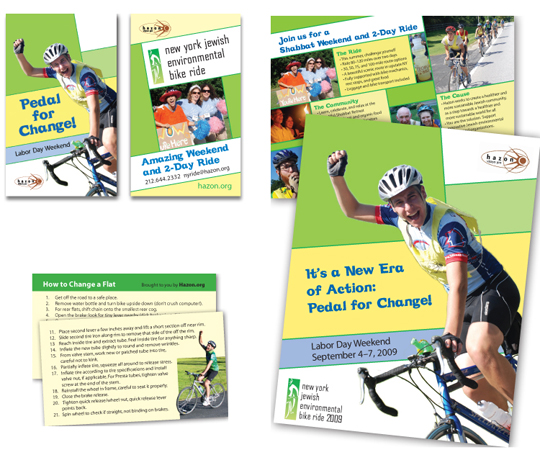
The outreach materials were designed to convey the excitement of the three day event and appeal to a broad spectrum of people. The event attracts people from all walks of Judaism including the unaffiliated. The posters, postcards and pocket cards showcased the diversity of people on the ride and the excitement of the ride experience. To make it easy for riders to promote the ride, we created business card-sized promotional cards and that are easy to keep in the pockets of a riding jersey or small bike pouch. To show riders that they are appreciated, we created cards explaining how to change a flat tire, which were distributed at the ride.

Recruitment Material


Fundraising Guide & Clinic

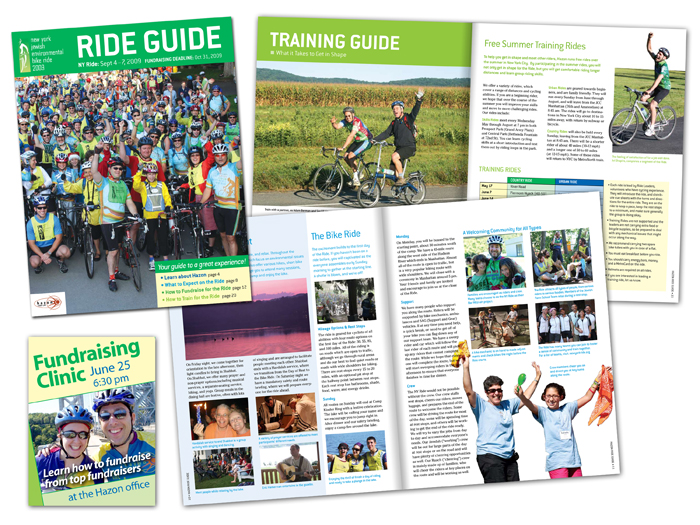
Since a good portion of the participants were riding and fundraising for the first time, we created a 28-page fundraising and training guide. The booklet contained an overview of the event and what to expect, a guide to fundraising, including sample letters, and a training guide with charts to help riders get in shape for the event. We also produced a fundraising clinic to explain how to overcome the fear of asking for money, who to ask, and to answer their questions.

Hazon Ride Guide

> Download PDF of the RIDE GUIDE


Social Media & Events

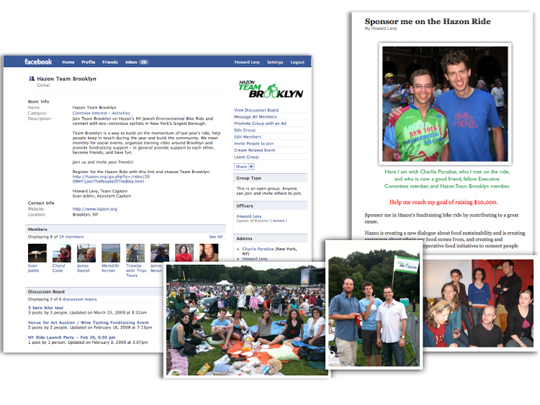
To galvanize participants, help them fundraise and train, and develop a sense of community, we created a new team — Team Brooklyn. The team kicked off with a house event that attracted 20 people and was soon followed by a series of other in-person events as various team members volunteered to host dinners in their apartments.

Social media was used to keep the team together and fundraise. A Facebook page as established for the team to foster interaction and communicate team events. Blog posts and email were used to solicit sponsors for the event.

Social Media Marketing


Tracking & Monitoring

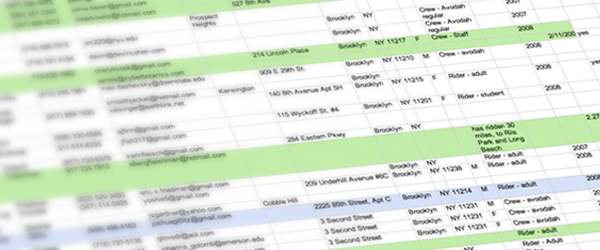
All team activity was monitored including maintaining an active list of all participants and what events they have attended. To boost the recruitment efforts, we collated information from riders who had participated in the past several years so they could be included in outreach efforts.

Tracking & Monitoring


Results

  1. In a year that donations to charities in the United States decreased 10%, the Hazon ride kept pace with last year’s giving levels. The Ride Guide is now being used for Hazon’s other rides in California and Israel.
  2. The new team which was formed, became the largest team on the ride and raised $28,000, about 10% of the entire ride total.
  3. We were successful in our goal of using the team to foster a sense of community. We had 4 events that brought together 50 people. Team members formed lasting relationships, and as a testament to this, a year after the team was started, team members have continued to voluntarily host dinners at their homes.

Award


Links