
A $6 million nonprofit loses all its funding overnight. What should it do? Red Rooster Group provides our recommendations.
Continue readingA $6 million nonprofit loses all its funding overnight. What should it do? Red Rooster Group provides our recommendations.
Continue reading
Targeted advertising such as Groupon, allows advertisers to reach people at the moment of sale. And people are welcoming the opportunity to be targeted.
Continue reading
This website for a special needs school helps promote the school for recruitment and fundraising purposes. The website development was part of name change and overall brand strategy which resulted in a new logo, look and messages. Created in WordPress, the site can be updated by school staff on their own without knowledge of programming. The site features a calendar of events, photo gallery and blog.
The new logo is professional as well as a little playful while emphasizing learning. The open book in the form of a bridge reinforces the name.

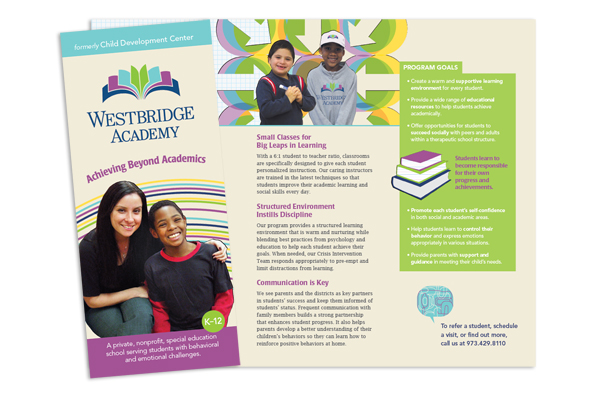
The school’s brochure explains their unique approach to helping kids. The audience for the brochure are the special needs departments at schools aimed towards getting referrals.
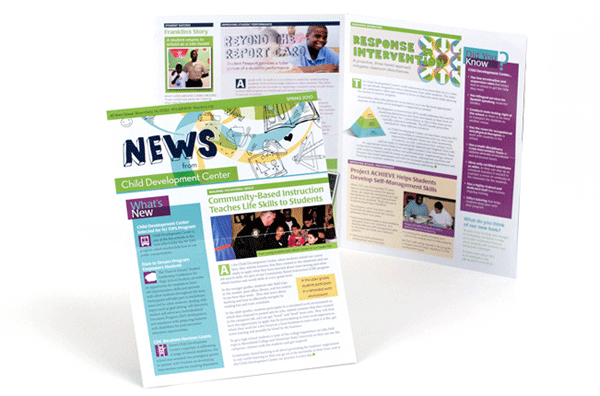
The newsletter conveys the hands-on approach of the school and features student activities, community involvement, and an integrated approach to learning.
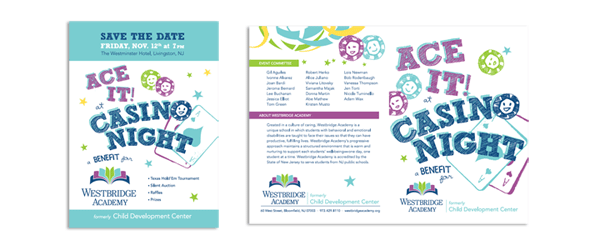
The invitation to a fun evening connects the visual theme as a recognizable look for the school by using handwritten typefaces and reinforcing the brand.
 Red Rooster Group is a New York based graphic design firm that creates effective brands, websites, and marketing campaigns to increase your visibility, fundraising, and communications effectiveness. Contact us at info@redroostergroup.com.

Kirby Ferguson, a New York based writer, producer, director and editor gave a lecture today at this month’s Creative Mornings on his 4-part documentary (3/4 complete) “Everything is a Remix” about how the appropriation of content has been and always will be at the center of all human creativity.
Ferguson said that, with this documentary, he hopes to destroy some lasting myths in today’s culture about what creativity is, and how it should be revered and/or protected. Among these are the myth of the “Lone Creator” (a genius-type who singularly creates an idea and/or work that is completely original) and “Ideas Are Property” (completely original ideas can be created and protected from being “stolen”).
Ferguson proposes that things are a bit more complicated. In both his lecture and his documentary, Ferguson outlined what he believes are the three critical steps in the evolution of creativity:
Making blatant copies of the work one admires.
Example: Of the 13 songs in Bob Dylan’s first album, 11 were covers; Hunter S. Thompson started out by typing out complete novels like “The Great Gatsby” word-for word “just to get the feel of writing a great novel.”
Variations are made on existing work to create new work.
Example: Thomas Edison’s lightbulb was not technically the first-ever electric bulb. The changes he made to existing models, however, produced the first commercially viable bulb.
Existing works are combined in an unprecedented way.
Example: The printing press used materials and processes that had been around for hundreds, even thousands of years—paper, ink, type, the screw press (traditionally used for pressing foodstuffs)—and created a new method of producing printed works.
Find out more about these steps by watching the third installent of Ferguson’s documentary (and the others) here:
Everything is a Remix Part 3 on Vimeo.
You can also watch all of the installments on Ferguson’s site:
everythingisaremix.info
Next month at Creative Mornings New York: Jamer Hunt, September 23, 2011
 Susannah Hainley is a graphic designer for Red Rooster Group, a New York based graphic design firm that creates effective brands, websites and marketing campaigns for nonprofits to increase their visibility, fundraising and communications effectiveness. Contact us at info@redroostergroup.com.
The effectiveness of your nonprofit organization in accomplishing its mission and in raising money depends upon the strength of its brand — what people perceive about your organization. And much of what people perceive, especially donors, is based on how well you are communicating with them. So it pays to know how well you are doing in all areas of your marketing, communications, and fundraising. This 3-hour hands-on workshop will give you the tools for thoroughly evaluating your organization’s brand.
Continue reading
Wondering what kinds of marketing challenges small and medium-sized nonprofit organizations are grappling with? The applications submitted by a wide range of nonprofit organizations as part of Red Rooster Group’s Free Brand Review Competition show nonprofits struggling to improve their branding and fundraising in different areas.
Continue reading
In TheStar.com’s 2010 article “CEOs Must Be Artists?”, McGill University Professor and artist Nancy Adler spoke of “a tradition of hostility between the arts and commerce,” in which “artists, too often, think of businesspeople as Philistines, and [businesspeople], in turn, think of artists as a bit flaky.”
Last Friday at the monthly breakfast lecture series “Creative Mornings,” guest speaker and current President of RISD (Rhode Island School of Design), John Maeda, endeavored to explain to his audience that, not only can artists and designers make great leaders/CEOs, but that the business world in general could benefit immensely from using the same techniques and mindset with which artists and designers approach their work.
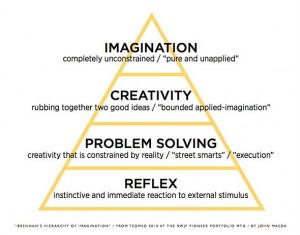 Maeda described one of these approaches as “taking leaps.” Employing a pyramid visual taken from Dr. Patricia Brennan of the University of Wisconsin-Madison’s work, Maeda argued that your archetypal businessperson in a role of leadership is stuck on the lower two rungs of the pyramid, where all decision-making is constrained by reality. Artists and designers, he argues, move beyond that realm into higher plane of problem solving which involves creativity, and finally “boundless creativity,” or, imagination. As artists and designers, we are constantly striving to create a solution that is unique to the world. As Adler puts it: “You’d be hard pressed to find a painter who didn’t approach a blank canvas wanting to produce something of high quality, but all too often people in the commercial world end up settling for the just-good-enough.”
Maeda’s bottom line? It is time that art and design stopped being thought of as “optional” but as a viable and essential part of the future of American education and business.
Susannah Hainley is a graphic designer for Red Rooster Group, a New York based graphic design firm that creates effective brands, websites and marketing campaigns for nonprofits to increase their visibility, fundraising and communications effectiveness. Contact us at info@redroostergroup.com.
More than 60 people from a diverse array of creative disciplines packed Mustang Harry’s Bar in New York City for networking. The event brought together professionals in branding, advertising, website design and development, photography, writing, social media, music, film production, and other sectors to meet each other and exchange ideas.
Continue reading
In today’s increasingly tech-mediated world it is absolutely essential that your company or organization have an effective and compelling website. Your website serves as the public face of your organization and in order to place your organization in the best light possible your site needs to be informational, aesthetically pleasing, and user-friendly.
Continue reading
If you are a small or medium-sized nonprofit with a limited marketing budget, you know social media is the way to go. However, social media marketing has more to it than just setting up a page and collecting fans. In order to make the most out of social media for your nonprofit, consider these 5 things.
Although social media is free and widely used in the industry, you might be focusing on other aspects of marketing and leaving social media out of the picture. As social media is becoming part of everyday activity, understand that it’s important to set up an official page on Facebook at the very least. I put an emphasis on official because anyone is able to create fan pages and groups on Facebook. It is important to delegate someone who understands the organization and its culture as your social media voice. The longer you wait to do this, the higher the chances that somebody who does not know your nonprofit very well is already creating pages and groups for it. Multiple pages and groups may seem like good awareness at first glance. However, too many groups and pages might confuse your donors as to which page to follow or group to join. You are also letting someone else draw an image for your organization, which might not be the same as what your board envisions.
If your donors are more active on Twitter, don’t miss out on the opportunity of reaching them there. If your potential donors are professionals, then setting up a company page or a group on LinkedIn is crucial. If you have videos or pictures, then you know you have YouTube and Flickr to help you organize and share them. There is still a few months’ wait until Google+ sends out organization invitations. Until then, it might be beneficial to create an individual account and familiarize yourself with it.
The sooner you create an official presence, the easier it is to control the type of message that you want to send to your donors. When there are multiple groups and pages already established, it is challenging to get a consistent message out. If you decide to start a brand new page, it is even harder to get everyone to switch to the new page. In any case, provide good content and establish your credibility. Reflect your organization’s culture in your posts. Just setting up a page or an account is not enough; regular activity is a must, and for this reason you should not join every single social media channel without thinking about the amount of time and effort it takes to maintain them.
The image of your brand will determine the success level of your organization. What people are saying about your nonprofit through social media is extremely valuable information. Any organization that ignores these conversations will miss out on possible opportunities for improvement. Whether you are a for-profit or nonprofit organization, you need to listen to your stakeholders.
The challenge with social media is sorting out the humongous amount of information and channeling it into the right directions to get the most out of it. If the communication is more organized, you will be able to get usable data. Use hashtags and discussion boards to keep track of different subjects. Ask the right questions and collect the information that you need. Social media is not just a great medium to create the right kind of buzz for your organization, it is also a great tool for feedback and market research. When you come across a wise person or organization, follow them! You might be able to gain valuable insight. Plus, it also shows that you support them and this helps to establish relationships.
There are numerous tools and applications that can help you gain measurable results on social media. Use social media to increase traffic to your website by creating welcome pages that are linked to your website. Increase subscribers to your newsletter, generate buzz for your fundraising events and simply collect donations by adding a donate button to your page.
Social media can do a lot for your organization if you let it. Utilize social media to get your message through to general public and to help them understand your organization and what it stands for. Use story-telling to create magic and turn them into activists and donors. Build meaningful relationships and create an online community.
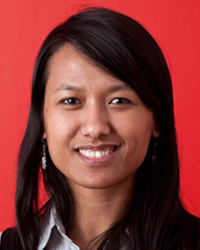 Moheeta Tamrakar, is a social media associate at Red Rooster Group. Red Rooster Group helps nonprofits build better brands. Moheeta helps the clients build communities on social media in order to cultivate donors. You can contact her at moheeta@redroostergroup.com.

Check out this webinar in which nonprofit branding expert Howard Adam Levy presents ways to integrate all marketing efforts to increase the number of supporters and attract donors. The webinar provides actionable tips for each aspect of marketing, a case study showing how the Livestrong foundation uses social media to build its base of supporters, and examples of best practices of website design and bonus marketing checklists.
Continue reading
Content can form the basis of a strong social media campaign according to Mary Lynn Halland. Mary Lynn is a marketing generalist and social media management specialist at Consulting Resources NY. She shared her knowledge at a Lunch and Learn session at Red Rooster Group.
Continue reading