
Ask the Expert: How do you pay for fundraising consulting?

Will urban gardens save America? This lofty topic was taken on tonight by a panel of experts representing different aspects of the urban agriculture movement that provided an interesting overview of the issue.
Continue reading
How do you measure the effectiveness of a nonprofit organization? In my post, Attributes of a Successful Nonprofit, I argue that low spending on overhead is not the way to measure the worthiness of a nonprofit, and suggest new criteria for donors to use in evaluating a nonprofit organization. A reader asks: “How would you objectively measure attributes like “lifecycle preparedness” and “organizational authority,” as just two of your 12 criteria?“
Continue reading
The Board’s Role in Managing Your Nonprofit’s Brand
If you have heard of the Red Cross, then you know the power of a strong brand: instant recognition and strong fundraising appeal. But powerful brands don’t just happen, they need to be nurtured. And boards can play an important role in building their nonprofit’s brand so that it engenders trust, inspires donations, and can be leveraged for corporate sponsorships. This article describes the 4 roles that your board can play in managing their nonprofit’s brand.
Continue reading
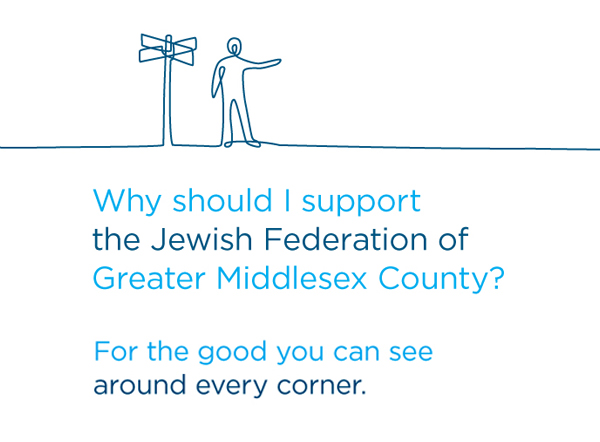
How do you help tell a cohesive story for an organization that works in so many areas? We created a compelling fundraising theme, brochure and materials to promote this Jewish Federation. With the headline, “Why should I support the Jewish Federation?,” the inside panel of the brochure answered with, “For the good you can see around every corner.” This was used as the overall fundraising theme to show the impact that the Federation has in many areas around the county. The inside of the brochure presents a virtual walk through the community, visually showing all the ways in which the Federation was supporting the institutions that people rely on.
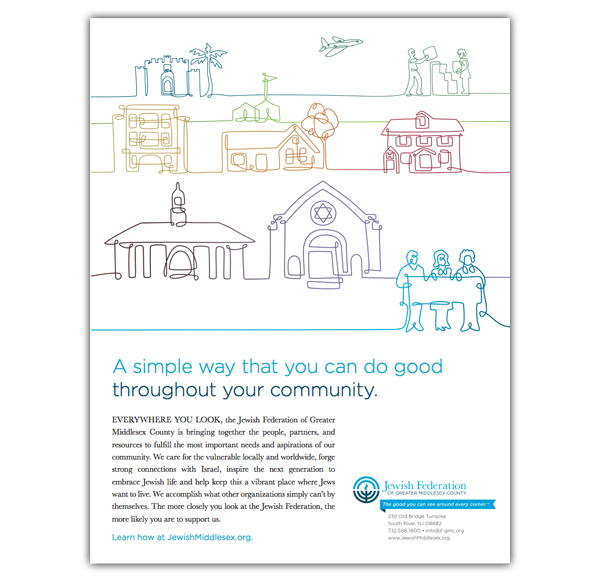
The ad presented the concept in one panel – a visual reminder of all the institutions that the Federation supports and a powerful appeal for support.
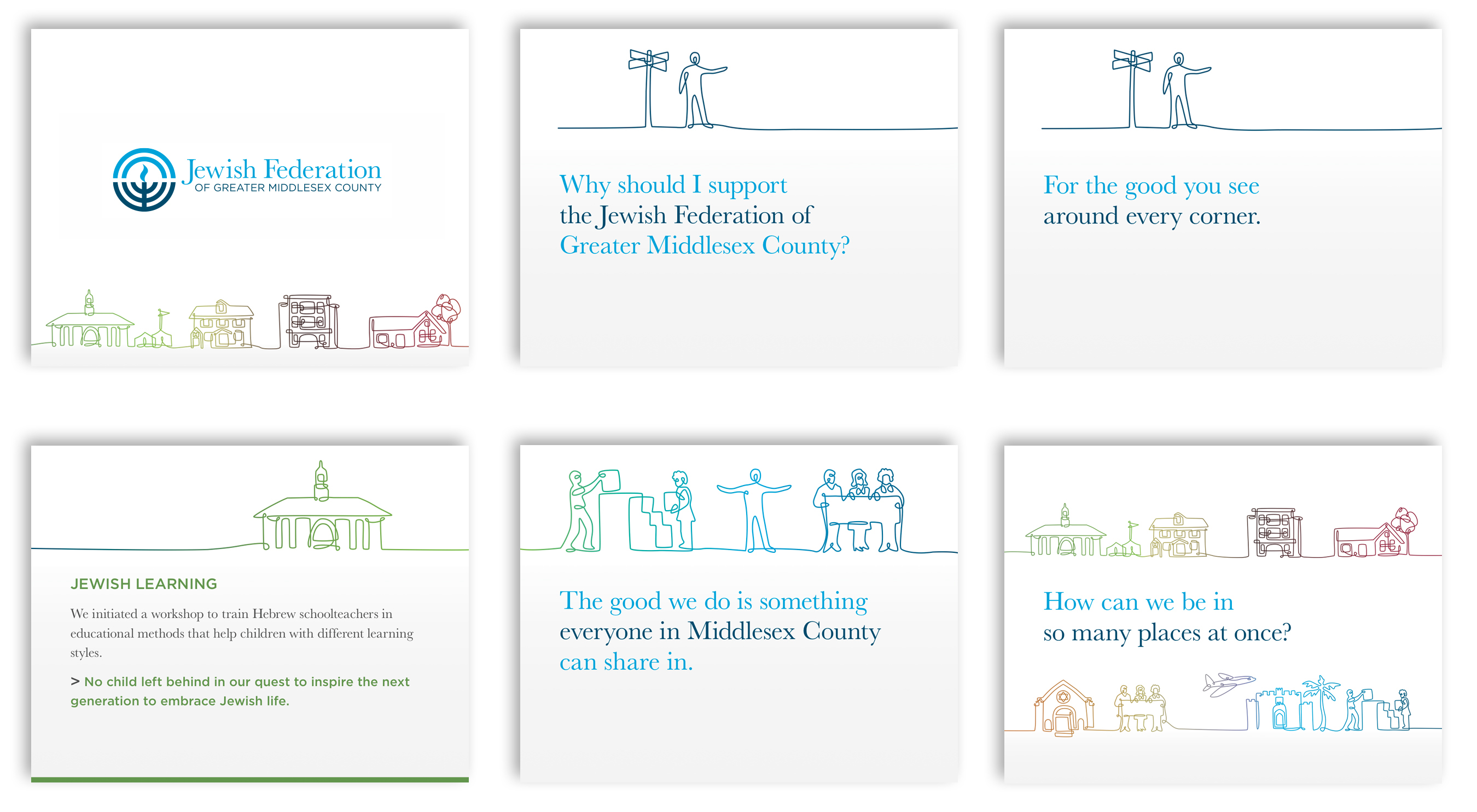
We then created a presentation that allows the organization to delve into the story at a more personal level, exploring the impact based on the values and institutions that donors could identify with.
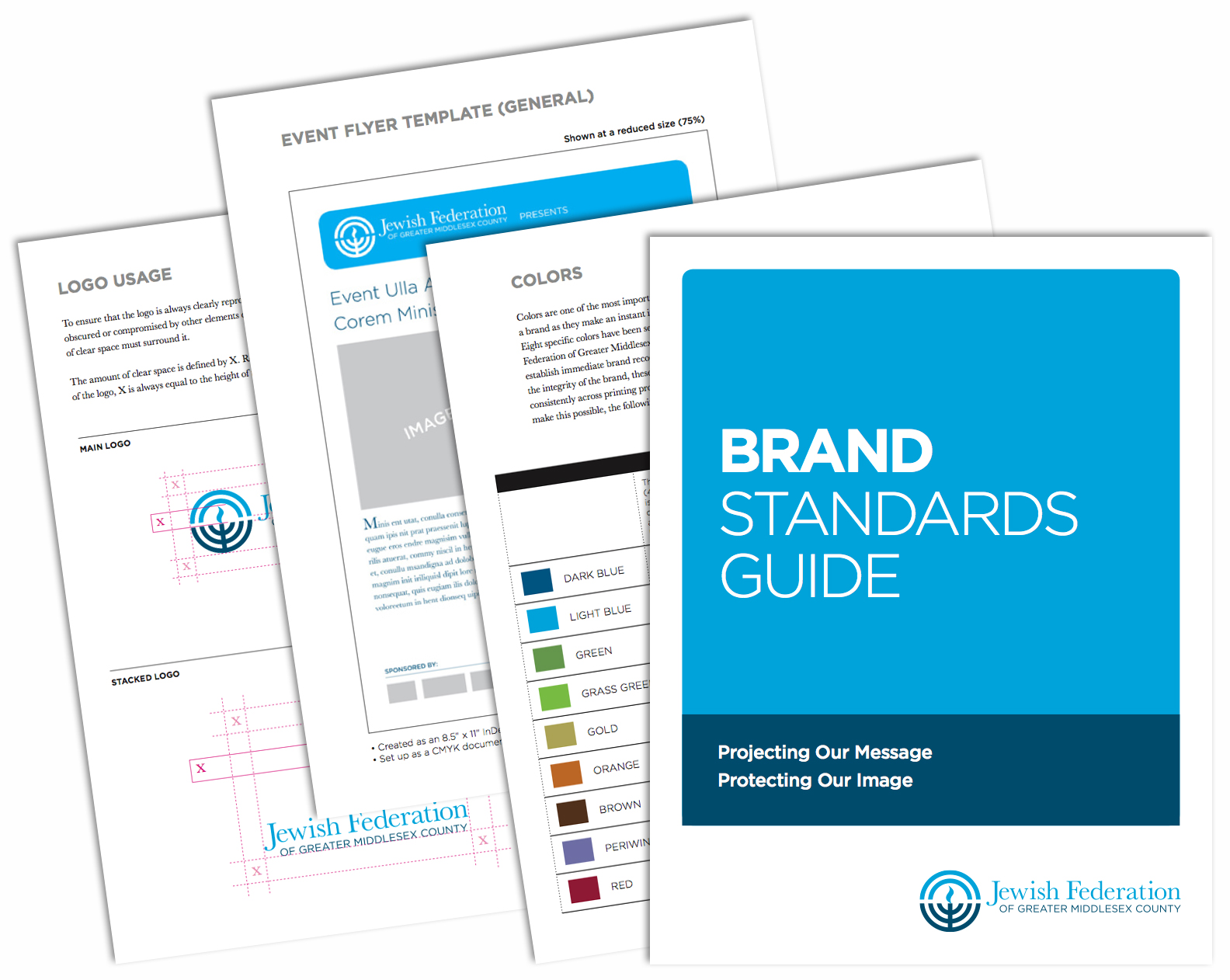
While the national organization, the Jewish Federations of North America, had developed a new logo, we adapted it for local use. To help the staff implement the brand successfully, we adapted the national Federation’s brand manual. The manual contains all the messaging elements, shows all the versions of the logos – with and without the tagline, in color and grayscale, and in print and web formats — along with guidelines for logo usage, typefaces, colors, stationery items and other marketing materials.
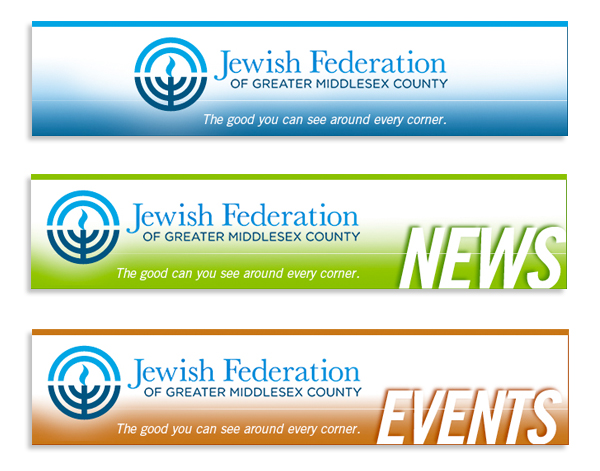
To help the Federation’s recipients quickly identify emails, we created a consistent system for the email templates, with headers for a general, news, and events emails.
Read the full case study and get the inside scoop.
Read “Lessons from Branding a Jewish Agency”
 Red Rooster Group is a New York based graphic design firm that creates effective brands, websites, and marketing campaigns to increase your visibility, fundraising, and communications effectiveness. Contact us at info@redroostergroup.com.

Promotional magazine improves credibility for home builder.
Continue reading
Red Rooster Group is bursting at the seams with good work and we are looking for passionate people to join our growing staff. We are currently seeking graphic designers, web programmers, social media experts, marketing experts, social media gurus and business development pros, as well as freelancers and interns. Check out our Careers section for job descriptions.
Continue reading
Find out how this innovative direct mail kit caught the attention of prospects and won a cable industry award for best promotion.
Continue reading
What should be expected from a media sponsor when asked to sponsor an annual gala fundraiser? When it comes to local TV, radio and newspaper sponsorships (if your sponsorship levels range from $600 to $10,000) what is reasonable to ask in return? It doesn’t seem like 10k would get you much air time if you were buying it outright. We are hoping to raise $30-50k in our second year and have 250-300 people attending. — Walter R.
Continue reading
How can two young teachers, fresh off stints from Teach for America, create what has become one of the most successful models for a charter school in America? Work Hard. Be Nice. is the story of hard work, persistence, and above all, a deep-rooted commitment to helping kids in the face of an educational system that denies has written them off.
Continue reading
Howard Adam Levy spoke about Nonprofit Marketing on a Shoestring at the Foundation Center yesterday. He described the process for updating Friends of Karens’ brand and website and then interviewed Jill Gold, Friends of Karen’s Communications Coordinator. Marketing Consultant Nancy Schwartz opened the session with an overview of marketing for nonprofits.
10 Ways to Save Money on Your Marketing
1. Be consistent to foster recognition. This will save your audience from having to “decode” your message every time they encounter your organization.
2. Conduct your own research – do interviews over the phone and surveys online with Survey Monkey.
3. Have a Brand Manual that features your message points and design templates so that you are not constantly re-inventing
the wheel when it comes to grant applications, newsletters, and other marketing.
4. Use colors wisely. Digital printing typically becomes cost effective at quantities of 1,000.
5. Get support online. Join a discussion forum on LinkedIn.
6. Talk to your printer before you start your project — or better yet, at the beginning of the year, so they can find efficiencies.
7. Tap into volunteers for marketing functions such as photography. You won’t know what you can get until you ask.
8. Empower your board as brand ambassadors to speak about your organization. Give them the tools and make them aware
of this role.
9. Make your fundraising event budget go further by adding “mission awareness” as part of your events so that donors
are aware of what your organization does.
10. Plan your marketing for the year. It’s worth taking the time to determine your goals and the best way to reach them.

Howard Adam Levy discusses how Red Rooster Group developed Friends of Karen’s website. and then interviewed Jill Gold, Friends of Karen’s Communications Coordinator.
Read the full Nonprofit Branding Case Study on the Friends of Karen branding process.

What do you think? What elements of street life are worth preserving as the city becomes more gentrified.